


 简体中文
简体中文
 English
  عربى
عربى Content
- 1 What an Airfoil Impeller Changes Inside the Housing
- 2 Peak Efficiency Is a Point, Not a Promise
- 3 Where the Efficiency Goes After Installation
- 4 The Motor Half of an Airfoil Fan
- 5 Duty-Point Matching for Appliance Blowers
- 6 Light Industrial Air Handling
- 7 Documents and Tolerances to Fix Before You Order
- 8 Frequently Asked Questions
A blower buyer sends out one duty point: 1,500 m³/h at 200 Pa, single-phase 220 V, under 62 dB(A) at one metre. Three suppliers quote the same impeller type, an airfoil centrifugal wheel, and three different performance curves. After installation, only one of them still hits the number.
That gap is what this article is about. Airfoil centrifugal fans are the most efficient shape in the centrifugal family, with wing-section blades that reach roughly 80% to 88% peak total efficiency, against 70% to 78% for a flat backward-curved wheel. But peak efficiency is measured at a single laboratory point. What your product actually delivers is decided by three things: where the fan sits on its curve, what is driving it, and how it is installed.
What an Airfoil Impeller Changes Inside the Housing
An airfoil impeller uses blades whose cross-section looks like a small aircraft wing: rounded leading edge, cambered surfaces, thin trailing edge. Air moving across that profile generates a pressure difference the same way a wing generates lift, so the wheel adds pressure with a smaller angle of attack and less flow separation than a simple curved plate.
Three consequences matter on the bench:
- Fewer, wider blades are needed for the same duty, so air enters the wheel with less shock loss.
- Lower internal turbulence usually means lower broadband noise at the same speed, though tone noise still depends on blade-pass frequency and housing clearance.
- Efficiency holds up better at higher specific speeds, which is where appliance and light industrial blowers run.
The trade-off is just as concrete. Thin blades and tight tip clearances do not tolerate abrasive dust, sticky grease or particle-laden condensate. A radial or radial-tip wheel, with thick straight blades, gives up efficiency and survives those streams far better.
| Impeller type | Peak total efficiency | Pressure capability | Dust and grease tolerance | Typical use |
|---|---|---|---|---|
| Forward-curved | 60–68% | Low to medium | Moderate | Compact air handlers, low-noise appliances |
| Backward-curved, flat blade | 70–78% | Medium to high | Moderate | General ventilation, light dust |
| Airfoil | 80–88% | Medium to high | Low, clean air only | High-efficiency cooling and drying units |
| Radial and radial-tip | 55–68% | High | High | Material handling, dirty or hot exhaust |
Peak Efficiency Is a Point, Not a Promise
When a datasheet says 84%, it means one operating point, measured to a standard such as ISO 5801 or AMCA 210 and corrected to a stated air density. Move 20% away from that flow rate and the same wheel can fall below 70%. The shape of the curve matters more than the height of the peak.
Typical peak total efficiency midpoints by impeller type, shown for comparison only.
Three habits keep a comparison honest:
- Ask for the full curve, not the peak figure. A flat curve that holds efficiency from 70% to 110% of design flow is worth more than a sharp spike.
- Compare only at the same duty point, the same speed and the same air density.
- Budget for tolerance. A five-point band on air flow between test rigs is normal.
Where the Efficiency Goes After Installation
Field measurements on small blower assemblies rarely match the catalogue. Four causes explain most of the shortfall.
- Duty-point mismatch 35%
- System effect 25%
- Dirt and wear 20%
- Motor and drive losses 20%
Typical distribution of efficiency loss measured on small blower assemblies.
Duty-point mismatch is the largest single item: the fan is selected on nominal flow, the real system resistance turns out higher, and the fan rides up its curve into a lower-efficiency region. System effect follows close behind, since an elbow placed within two duct diameters of the inlet can cost more than a blade redesign. Dirt, wear and widening tip clearance accumulate slowly, and motor or belt drive losses are simply absent from a fan-only curve.
The Motor Half of an Airfoil Fan
An 84% impeller on a 70% drive does not deliver 84%. In direct-drive appliance and light industrial blowers, the motor choice sets the ceiling:
- Thermal margin. Insulation class and temperature rise limit how hard a smaller, faster motor can be pushed before the winding ages prematurely.
- Speed control. Inverter duty needs windings that tolerate fast switching voltage spikes; a standard motor run at a 4 kHz carrier frequency can lose years of life.
- Bearing life. L10 rating, lubrication type and shaft loading decide whether the assembly still runs quietly after 8,000 hours.
- Vibration and balance. Residual unbalance at the impeller raises bearing load and turns a quiet wheel into a noisy one.
If the drive side is new to you, a short overview of blower motor construction is a useful starting point before comparing quotes.
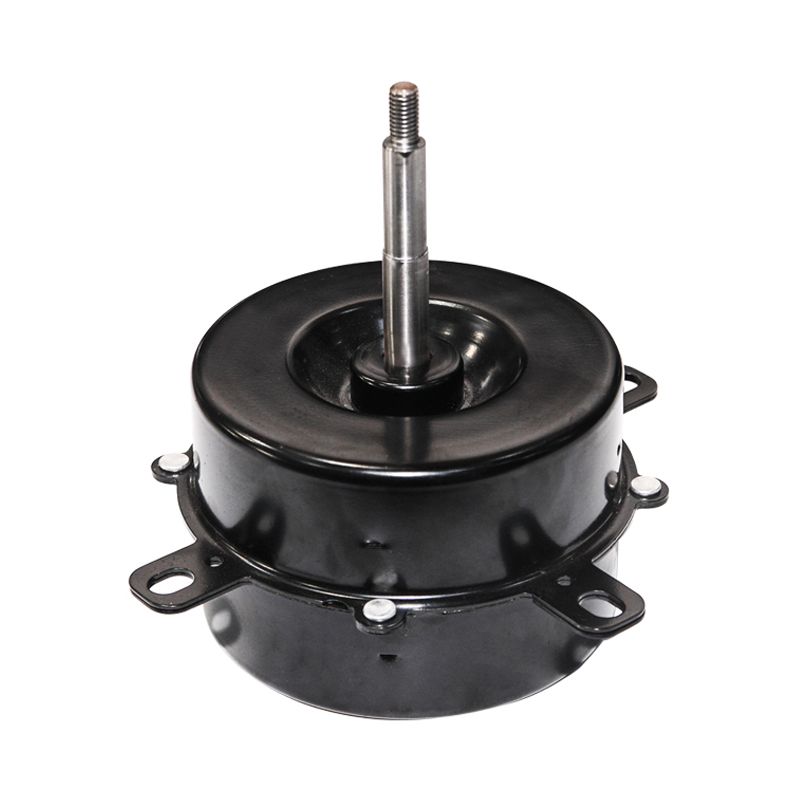
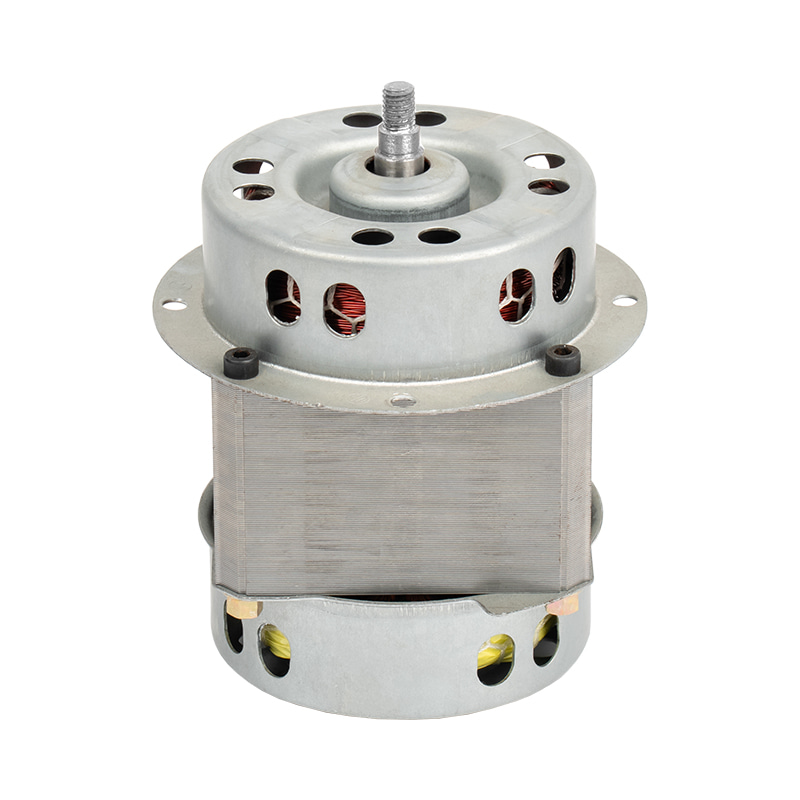 YYK-60 Cooling and Drying Medium Blower MotorFor cooling and drying medium blower applications, this YYK-60 motor combines low-noise operation, continuous-duty design and IP55 protection for dusty or oily workshop environments.View Product →
Duty-Point Matching for Appliance Blowers
Evaporative coolers and air coolers show where airfoil wheels pay off. They run long hours at moderate pressure, users judge them by noise, and energy labels reward efficiency. A 200 mm airfoil wheel with a matched single-phase motor can hold 60% to 70% total efficiency in the finished unit, which is a healthy figure once the drive and housing are included.
Practical guidance for this size class:
- Size the motor for the worst case: hot afternoon air, saturated pads and a slightly oversized duct run.
- Keep blade tip clearance below 1% of wheel diameter, because doubling it costs several points of efficiency.
- Choose a motor built for humid service, with moisture-resistant insulation and protected bearings, rather than the cheapest frame that fits.
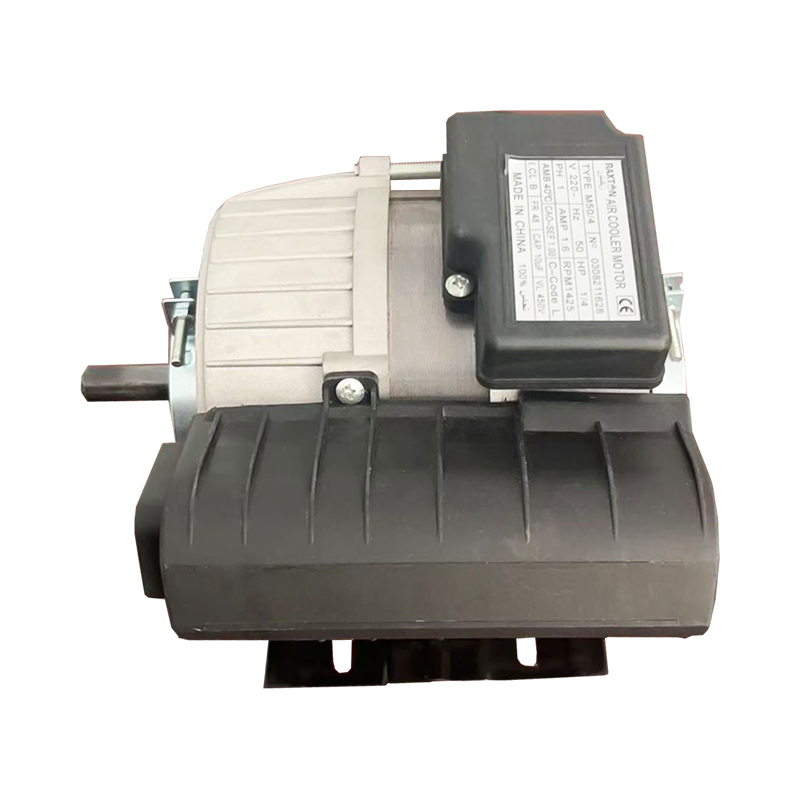
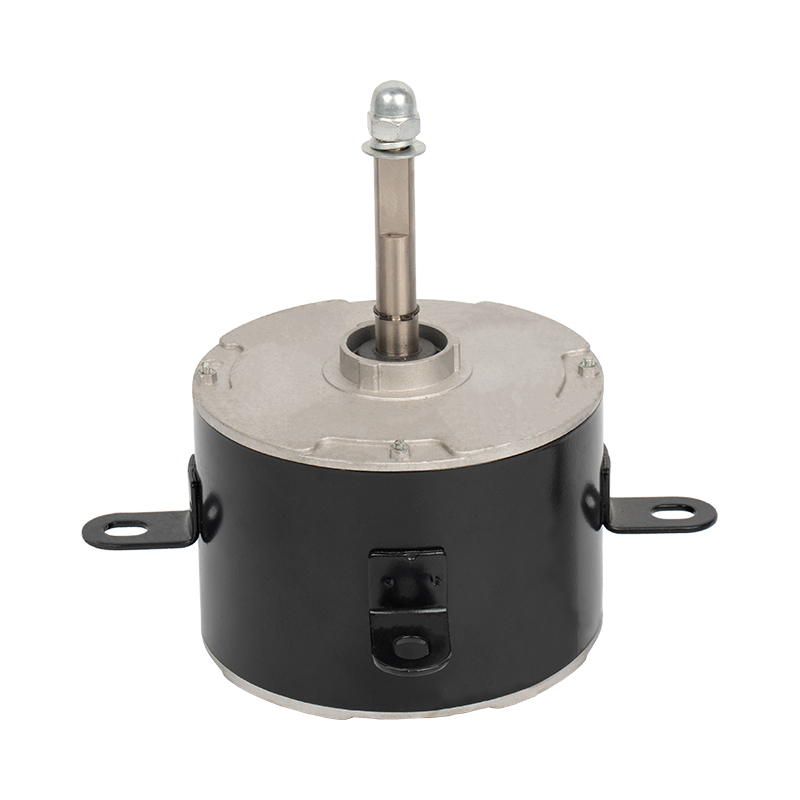 YYK-200 Evaporative Cooling Air Cooler MotorFor evaporative air cooler replacement or upgrade, YYK-200 offers standard mounting dimensions, stronger air supply, quieter operation and energy savings over ordinary motors.View Product →
Light Industrial Air Handling
Industrial air purifiers and drying tunnels push the same principle further. Duty points sit at higher static pressure, run continuously and often handle dustier air, so the wheel is frequently backward-curved or radial-tip rather than airfoil. Where the air stream stays clean, such as filtered paint booths, electronics cooling and drying cabinets, an airfoil wheel with a sturdy aluminium fan and a matched motor keeps power draw low over thousands of hours.
At this scale the detail that decides total cost is not the peak percentage. It is the power consumed at the real operating point, plus the maintenance interval the bearings will allow.
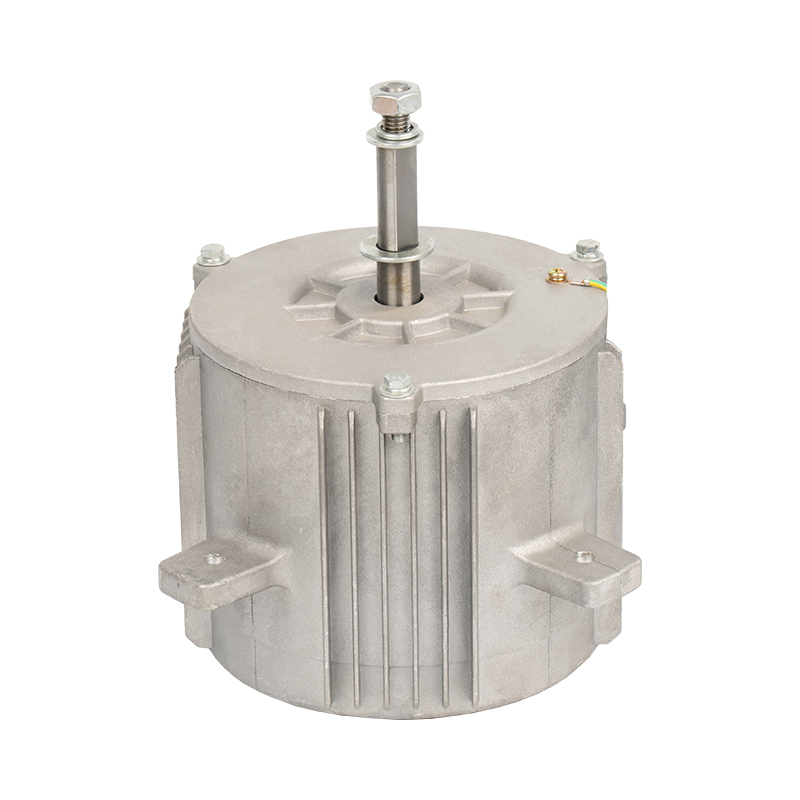
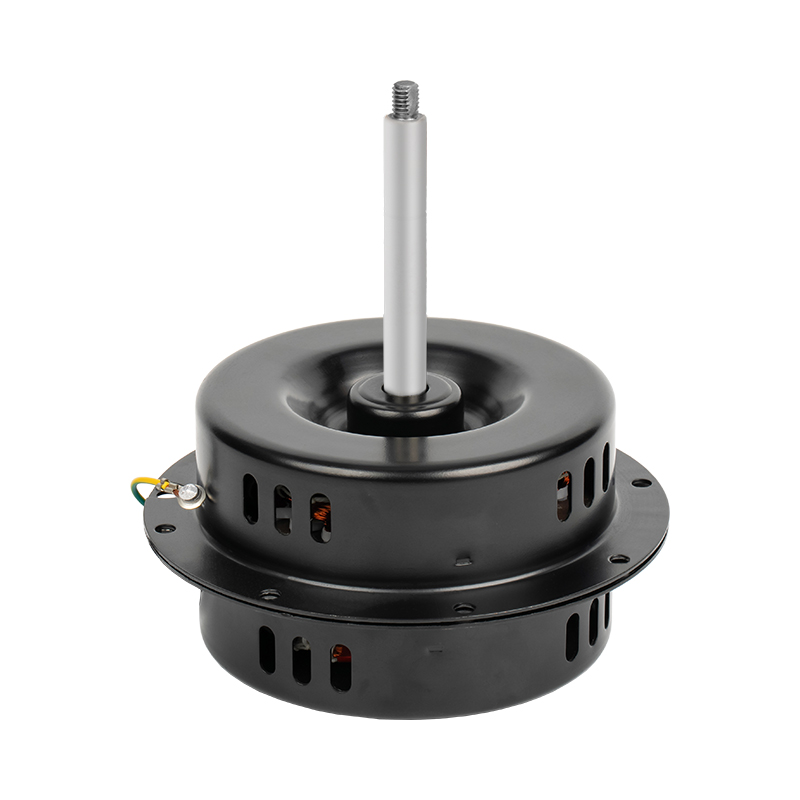 YYK-120 Industrial Air Purifier Motor, Aluminum ShellFor industrial air purifiers, warehouse ventilation, or restaurant fume exhaust, YYK-120 combines an aluminum shell, sealed bearings, dust/splash protection, and overheating protection for low-maintenance duty.View Product →
Documents and Tolerances to Fix Before You Order
Put these six items into the enquiry and most of the surprises disappear before the first sample is built:
- Duty point with air density, air temperature and site altitude.
- Full fan curve at the quoted speed, from shut-off to free delivery.
- Sound power by octave band, not only a single dB(A) figure at one metre.
- Motor nameplate data: voltage, frequency, insulation class, IP rating, bearing type and expected L10 life.
- Test standard and tolerance, for example ISO 5801 with a five percent flow band.
- Installation limits: inlet clearance, outlet duct length and mounting orientation.
Frequently Asked Questions
Do airfoil centrifugal fans work with variable speed drives?
Yes, and they benefit more than most wheels because their efficiency stays reasonably flat across a wide flow range. The motor is usually the limiting item, so specify inverter-duty insulation if the drive carrier frequency runs above 4 kHz.
How much of the 80–88% peak efficiency survives in real service?
On clean air with a well-matched duty point, five to ten points of loss is a realistic expectation once motor, drive, system effect and installation are counted. A flat curve protects that margin better than a high peak.
Can an airfoil wheel handle humid air from evaporative cooling?
The wheel can, provided the material and coating resist corrosion. The real risk sits in the winding and bearings, so moisture-resistant insulation and sealed bearings matter more than the blade profile.
What should I send for an accurate quotation?
Flow rate, static pressure, air density or temperature, available voltage and frequency, the maximum acceptable sound level, and the physical envelope the fan must fit into.
Airfoil centrifugal fans earn their reputation on clean air and a well-chosen duty point. If the duty point drifts, the air is dirty, or the motor is an afterthought, the efficiency advantage shrinks quickly, and it shrinks quietly, which is the expensive part. Send over your flow, pressure and envelope details, and we will reply with a matched impeller and motor combination rather than a peak percentage. You can reach us through our contact page.



 Home
Home  Tel.: +86-13819807486
 Whatsapp:+86 13819807486
 E-mail:


