


 简体中文
 English
 عربى
Content
A centrifugal blower cooling fan is the right answer when the air has to travel through something. Put an axial fan in front of a folded fin stack, a pleated filter, or a duct with two 90-degree bends, and the airflow collapses. Swap in a centrifugal blower of similar diameter, and the same motor keeps moving air, because the impeller converts rotational speed into pressure as well as volume.
That single difference, pressure capability, explains why centrifugal blowers dominate air coolers, industrial air purifiers, drying lines, range hoods and enclosure cooling. It also explains why they are harder to specify. The blower and the motor behave as one aerodynamic system, and a motor that looks fine on paper can run hot, howl, or stall once the impeller and volute are attached.
What follows is a practical breakdown of how these units work, where they fit, and what to check on the motor side before a sample is approved.
How a Centrifugal Blower Actually Moves Air
The impeller draws air in along the shaft axis and throws it outward into a scroll-shaped housing, the volute. The volute slows that fast swirling air and converts velocity into static pressure before it leaves the discharge. Three blade families cover most cooling duty:
- Forward-curved blades: many shallow blades, low speed, quiet, used in air coolers and light commercial cooling where pressure demand is moderate.
- Backward-curved blades: fewer, deeper blades, higher efficiency, suited to continuous industrial duty.
- Radial blades: straight blades that tolerate dust and sticky particles, common in fume and drying applications.
Performance is read from a pressure-volume curve, not a single figure. A blower rated at 800 m3/h in free air may deliver only 300 m3/h once system resistance reaches 150 Pa. When a supplier quotes airflow without a matching static pressure point, the number is close to meaningless.
| Characteristic | Axial fan | Centrifugal blower |
|---|---|---|
| Air path | Straight through, parallel to the shaft | Inlet axial, discharge at 90 degrees |
| Static pressure | Low, often under 100 Pa | High, commonly 150 to 800 Pa |
| Best match | Open air exchange | Ducted, filtered or pad-loaded cooling |
| Noise character | Broadband | Tonal, tied to blade pass frequency |
| Starting torque | Low | Higher, impeller inertia matters |
Where a Centrifugal Cooling Fan Earns Its Cost
Four applications account for most of the demand:
- Evaporative air coolers, where air passes through a wet pad and a grille before reaching the room.
- Medium blowers for cooling and drying, where process air is pushed across motors, coils or printed products.
- Industrial air purifiers, where the filter medium adds resistance that grows as it loads with dust.
- Range hoods and cabinet exhaust, where grease filters and long ducts create the same problem.
Each load behaves differently over time. A clean filter may add 40 to 60 Pa; the same filter at end of life can add 200 Pa or more. The blower therefore drifts up its curve, airflow falls, and motor current changes. Choosing a motor at the clean-filter point alone is one of the most common specification mistakes we see.
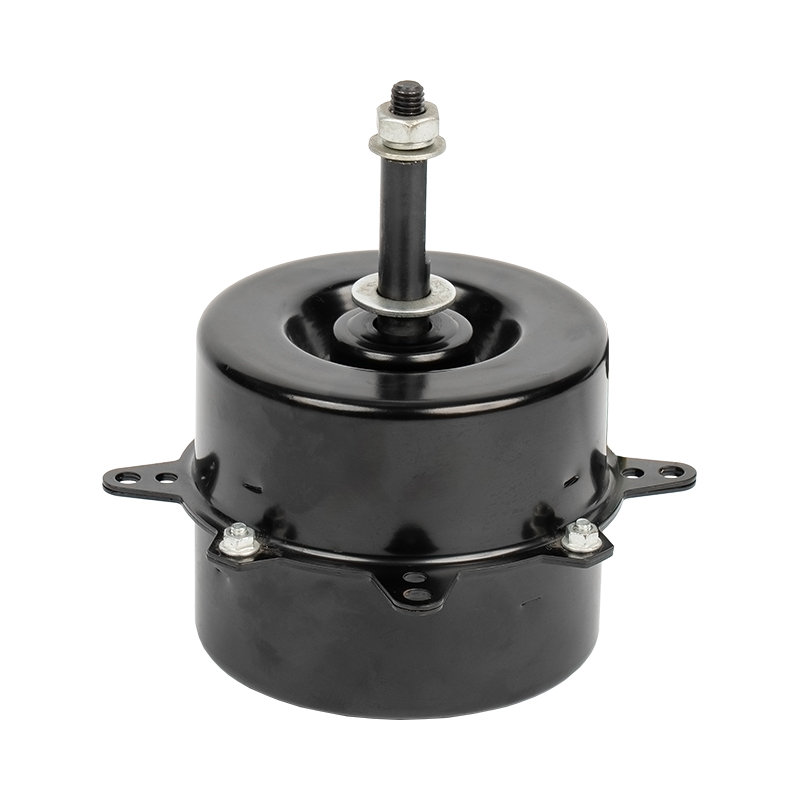
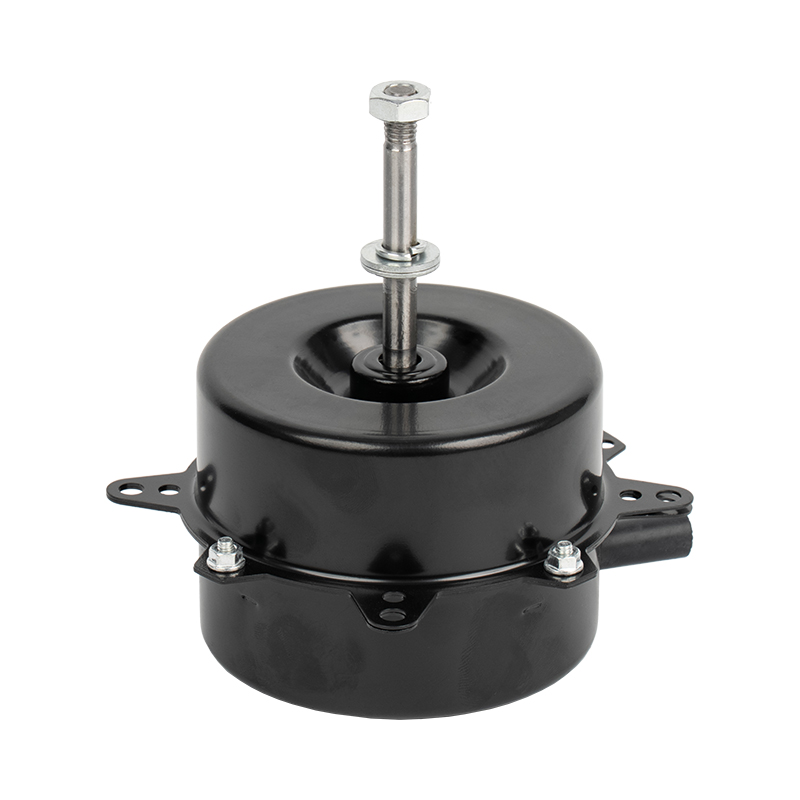
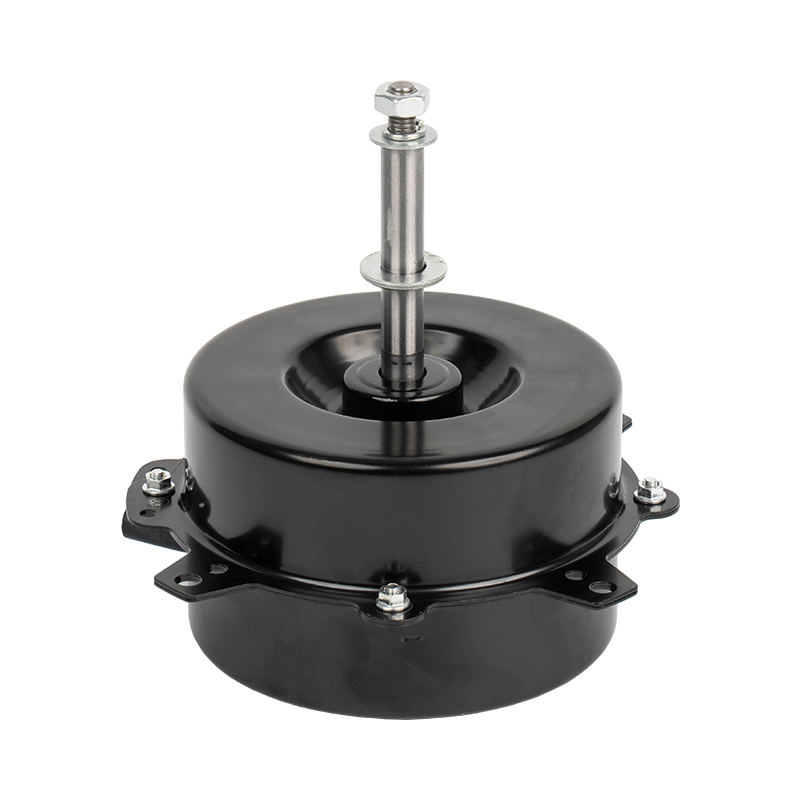
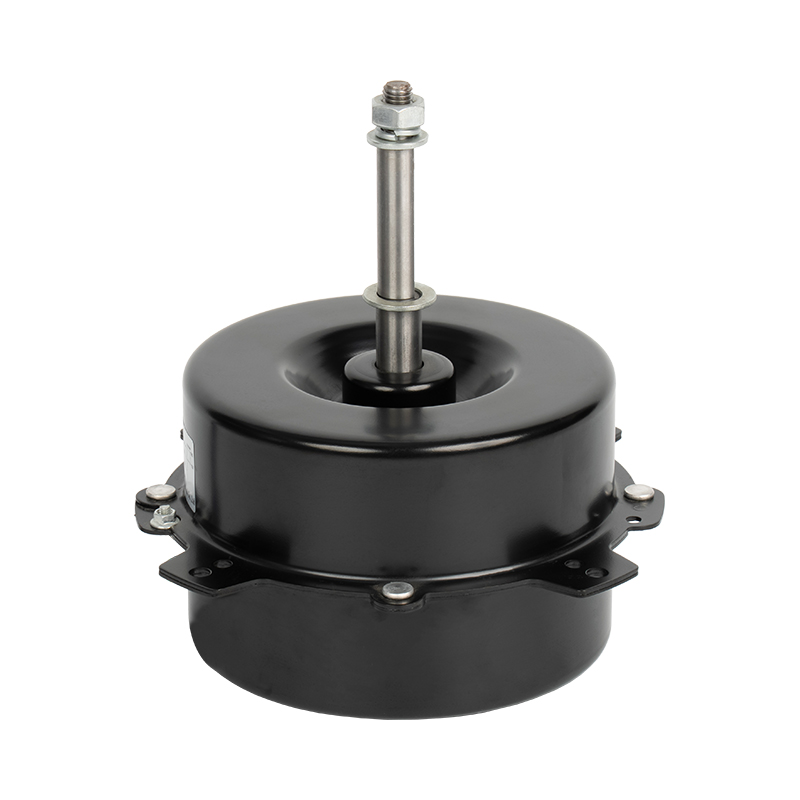
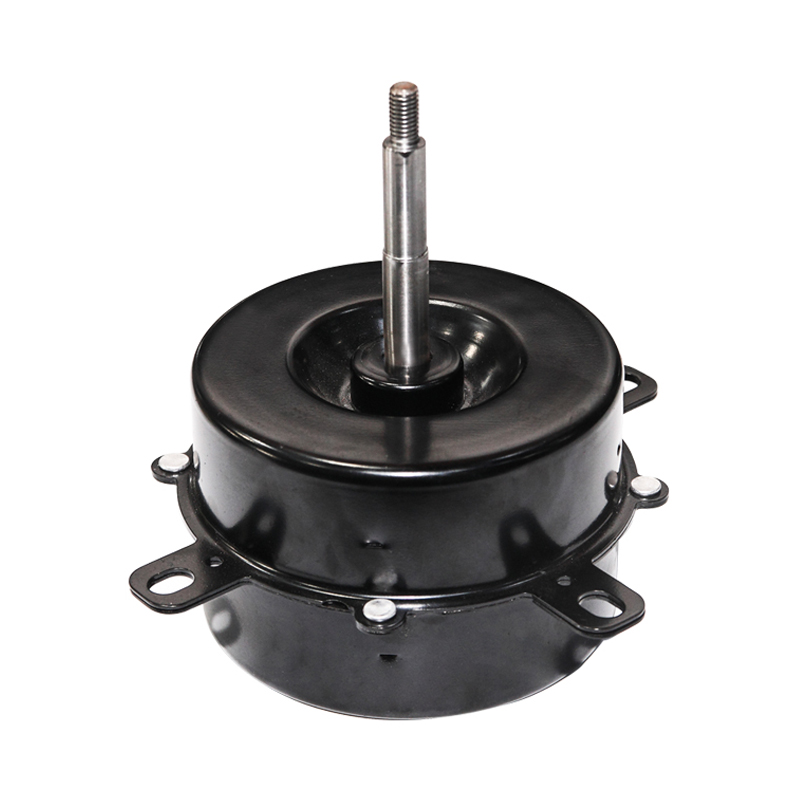
For drying and cooling duty with moderate pressure demand, a 60-frame blower motor sized against the impeller's real load curve keeps the unit inside its thermal limits without oversizing windings and capacitor.
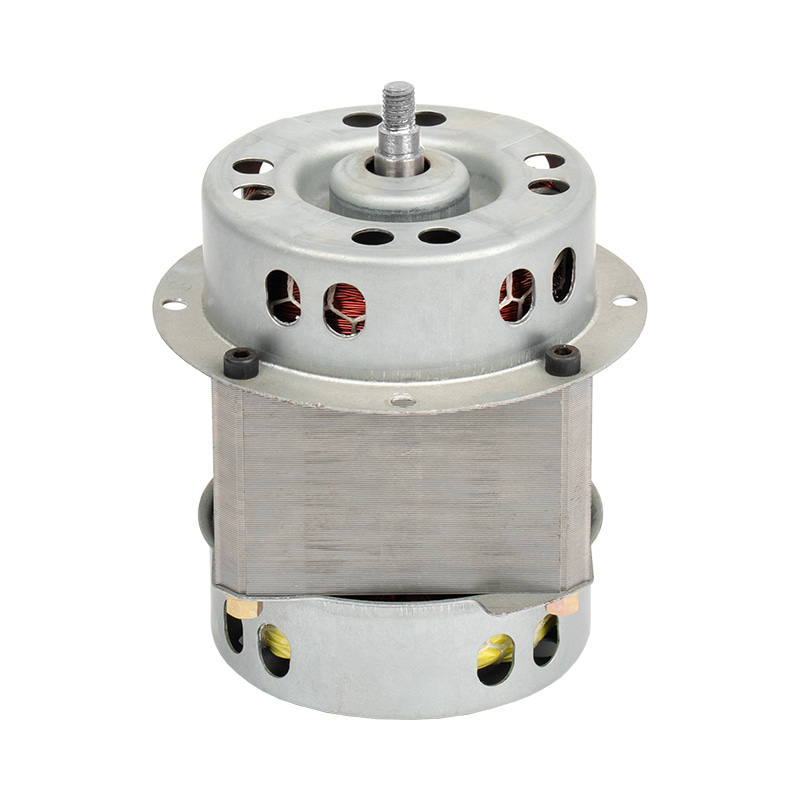 YYK-60 Cooling and Drying Medium Blower MotorMedium blower motor for cooling and drying duties, presented with low-noise sealing and continuous-duty features for checking against impeller load and thermal limits.View Product →
Matching the Motor to the Impeller
The motor in a centrifugal blower does not run at its nameplate speed under load. Slip, supply voltage and impeller inertia all shift the operating point. Four checks matter most:
- Starting torque: forward-curved impellers carry high inertia, so a motor sized only for running torque may fail to start or trip its protector.
- Speed tolerance: a 5 percent speed variation moves airflow by roughly the same proportion, which shows up when a customer measures airflow at the grille.
- Temperature rise: cooling-fan motors often sit in the warm exhaust stream, where internal ambient runs 15 to 25 degrees Celsius above room temperature.
- Bearing choice: sleeve bearings are quiet but sensitive to vertical mounting, while ball bearings tolerate axial loads and higher ambient.
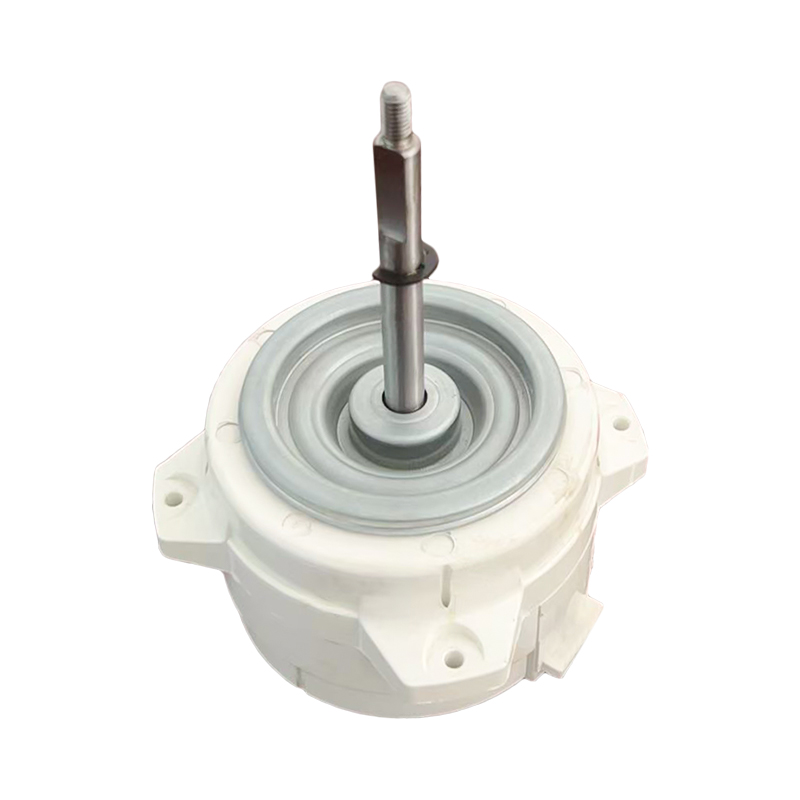
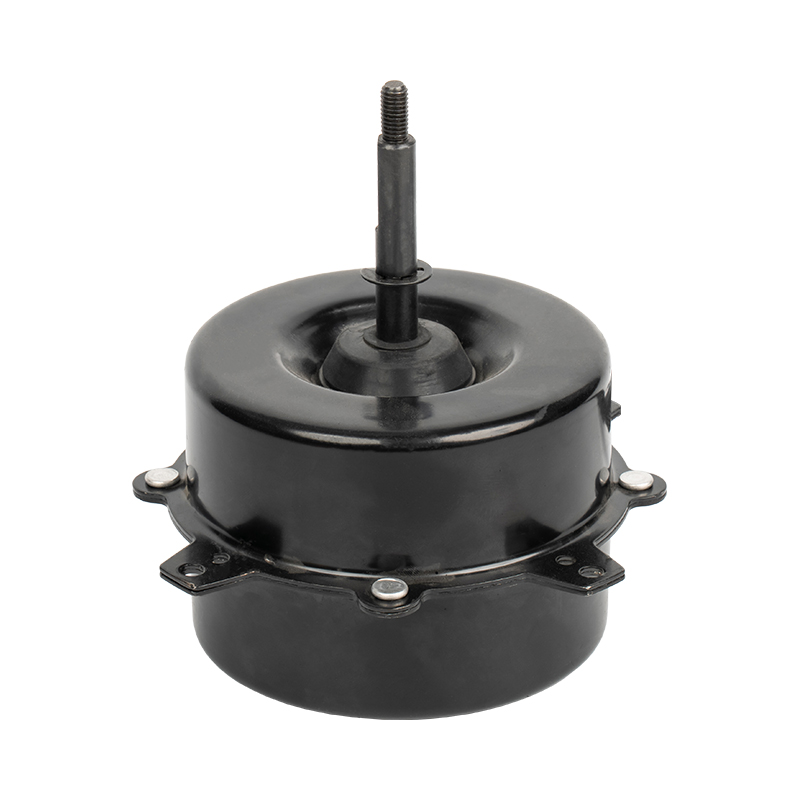
When a fixed speed cannot satisfy both quiet night operation and full-load daytime demand, a variable-frequency small blower motor lets the controller follow the load instead of throttling with a damper, which wastes energy and adds noise.
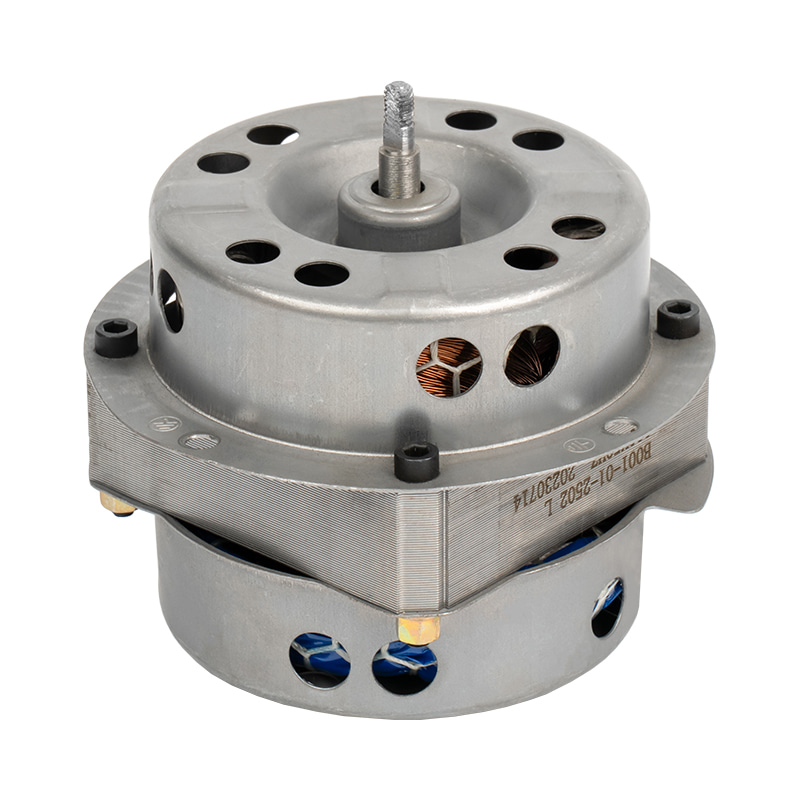 Variable Frequency Speed Small Blower Motor YYK-60Small variable-frequency blower motor with stepless speed control, quiet operation, and compact mounting, suited to load-following ventilation instead of damper throttling.View Product →
Noise, Vibration and Dust
A blower is rarely the only noise source in an appliance, but it is usually the most tonal one. Three fixes resolve most complaints:
- Balance the impeller. An unbalanced wheel produces a once-per-revolution tone that no amount of insulation removes.
- Keep inlet clearance. A hub or grille placed too close to the inlet creates turbulence and a sharp broadband hiss.
- Decouple the motor from the housing with rubber grommets, and check that the volute cut-off does not resonate with the mount.
Dust is the other long-term issue. Radial and backward-curved impellers tolerate dust far better than fine forward-curved blades, which clog and lose balance. In purifier and drying duty, match the blade family to the particle load and set a realistic service interval.
Evaporative Cooling Sets: Motor and Pump Together
In an evaporative air cooler, the blower and the water pump form one system. If the pump delivers more water than the pad can evaporate, droplets carry into the airstream. If it delivers too little, dry patches reduce cooling and raise supply air temperature. The blower side is just as sensitive, because a saturated pad increases resistance and the motor has to hold speed as pressure rises.
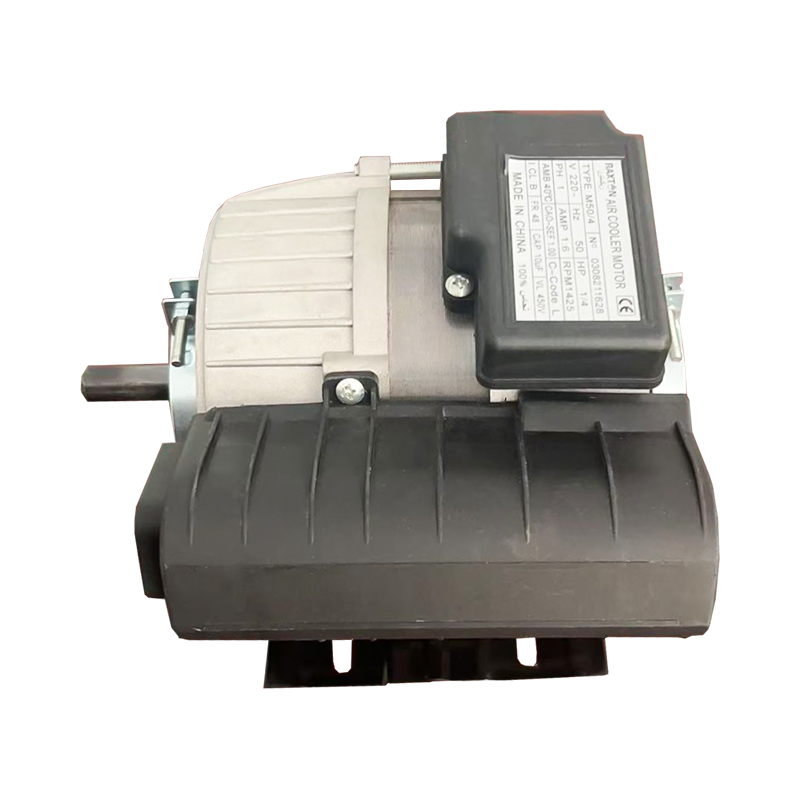
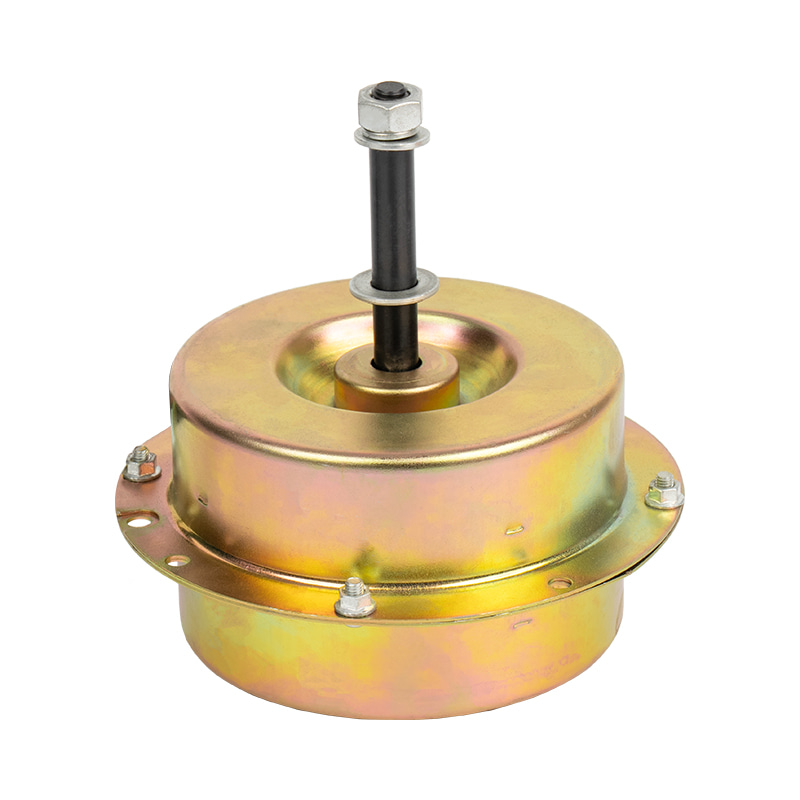
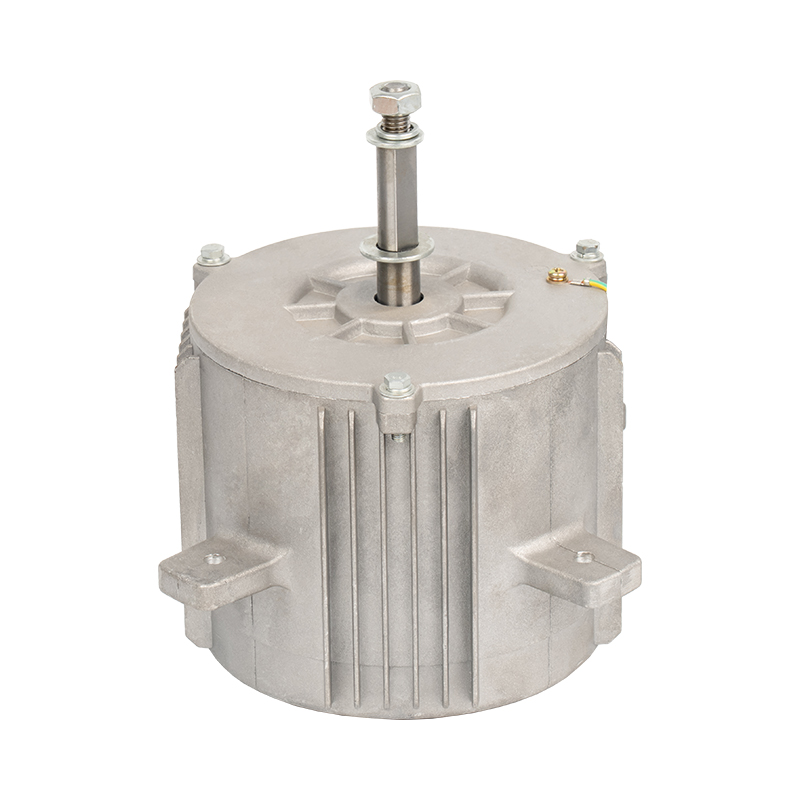
For larger evaporative cooling units, a motor rated for continuous operation at elevated humidity, paired with a corrosion-resistant shaft and adequate ingress protection, avoids the two failure modes we see most often: winding failure from moisture ingress and bearing seizure from mineral deposits.
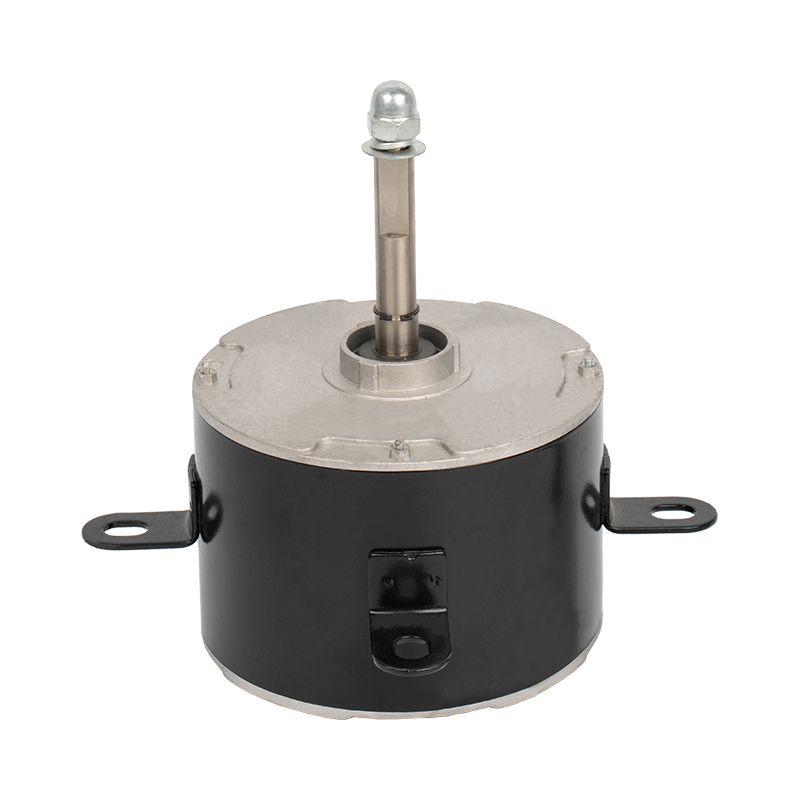 Evaporative Cooling Air Cooler Motor YYK-200Air cooler motor for evaporative cooling units, presented with sealed construction and replacement dimensions; assess continuous humidity duty, shaft corrosion, and bearing protection.View Product →
A Procurement Checklist Before You Approve a Sample
- Ask for a pressure-volume curve at the real operating speed, not only a free-air airflow figure.
- Confirm the airflow tolerance. Plus or minus 5 percent is typical in production; tighter demands need an agreed test protocol.
- Specify noise measurement distance and background level. 45 dB at one metre in a quiet room is a very different claim from 45 dB at three metres.
- Verify temperature rise at worst-case ambient inside the appliance, not on a 25 degrees Celsius bench.
- Agree on bearing type, lubrication and mounting orientation before tooling.
- Confirm insulation class, ingress protection, lead time and the incoming inspection standard.
Teams that write these six points into the request for quotation usually skip two or three rounds of sample revisions. For a deeper look at construction details and field failures, our blower motor knowledge guide covers the topic in more detail.
Frequently Asked Questions
Is a centrifugal blower quieter than an axial fan?
Not automatically. At equal airflow and pressure a well-designed centrifugal blower is often quieter because it runs slower, but it produces a more tonal sound, so perceived quality depends on impeller balance and inlet design.
How do I know whether I need a blower motor or a standard fan motor?
Look at system resistance. If air passes through a filter, wet pad, dense fin stack or more than one duct bend, choose the centrifugal option. If the fan simply stirs air in open space, an axial fan is smaller and cheaper.
What speed tolerance should I expect in production?
For shaded-pole and permanent-split capacitor motors, plus or minus 5 percent at rated voltage is a normal expectation, and load changes move the speed further. Keep design margin if airflow is measured at the grille.
Can one motor drive both the blower and the water pump?
Usually not. Pumps need higher starting torque and different sealing, while blower impellers need speed stability. In evaporative coolers the two are normally separate units selected as a matched set.
A centrifugal blower cooling fan is a system, not a part number. Decide the operating point first, then choose the impeller family, then size the motor around starting torque, temperature rise and the speed tolerance your product can live with. That order prevents the usual spiral of sample revisions.
We build blower, air cooler and air purifier motors at our facility in Cixi, and we can review your pressure-volume curve before you commit to tooling. Send us your duty point and mounting details and we will come back with a matched motor recommendation.


 Home
 Tel.: +86-13819807486
 Whatsapp:+86 13819807486
 E-mail:


