


 简体中文
 English
 عربى
Content
A cold fan that moves plenty of air on the test bench can fall flat once it is mounted in a real cabinet with filters, bends, and a condenser coil in the way. The reason is not usually the motor alone, but the match between the impeller, the housing, and the system resistance. Centrifugal fan characteristics describe that match in numbers: airflow, static pressure, shaft power, efficiency, and noise.
What Centrifugal Fan Characteristics Really Tell You
Start with the conclusion: a centrifugal fan is selected by its operating point, not by its free-air delivery. The operating point is where the fan's pressure-volume curve crosses the system resistance curve. Move the system resistance, and the fan moves to a different point on the same curve, changing airflow, power draw, and noise at the same time.
Three characteristics matter most in everyday equipment design:
- Airflow and static pressure at the duty point, usually expressed in CFM or m³/h and in Pa or in.wg.
- Shaft power and the shape of the power curve, which decides whether the motor can be overloaded when resistance drops.
- Sound power level and blade-pass frequency, which affect perceived noise in appliances and industrial air handling units.
Those three are not independent. A change in impeller width, blade angle, or housing cut-off shifts all of them at once. That is why a centrifugal fan datasheet is a family of curves, not a single rating.
The Operating Point: Airflow and Static Pressure
A centrifugal fan accelerates air radially outward through the impeller, then the volute converts velocity into static pressure. The pressure-volume curve slopes downward: as airflow increases, static pressure falls. At zero airflow, the fan produces its maximum static pressure. At free delivery, static pressure is zero and airflow is highest.
System resistance behaves in the opposite way. A filter, coil, grille, or duct run requires more pressure as airflow rises, so the system curve slopes upward. The intersection of the two curves is the operating point. In a typical air cooler or air purifier, that point may sit at 60 to 70 percent of free airflow, depending on filter loading and inlet restriction.
Two practical consequences follow. First, a dirty filter moves the operating point toward lower airflow and often toward lower power. Second, a removed filter can move a forward-curved fan toward higher airflow and higher power, sometimes beyond the motor's safe continuous rating. This is the overload condition that engineers check before approving a fan-motor package.
Power Curves and the Overloading Risk
Centrifugal fan power curves are not all shaped alike. Backward-curved and airfoil impellers usually have a non-overloading characteristic: power rises to a peak and then falls as airflow increases. Forward-curved multiblade impellers often show continuously rising power, so the motor must be sized for the worst-case airflow, not just the nominal duty point.
Radial impellers sit between those extremes. They handle dirty or abrasive airstreams well, but their efficiency is lower, and the power curve can be steep. For a compact appliance fan, the difference between a forward-curved wheel and a backward-curved wheel can be 15 to 25 percentage points of efficiency, which directly affects heat rise, insulation class, and bearing life.
Fan laws give a quick sanity check. At a fixed impeller diameter and air density, airflow varies with speed, static pressure with speed squared, and shaft power with speed cubed. A 10 percent speed increase therefore asks for about 33 percent more power. That is why variable-frequency drive settings and motor headroom should be reviewed together, not separately.
Blade Geometry and Its Fingerprint on Performance
Blade shape is the clearest single indicator of what a centrifugal fan will do. The table below compares the common families found in appliance, HVAC, and light industrial equipment.
| Blade type | Typical efficiency | Pressure capability | Overloading behaviour | Common use |
|---|---|---|---|---|
| Forward-curved multiblade | Moderate | Low to medium | Rising power, overload risk | Air coolers, fan coils, compact appliances |
| Backward-curved | High | Medium to high | Non-overloading | HVAC, air purifiers, clean air systems |
| Airfoil | Highest | Medium to high | Non-overloading | Large HVAC, high-efficiency units |
| Radial | Low to moderate | High | Can be steep, material dependent | Dust, abrasive or high-temperature air |
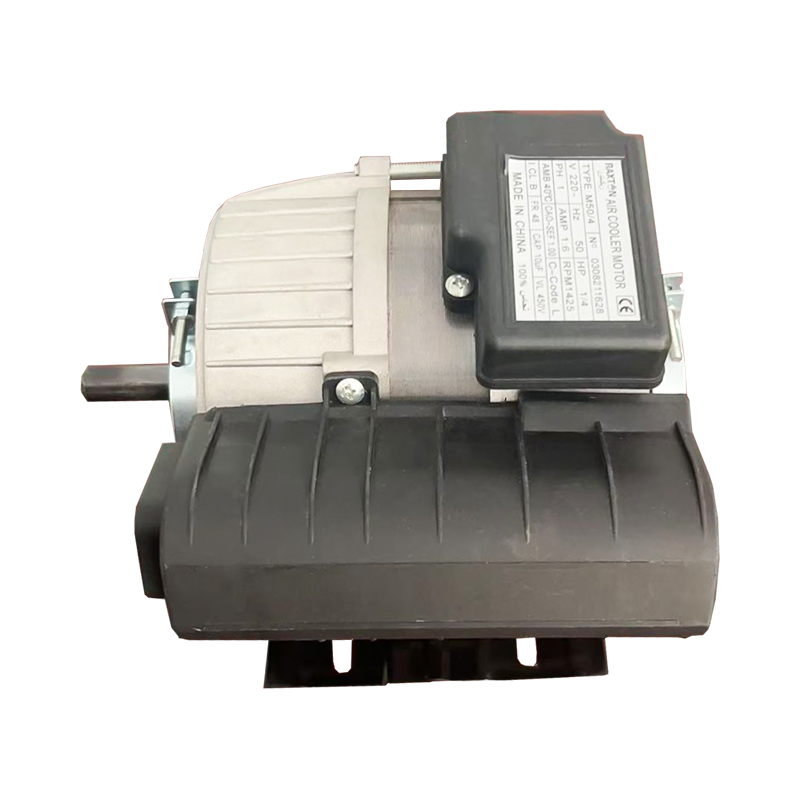
The housing matters as much as the wheel. A tight volute clearance raises pressure but can increase noise and losses. A poorly designed inlet cone creates turbulence that shows up as a drop in efficiency and a rise in blade-pass noise. In small motors for air coolers and blowers, the impeller is often matched to a specific motor stack and speed, so replacing one without the other can move the operating point away from its best efficiency region.
Noise, Vibration, and Motor Matching
Noise in a centrifugal fan comes from three sources: aerodynamic turbulence, blade-pass tone, and mechanical vibration. Aerodynamic noise rises sharply with tip speed, roughly with the fifth to sixth power of speed in some broadband ranges. Blade-pass tone appears at the blade-pass frequency, which is the number of blades multiplied by rotational speed. If that frequency coincides with a panel resonance or a motor mounting resonance, the result is a narrow, annoying tone rather than a broad whoosh.
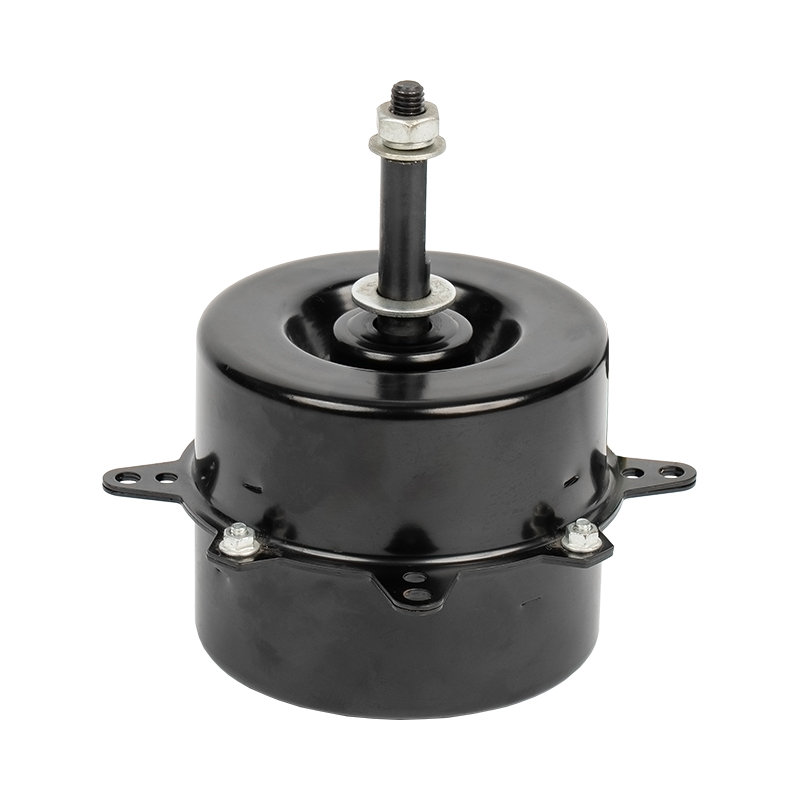
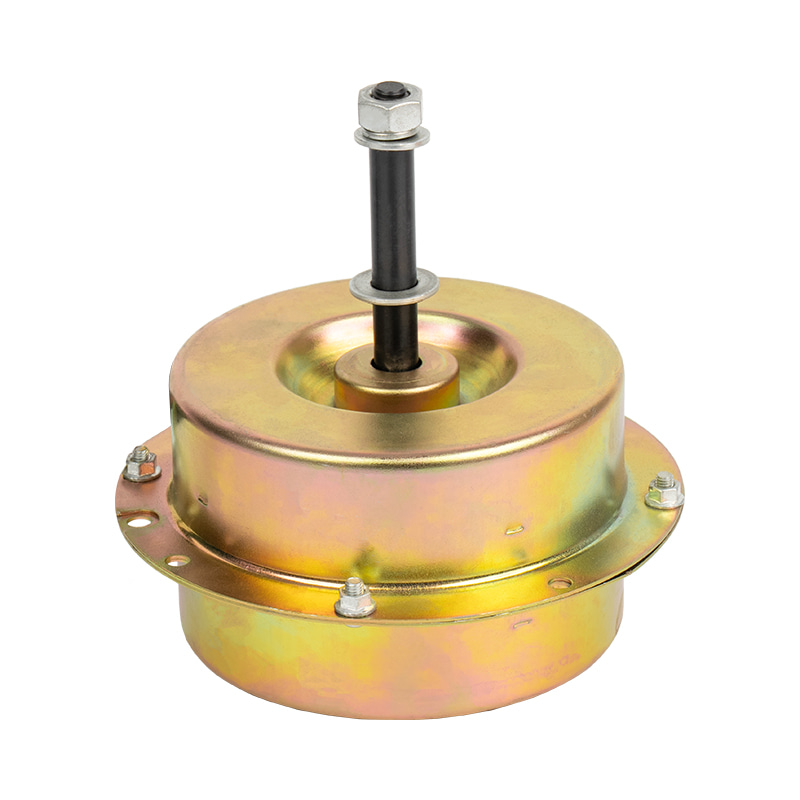
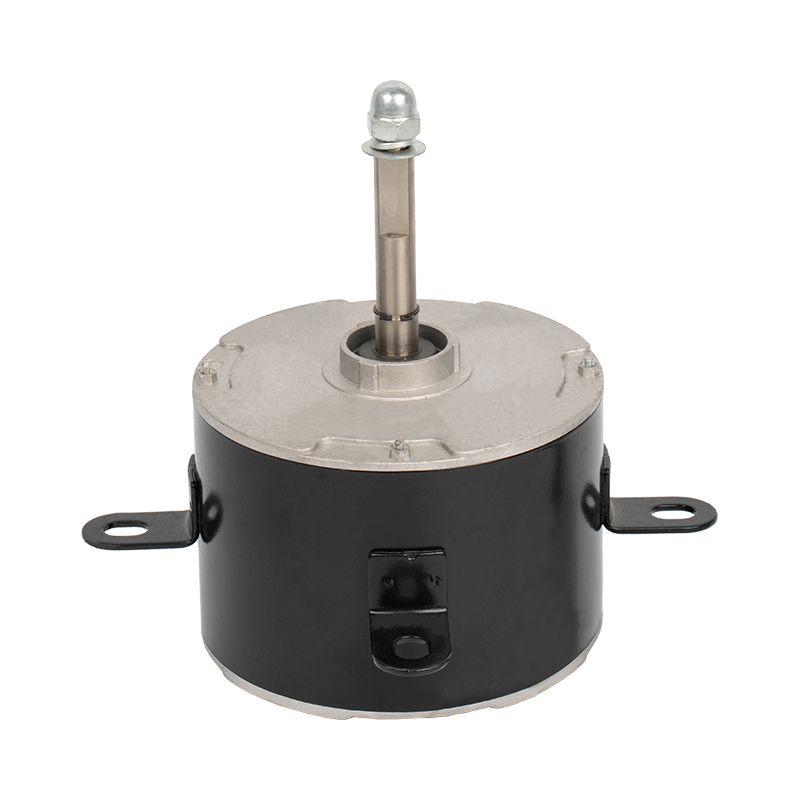
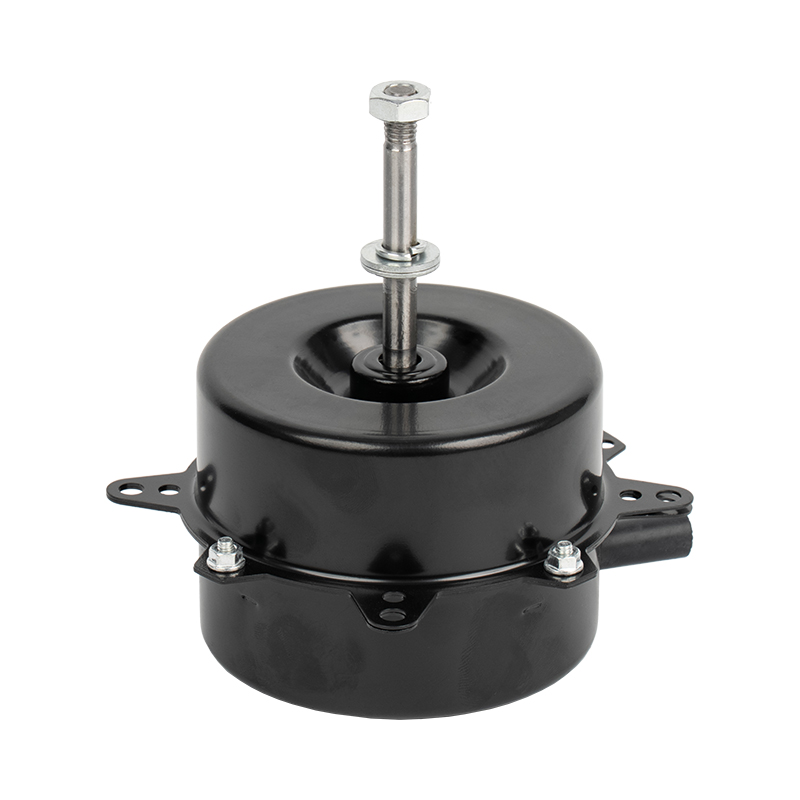 Quiet Running Air Cooler Motor YYK-50 for Cooling EquipmentMotor for air coolers and ventilation, with low-noise operation, built-in cooling, energy-efficient winding, and IP54 housing; useful where fan noise and motor balance matter.View Product →
Motor matching is not just about shaft diameter and speed. The motor's synchronous speed, slip, and rotor balance influence the fan's vibration signature. A motor with low vibration and stable speed control helps keep the fan near its design point, especially in appliances that run for hours at a time. In air coolers, for example, the motor and impeller are often balanced as a subassembly before final assembly, because a small unbalance grows quickly with impeller diameter and speed.
For a broader look at how blower and fan motors are built and applied, this blower motor overview is a useful companion read.
Selecting a Fan and Motor as One System
The practical selection sequence is short but strict. Define the required airflow and the system resistance at that airflow. Add margins for filter loading, voltage variation, and altitude. Choose an impeller family that meets the pressure and contamination requirements. Then check the power curve at the worst-case resistance and confirm that the motor can carry it without exceeding its insulation class or bearing limits.
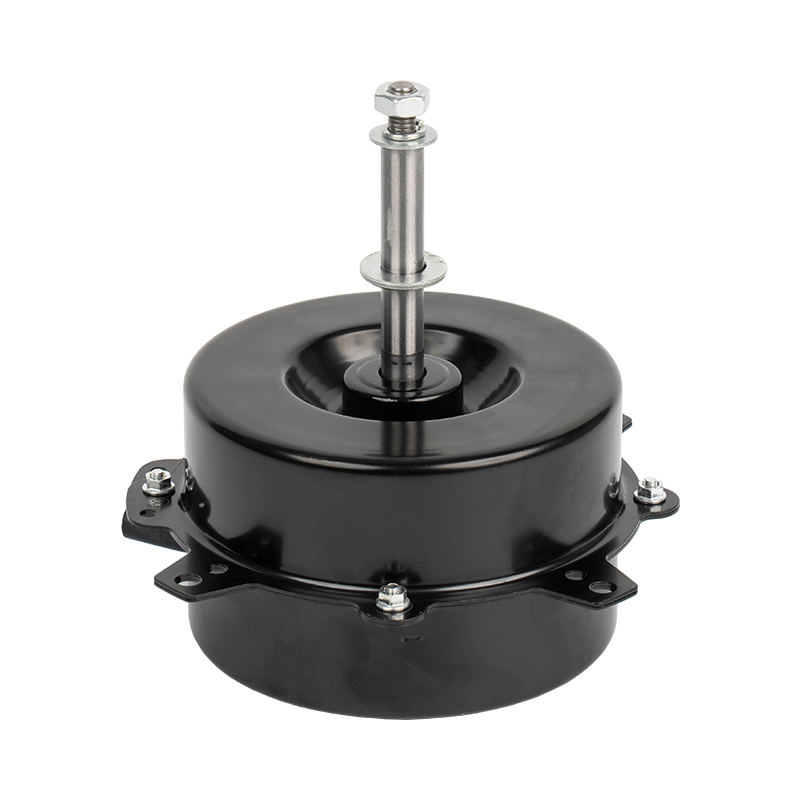
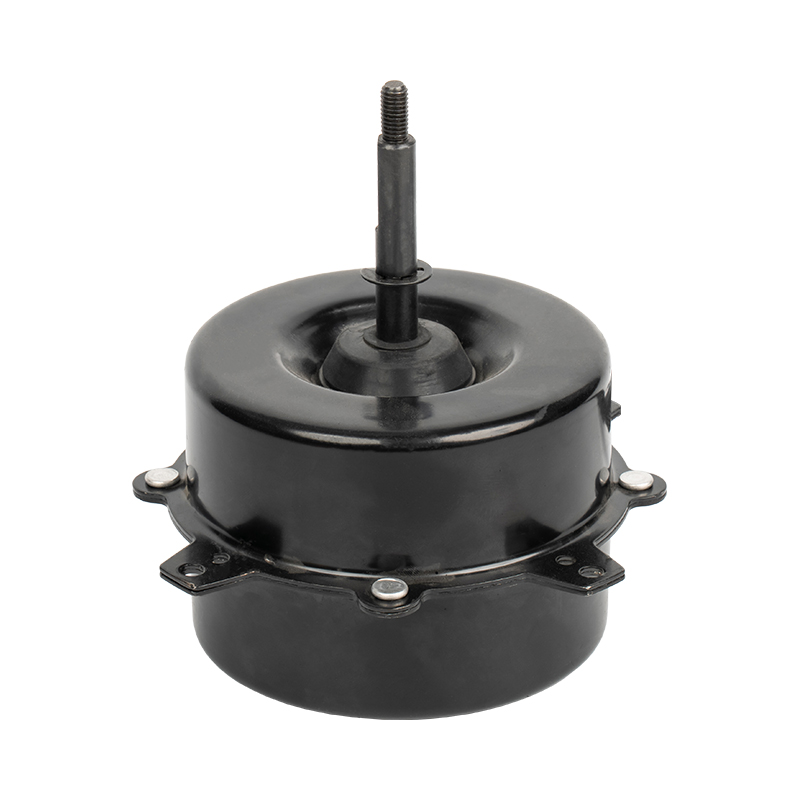
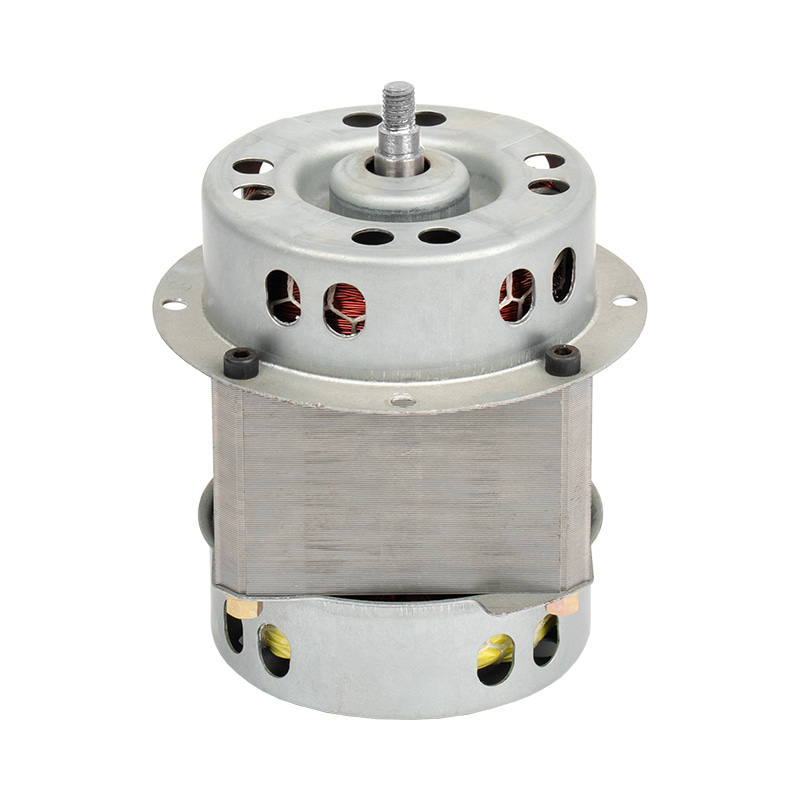 Cooling and Drying Medium Blower Motor YYK-60Medium blower motor for cooling and drying, featuring quiet sealed housing, dust and oil resistance, and maintenance-free continuous operation; suited to noise-sensitive workshop equipment.View Product →
In many compact units, the fan curve is fixed by the impeller and housing, so speed becomes the main adjustment. A frequency-conversion motor allows the same impeller to serve different airflow settings without swapping hardware. That flexibility is useful in products that ship with multiple power modes or that must meet different regional voltage and frequency standards.
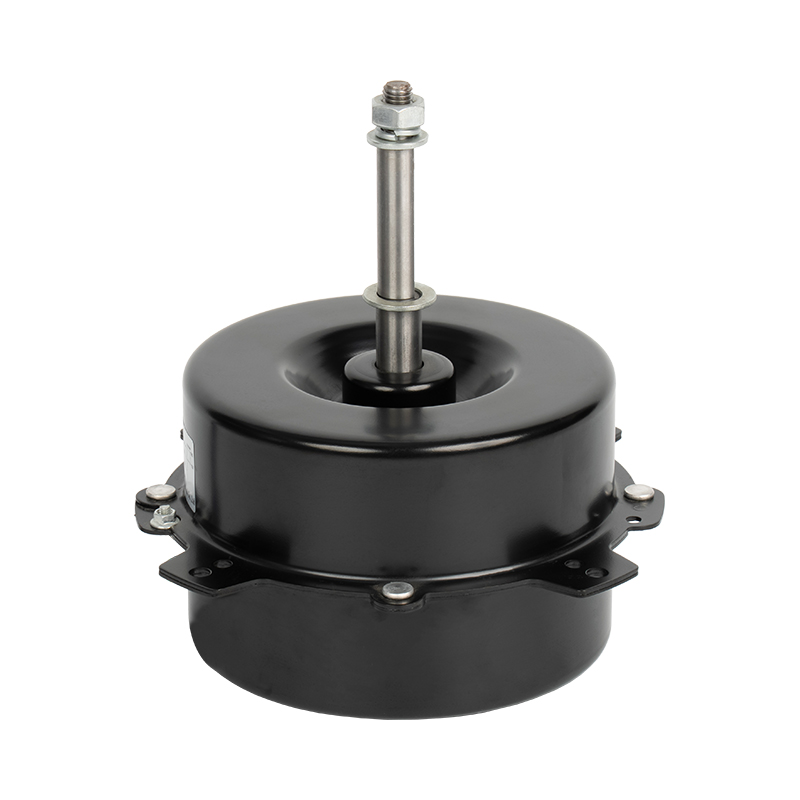
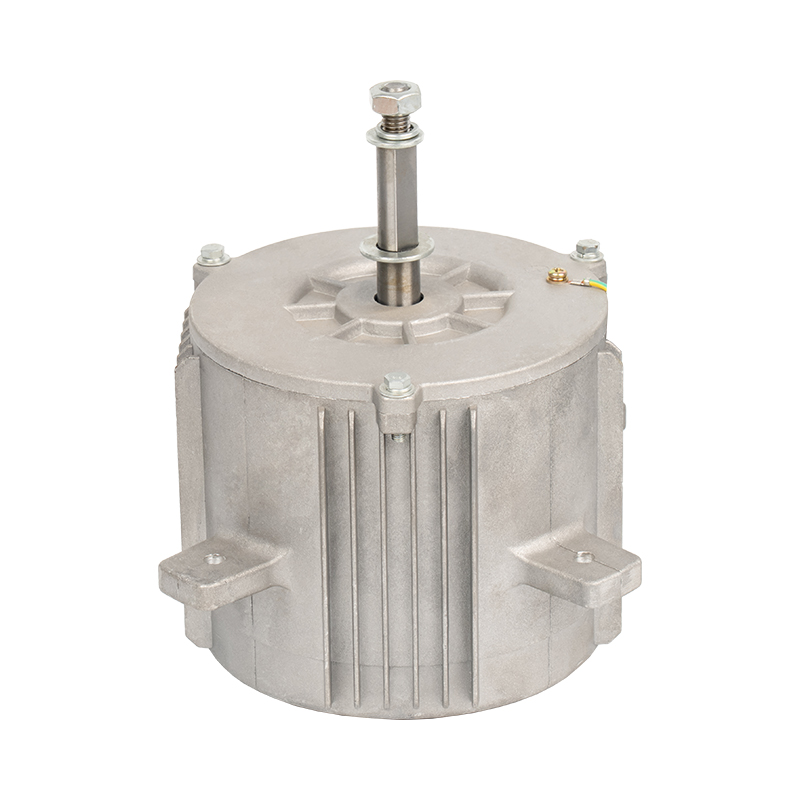 Frequency Conversion Air Cooler Motor YYK-250 for Cooling EquipmentVariable frequency air cooler motor with aluminum shell, intelligent speed and power adjustment, quiet operation, and protections; relevant for flexible airflow control and stable cooling.View Product →
Finally, validate the design with a system-level test, not just a fan bench test. Inlet obstructions, sharp turns, and uneven approach flow can cost 5 to 15 percent of airflow. A fan that looks comfortable on paper can sit on the wrong side of its curve once it is inside the finished product.
FAQ
What is the most important centrifugal fan characteristic?
The pressure-volume curve at the actual operating point. It determines airflow, and it also tells you where the fan sits relative to its best efficiency point.
Why does a centrifugal fan draw more power when airflow increases?
For forward-curved impellers, the power curve rises with airflow. If system resistance falls, the fan moves to higher airflow and can overload the motor. Backward-curved and airfoil fans usually avoid this behaviour.
How do I reduce centrifugal fan noise?
Lower tip speed, increase blade count carefully, improve inlet flow, and avoid structural resonances at blade-pass frequency. Balance the impeller and motor as an assembly.
Can I change the motor without changing the impeller?
Only if speed, shaft power, and mounting interface stay within the original design envelope. Otherwise the operating point shifts and the fan may no longer meet the airflow or noise target.
Centrifugal fan characteristics are a system story, not a single number. Treat airflow, static pressure, power, efficiency, and noise as one connected set, check the worst-case operating point, and match the motor to the impeller rather than to a catalogue headline. For application-specific questions about fan and blower motors, reach out through our contact page.


 Home
 Tel.: +86-13819807486
 Whatsapp:+86 13819807486
 E-mail:


