


 简体中文
 English
 عربى
Content
- 1 Where Centrifugal Fan Noise Actually Comes From
- 2 The Blade-Pass Tone Comes First
- 3 Motor Choices That Set the Noise Floor
- 4 Match the Blower Motor to the Duty Point
- 5 Installation Details Worth 6 to 10 dB
- 6 A Practical Order of Work
- 7 What to Put in a Low-Noise Motor Specification
- 8 Range Hoods, Air Coolers and Similar Duties
- 9 FAQ
A backward-curved blower that reads 46 dB(A) at one metre on the bench can read 54 dB(A) once it is bolted into a sheet-metal housing with a short elbow on the inlet. Nothing inside the motor has changed. That is the practical reality of centrifugal fan noise: what the user hears is produced by the airflow, the rotor and the structure together, and any one of them can dominate.
The practical conclusion is to rank the sources before spending money. Most complaints come down to a blade-pass tone, a balance or bearing problem, or a system effect from ducting and mounting. Fix the dominant source first; acoustic foam applied to the wrong section changes the number by one or two decibels at best.
Where Centrifugal Fan Noise Actually Comes From
Air enters a centrifugal impeller axially, turns through the volute and leaves at the outlet. Each step can generate sound. The tonal part comes from the periodic interaction between the impeller outflow and the cutoff, the tongue of the volute, and appears at the blade-pass frequency with harmonics above it. The broadband part comes from turbulence, separation at sharp edges and distorted inlet flow. Mechanical noise adds bearing rumble, brush hash and imbalance, while the housing and duct amplify or re-radiate whatever reaches them.
Most symptoms point to one group first. The table below maps common complaints to the cheapest useful check.
| Complaint | Likely source | First check | Typical treatment |
|---|---|---|---|
| Pure tone that follows fan speed | Blade-pass tone and harmonics | Cutoff clearance, blade count, struts near the outlet | Open the clearance, vary blade spacing, move brackets |
| Hiss or rushing sound | Broadband turbulence | Sharp inlet edges, blocked inlet, throttled damper | Bell-mouth inlet, straightening grill, run at lower speed |
| Low-frequency rumble | Rotor imbalance at running speed | Balance grade, shaft runout, impeller fit | Balance the rotor and impeller as one assembly |
| Squeal after months of service | Bearing wear or lubrication loss | Bearing type, preload, shaft alignment | Sealed ball bearings, correct fit, shorter service interval |
| Noise only when the cover is fitted | Panel resonance | Panel stiffness and isolator selection | Damping, stiffer panel, softer isolators |
| Noise appears after duct connection | System effect at inlet or outlet | Elbow or reducer close to the fan flange | Straight run of three to five duct diameters, flexible connector |
The Blade-Pass Tone Comes First
Blade-pass frequency is simple to calculate: blade count multiplied by rpm, divided by 60. A seven-blade impeller at 1,300 rpm gives 152 Hz, with harmonics at 304 Hz and 456 Hz. A tone in that pattern is almost always aerodynamic rather than electrical, and it is what people describe as a hum or drone that follows fan speed.
Two details drive the level. Cutoff clearance is the gap between the impeller outside diameter and the volute tongue; below roughly 8% of the impeller diameter the pressure pulse becomes sharp and the tone climbs. Opening the gap toward 10 to 15% usually trades a little static pressure for a clear tonal reduction. The second is any strut, bracket or duct edge sitting near the outlet at blade-pass spacing; moving it a few centimetres can beat any add-on treatment.
Speed is the strongest single lever
Aerodynamic sound power falls roughly with the fifth power of rotational speed, so a 10% speed cut removes about 2 dB and a 20% cut about 5 dB. That is why a larger impeller running slower is usually quieter than a small one pushed to the same duty point. Rotor balance then protects the gain: G6.3 is a reasonable floor for general duty, and G2.5 is common for units sold on quiet operation.
Motor Choices That Set the Noise Floor
The motor is often blamed for noise that starts at the impeller, but it still defines how quiet the assembly can ever be. Bearing type, rotor balance, commutation and mount stiffness all show up at one metre.
Brushed DC motors are simple and inexpensive, yet commutation adds a broadband hash that sits above the aerodynamic noise and is hard to treat afterwards. Brushless designs remove that source and make a low-speed night mode practical. Bearings matter just as much: a sealed ball bearing with correct preload handles a horizontal shaft better than a loose sleeve bearing in a unit that starts cold.
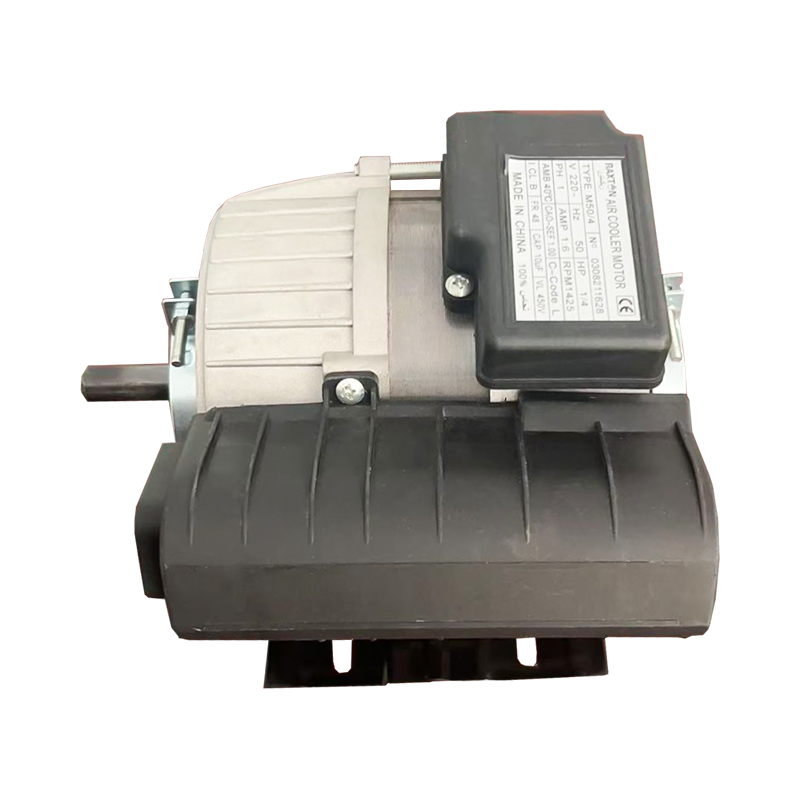
In evaporative coolers and small air coolers, where the blower runs for hours at low speed, a motor built for quiet operation removes one variable from the acoustic test.
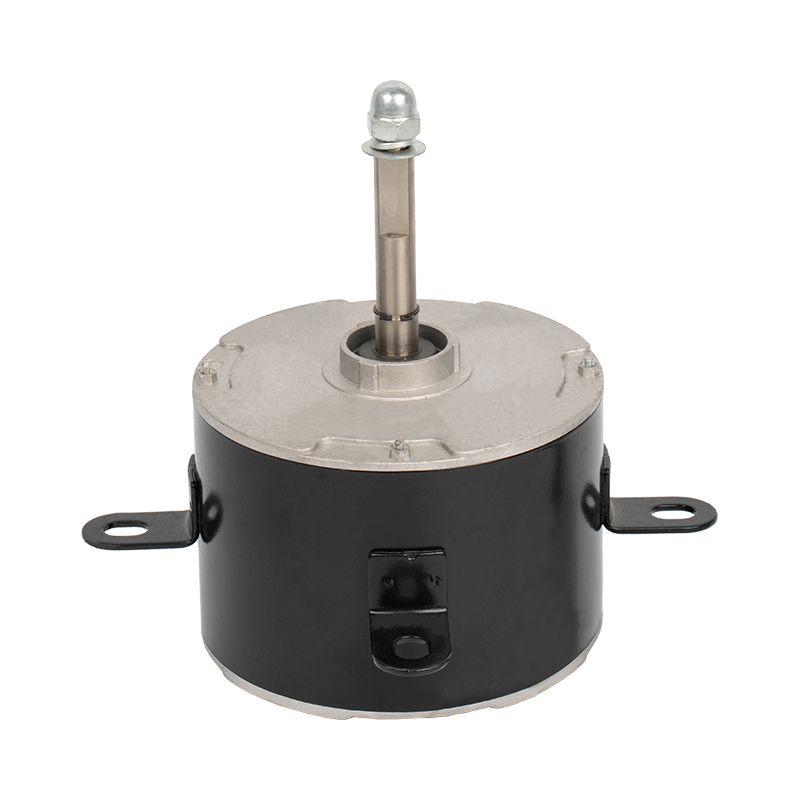
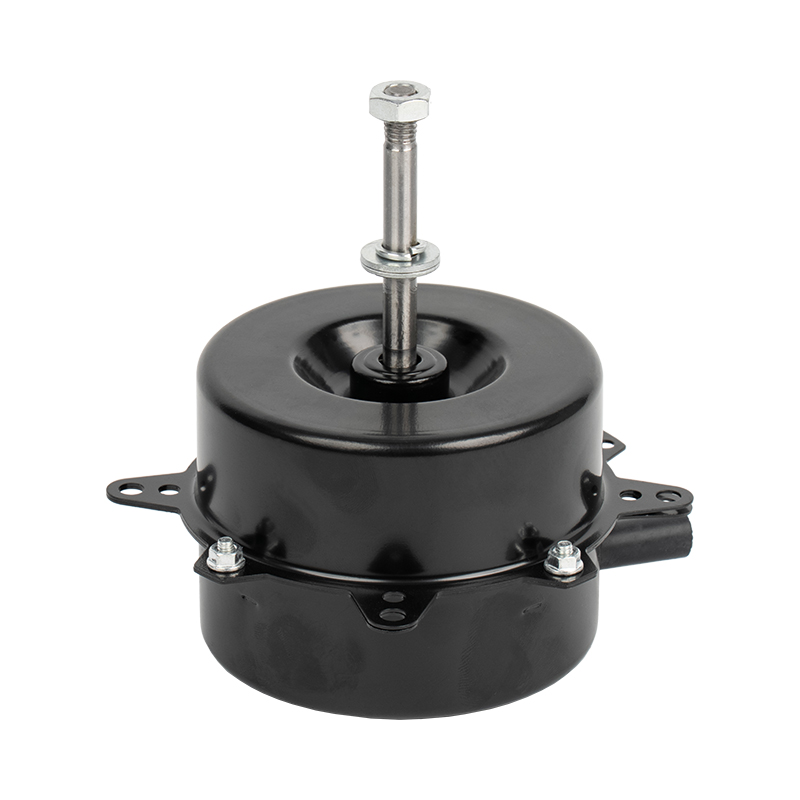 Quiet Running Air Cooler Motor YYK-50For low-speed cooler duty, this motor's sub-35 dB operation and efficient design help keep acoustic tests quieter while avoiding oversizing.View Product →
Match the Blower Motor to the Duty Point
Oversizing is a hidden noise source. A blower chosen 20% above the required airflow either runs faster than necessary or is throttled with a damper, and throttling does not lower impeller tip speed. Selecting close to the best-efficiency point keeps power and sound down together.
Where the assembly is for cooling, drying or ventilation, it is worth reviewing the blower motor range before changing impeller geometry, because the drive often limits what the impeller can be tuned to do.
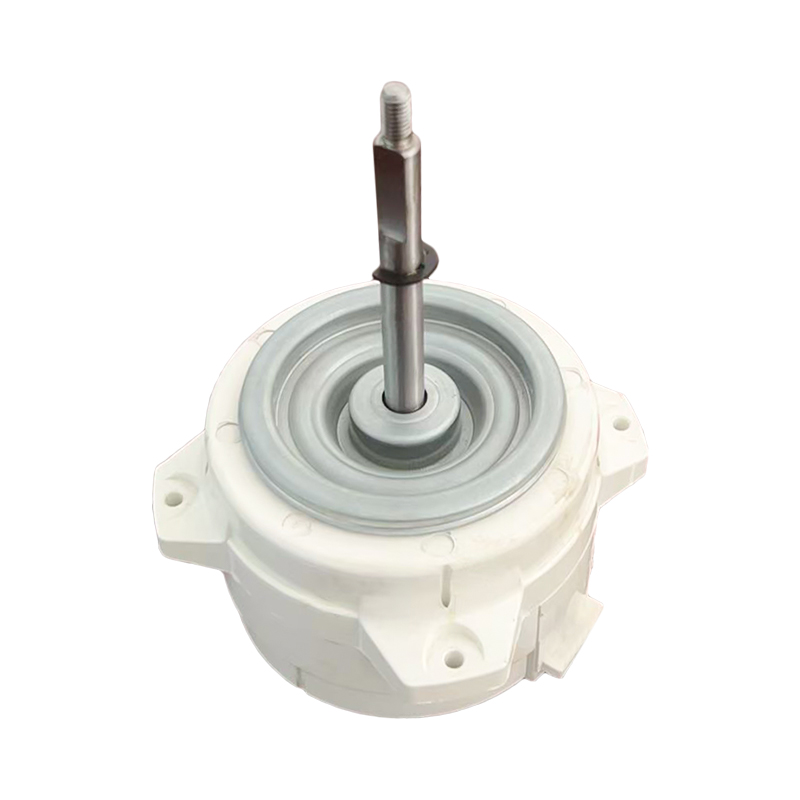
Continuous duty in a drying cabinet also demands stable balance over thousands of hours, so a medium-duty motor rated for cooling and drying service is the sensible baseline.
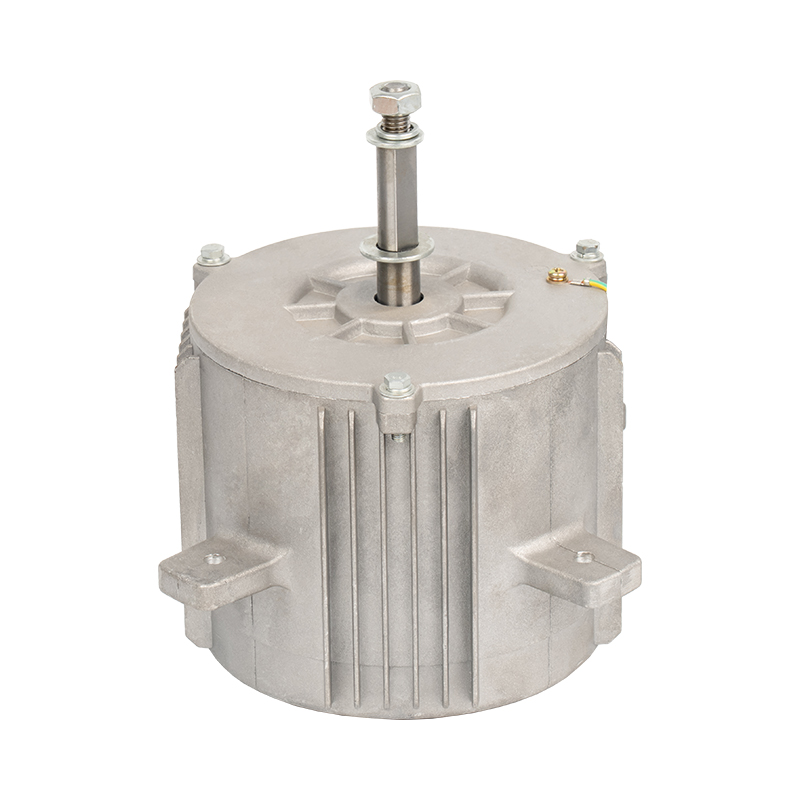
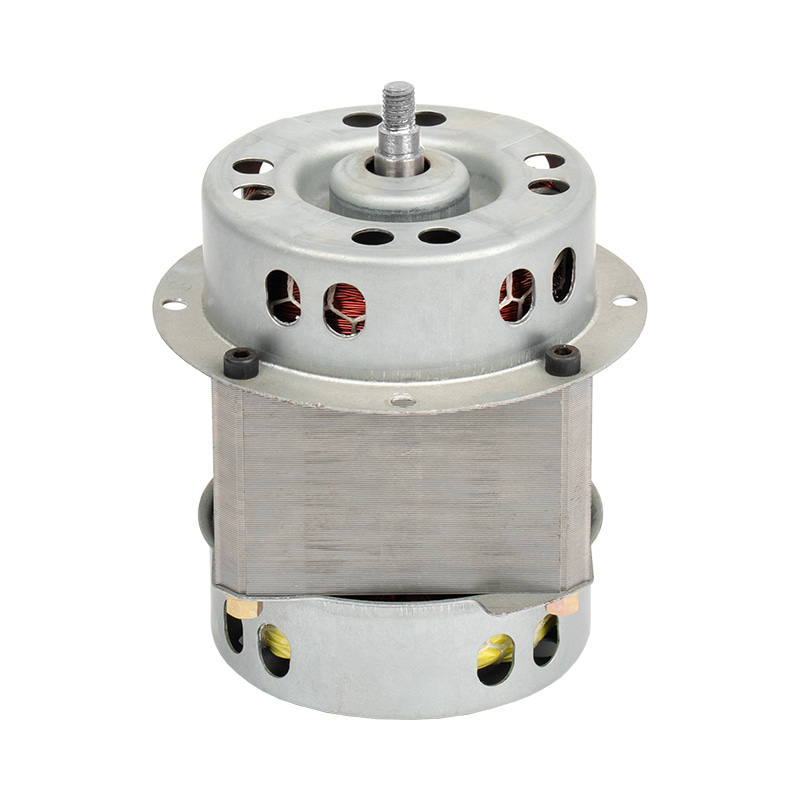 Cooling and Drying Medium Blower Motor YYK-60A medium-duty choice for continuous drying-cabinet duty, with sealed housing, 24-hour operation and low-noise design for stable equipment use.View Product →
Variable-speed drives allow turndown at night, but below about 30% speed the bearing film and motor cooling both suffer. Set a floor in the controller instead of relying on the operator.
Installation Details Worth 6 to 10 dB
System effects are where the largest and cheapest gains usually sit.
- Fit a flexible connector between the fan outlet and rigid duct; a bolted flange carries vibration straight into the wall.
- Keep three to five duct diameters of straight run at the inlet; an elbow close to the inlet distorts flow and raises broadband noise.
- Use a bell-mouth or rounded lip instead of a sharp sheet-metal inlet edge.
- Select isolators for the actual weight; one that is too stiff behaves like a rigid mount.
- Damp large flat panels; a panel that rings near 200 Hz will re-radiate the blade-pass tone.
- Check the pressure drop of any silencer, because 60 Pa of extra loss can push the fan back up its curve and raise speed noise.
A Practical Order of Work
- Measure with a third-octave analyser at the inlet, the outlet and one metre from the housing, not only as an A-weighted total.
- Decide whether the dominant component is tonal or broadband, because that decides between geometry work and absorption.
- Correct the installation first: flexible connectors, isolators and a straight inlet run.
- Reduce speed or trim the impeller before adding passive treatment.
- Balance the impeller and motor rotor as one assembly to G6.3 or better.
- Add silencers, lining or an enclosure last, then re-measure pressure drop and sound together.
It also helps to know what the motor is doing at part load; a plain-language guide to blower motors covers the operating principles in more detail.
What to Put in a Low-Noise Motor Specification
A sample that passes in the workshop can drift three or four decibels in volume production. The specification, not the sample, controls that drift.
| Parameter | Why it matters | Value to request |
|---|---|---|
| Sound pressure level | Comparable only with test conditions stated | A-weighted at one metre, free field, rated speed |
| Speed tolerance | Shifts the blade-pass tone and its harmonics | Within plus or minus 5% at rated load |
| Bearing type | Sets rumble and service life | Sealed ball bearings for horizontal shafts above about 1,000 rpm |
| Balance grade | Controls low-frequency vibration | G6.3 minimum, G2.5 for quiet-duty units |
| Vibration limit | Catches imbalance before it becomes noise | For example 2.8 mm/s RMS at the bearing housing |
| Insulation class | Thermal margin at continuous duty | Class B or F with recorded temperature rise |
| Life test | Shows noise drift over time | 1,000 hours continuous with drift within 2 dB |
Range Hoods, Air Coolers and Similar Duties
Range hoods
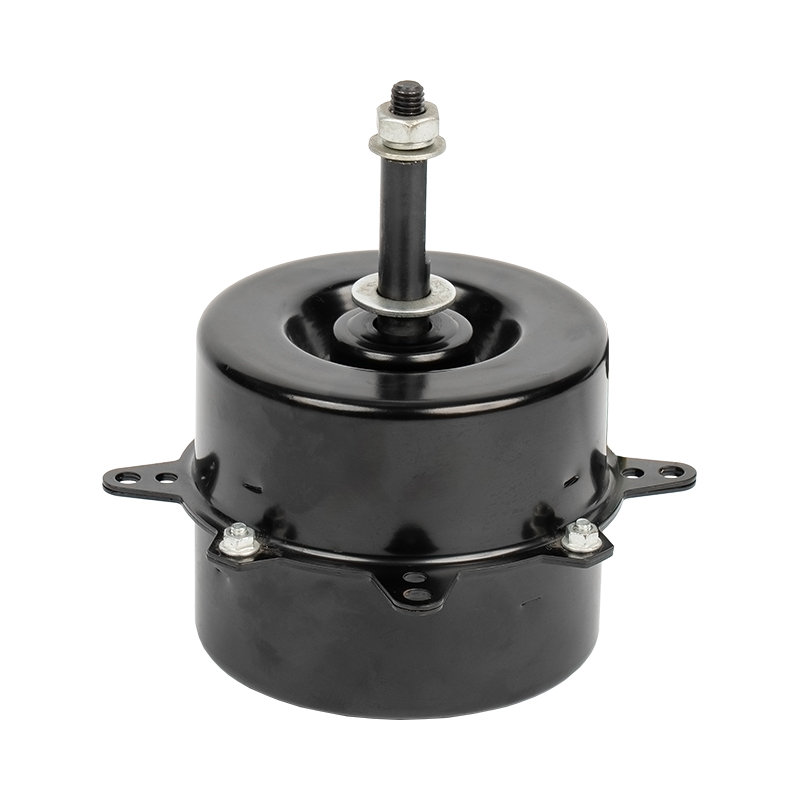
Kitchen hoods use a squirrel-cage centrifugal blower because it produces pressure in a compact body. Complaints usually appear at the top speed setting, where blade-pass tone and cabinet resonance meet. A controlled low-speed setting and a balanced motor address most of it.
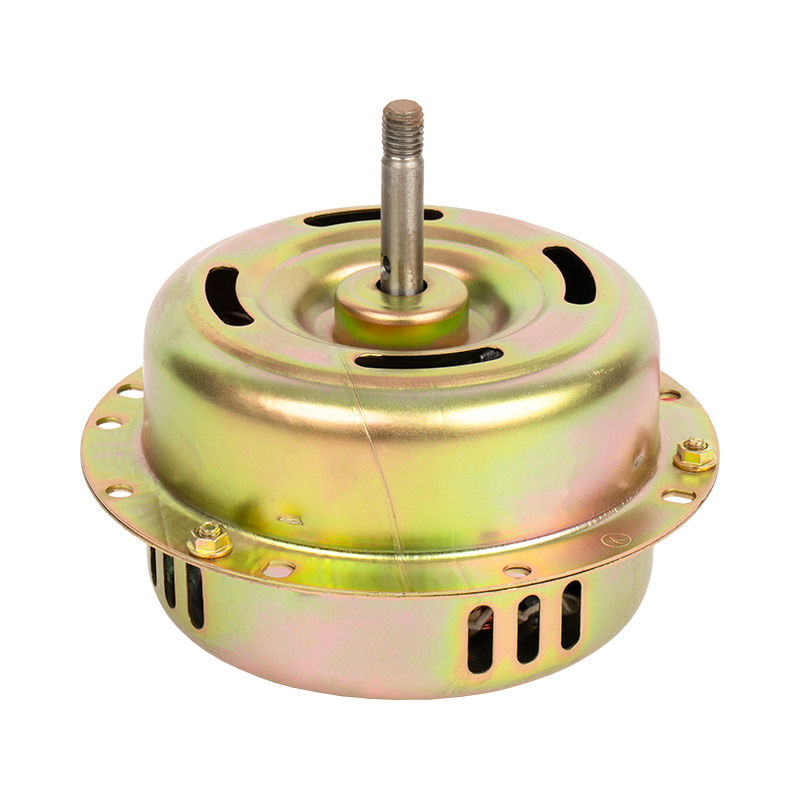 Quiet Operation Range Hood Motor YYK-120For hood noise at high speed, this ultra-quiet range hood motor offers 40 dB operation and DC speed control to reduce top-setting resonance.View Product →
Evaporative coolers
An air cooler pairs the blower with a water pump, and the pump can add its own hum at night. Isolate the water loop from the motor bracket and mount the pump on rubber grommets.
FAQ
Why is my centrifugal fan louder after installation?
Usually inlet distortion, a rigid connection into the building structure, or a panel resonance. The fan itself is unchanged; the system around it changed both the load and the radiation path.
Will a bigger impeller make it quieter?
For the same airflow and pressure, a larger impeller turning slower is normally quieter. Check bearing life, starting torque and available space before changing the design.
Can acoustic lining remove a blade-pass tone?
Lining absorbs broadband noise and reduces duct breakout. A strong tone needs a source fix through cutoff clearance, blade spacing or speed before a silencer is worth its pressure loss.
How much reduction is realistic?
Three to six decibels from installation corrections is common, another two to five from speed or impeller changes, and more with a correctly sized silencer. Larger gains usually need several changes together.
A quiet centrifugal fan is a system result, not a single part number. Balance, cutoff clearance, mounting and motor quality each take a share of the decibels, and the cheapest path is always to rank the sources before changing any hardware.


 Home
 Tel.: +86-13819807486
 Whatsapp:+86 13819807486
 E-mail:


