


 简体中文
简体中文
 English
  عربى
عربى Content
- 1 The Core Principle: Current Plus Magnetism Equals Force
- 2 Inside the Motor: The Parts That Do the Work
- 3 How an AC Induction Motor Works
- 4 How a DC Motor Works: Brushed and Brushless
- 5 Torque, Speed and Efficiency: Reading the Numbers
- 6 Where the Energy Goes: Losses, Heat and Lifespan
- 7 Choosing the Right Motor Family
- 8 Frequently Asked Questions
A washing-machine drum accelerates to 1,400 rpm while carrying several kilograms of wet laundry, a range-hood fan runs for years against greasy airflow, and a blower in a commercial cooler spins through entire summers without a pause. All three are electric motors converting electrical energy into rotation, and all three obey the same physical rule. The short answer to how a motor works: electric current flowing through a conductor inside a magnetic field creates a force on that conductor, and the motor is arranged so that this force continuously pushes a rotating part around a shaft. Conductors are wound into coils, the coils sit in slots of an iron core, the magnetic field comes from permanent magnets or additional windings, and a timing mechanism - mechanical or electronic - keeps the push always pointing in the direction of rotation. Once that chain is clear, every motor type becomes a variation on one theme, and comparing datasheets or suppliers becomes far easier.
The Core Principle: Current Plus Magnetism Equals Force
In its simplest form, the force on a current-carrying wire in a magnetic field is F = B × I × L, where B is the magnetic flux density, I the current and L the length of conductor inside the field. A single wire produces a force of fractions of a newton - useless on its own. Motors scale this up in three ways: they wind hundreds of turns into a coil, they concentrate the field with laminated steel cores, and they place these conductors in the narrow air gap between two magnetic structures, where the field is strongest.
The two structures have standard names. The stator is stationary and generates the main magnetic field; the rotor sits inside it on bearings and carries the conductors that experience the force. Because the force acts sideways on the rotor conductors, it produces torque - a twisting effort around the shaft - and the rotor turns.
One detail decides whether you get a working motor or a useless twitch. If nothing switched, the rotor would simply rotate until its magnetic poles lined up with the stator and stop there. Every working motor therefore contains a timing mechanism that keeps changing which winding is energised, so the magnetic push always leads slightly ahead of the rotor. In brushed DC motors this is done mechanically by a commutator; in induction and brushless motors it is done by alternating current itself or by electronic control.
Inside the Motor: The Parts That Do the Work
Stator: the stationary field maker
The stator carries the windings or permanent magnets that establish the main field. Its iron core is built from thin, insulated silicon-steel laminations - typically 0.35 to 0.5 mm thick - stacked together. Solid steel would circulate eddy currents and waste energy as heat; laminations cut that loss dramatically.
Rotor: the part that turns
The rotor is the rotating assembly. In the most common household design, the squirrel-cage induction rotor, it is a cylinder of laminated steel with aluminium or copper bars shorted together at both ends. Permanent-magnet and brushed designs carry magnets or wire windings instead. The rotor delivers torque through a steel shaft.
Air gap, shaft and bearings
Between stator and rotor sits the air gap, often just 0.3 to 1 mm in small appliance motors. Force transfers across this gap and weakens rapidly with distance, so a larger gap means lower torque and efficiency, while a smaller gap demands tighter machining tolerances and leaves less margin for bearing wear. Ball or sleeve bearings hold the shaft centred, and their quality largely determines noise, vibration and service life.
| Part | What it does | What buyers should check |
|---|---|---|
| Stator | Creates the main magnetic field | Lamination quality, winding resistance, insulation class |
| Rotor | Carries the conductors or magnets that feel the force and delivers torque | Bar casting quality, dynamic balancing |
| Air gap | Transmits magnetic force between stator and rotor | Gap consistency; any evidence of rubbing |
| Shaft and bearings | Keep the rotor aligned and transfer rotation | Bearing grade, noise level in dB(A), grease type |
| Commutator or controller | Times the current so torque keeps one direction | Brush life for brushed types; driver reliability for brushless |
How an AC Induction Motor Works
Feed alternating current into the stator windings and the magnetic field does not simply pulse - it rotates around the air gap. With three-phase supply, three windings spaced 120 degrees apart create a rotating field by themselves. Most homes only have single-phase power, so appliance motors add an auxiliary winding fed through a capacitor; the phase shift between the two windings creates the rotating field needed to start.
The rotor receives no supplied current at all. As the stator field sweeps past the rotor bars, it induces currents in them, and those currents generate their own field, which drags the rotor around after the stator field. This is why the design is called an induction motor, and why the rotor can never quite catch up: it runs slightly slower than the field, a difference called slip, typically 2 to 5 percent at full load. A four-pole motor on a 50 Hz supply has a synchronous speed of 1,500 rpm and runs at roughly 1,425 to 1,470 rpm under load.
Two practical consequences follow. First, speed is set mainly by supply frequency and pole count, roughly rpm = 120 × f / poles, which is why a motor built for 50 Hz runs about 20 percent faster on 60 Hz. Second, single-phase motors depend on the start capacitor, and a failed capacitor is the most common reason a motor hums but will not turn. This family dominates household air conditioners, fans, pumps and compressors, where simplicity and cost matter more than precise speed control.
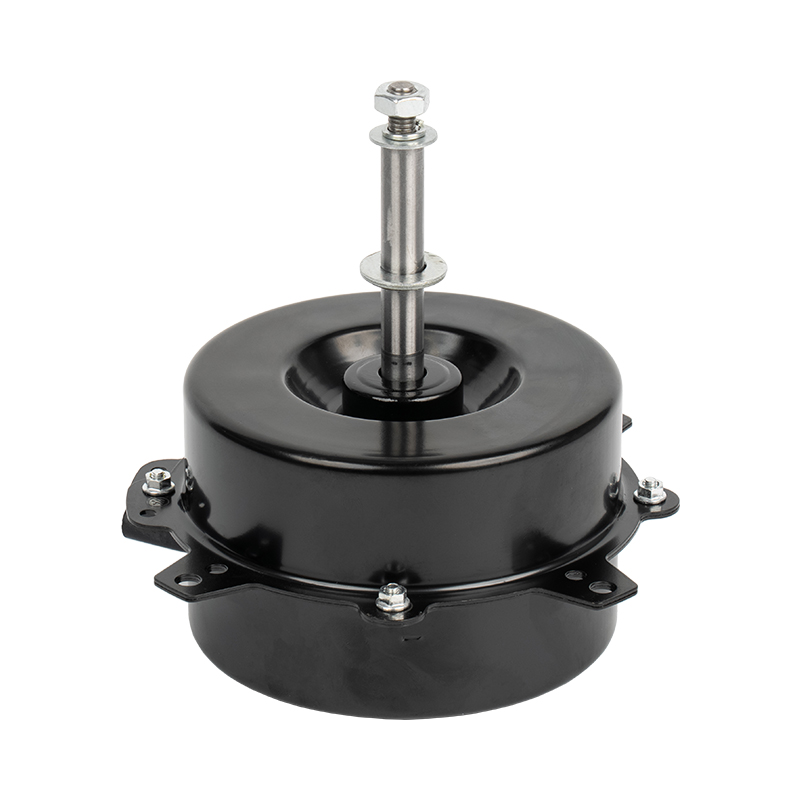
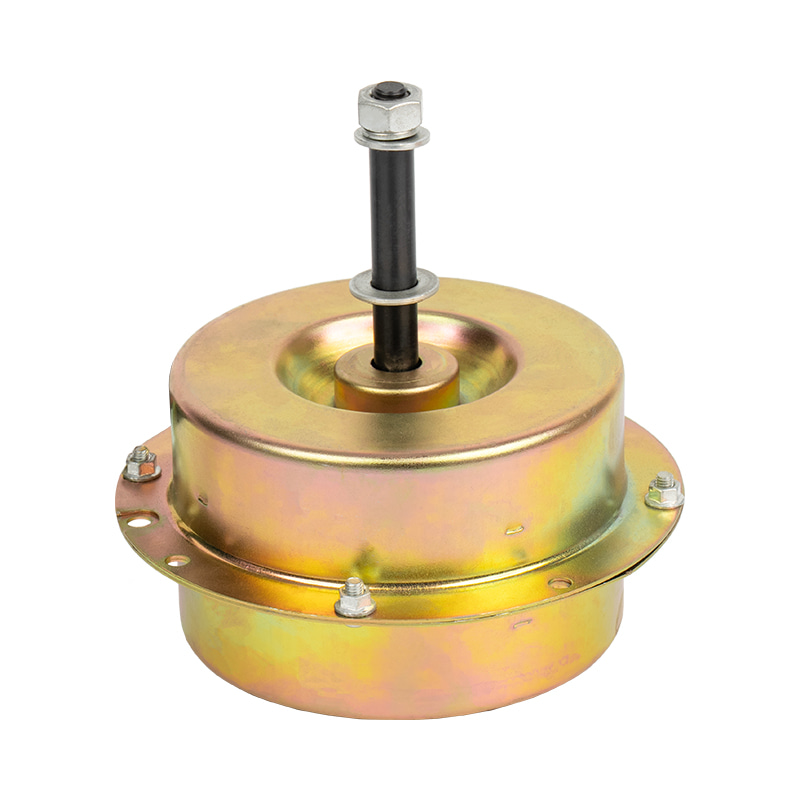
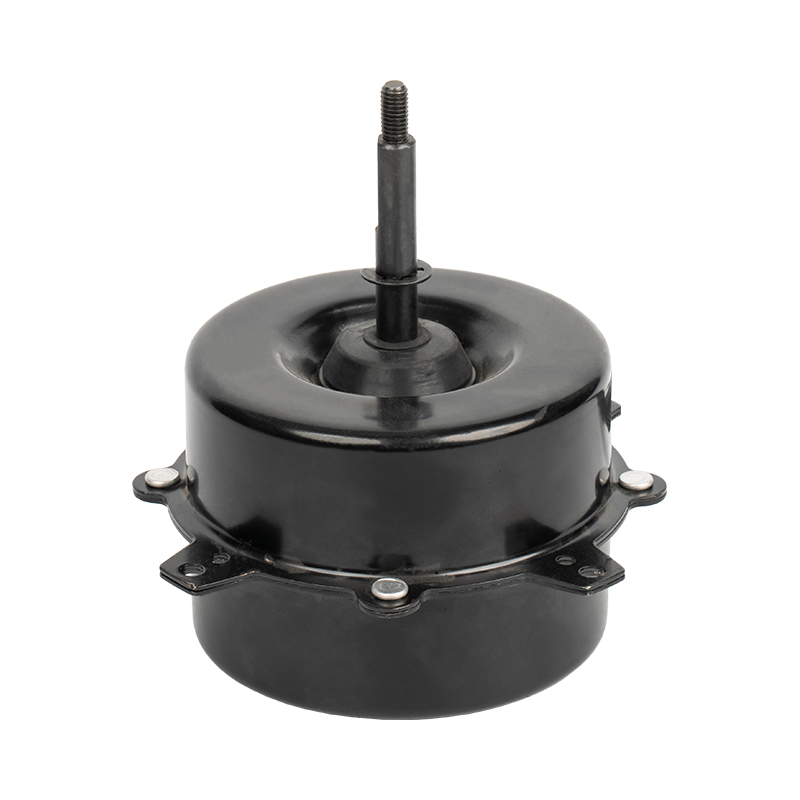
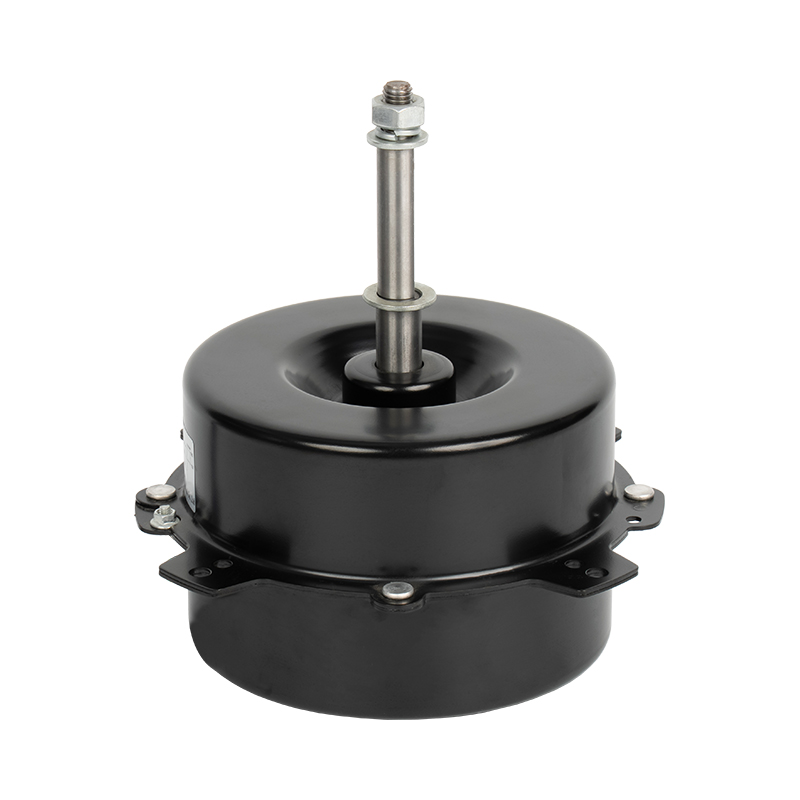
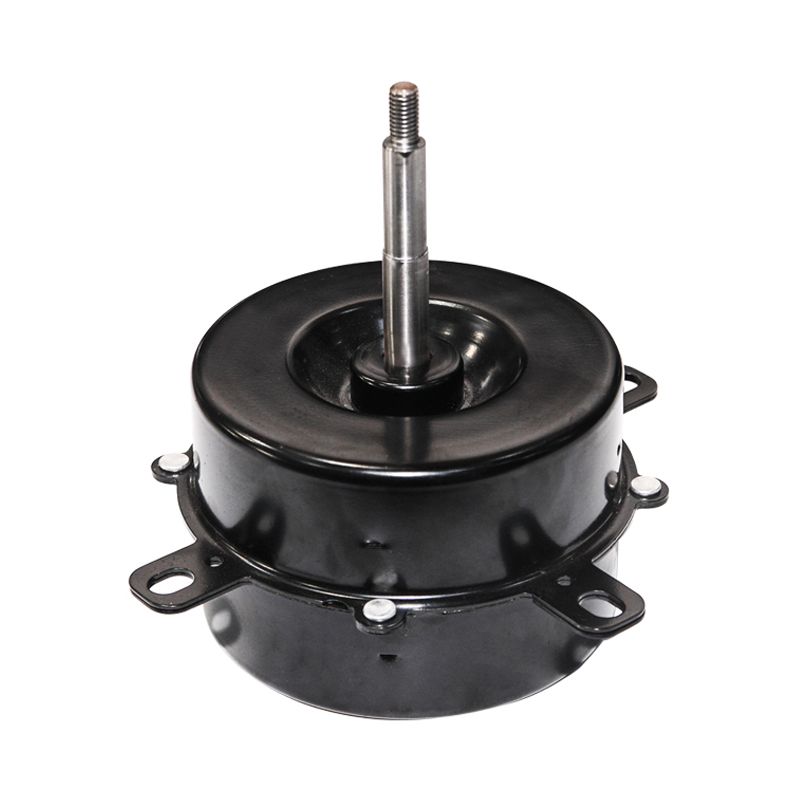
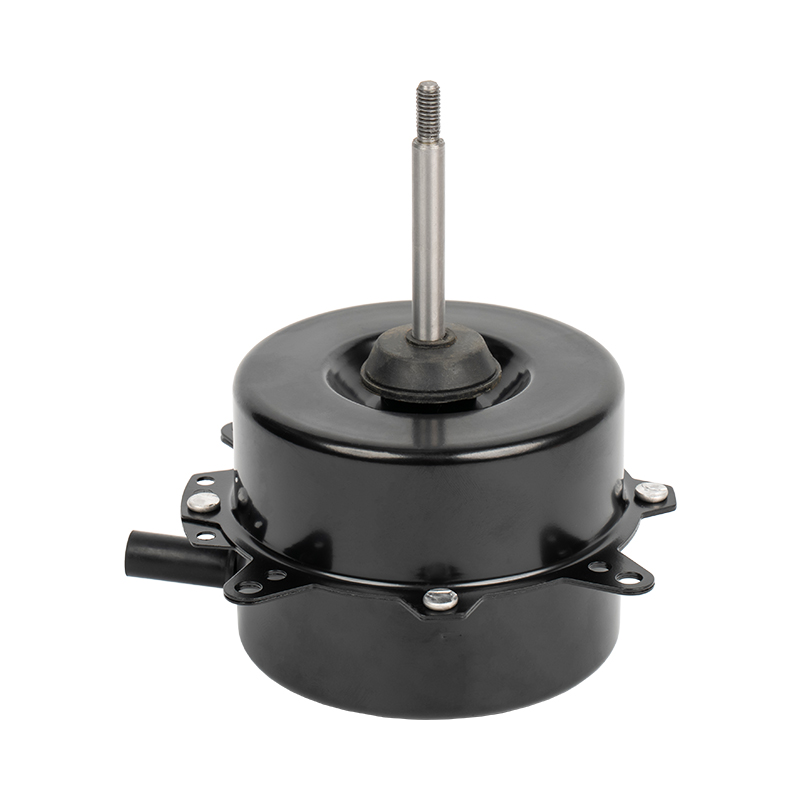 Energy-Saving 1P-1.5P Air Conditioner Motor YYK-60A single-phase AC motor for 1-1.5P wall-mounted and small cabinet air conditioners, sized with 127x127mm mounting holes. Following the discussion of single-phase motors and start capacitors, it suits household AC, fan and compressor applications where cost and simplicity matter.View Product →
How a DC Motor Works: Brushed and Brushless
A brushed DC motor takes the opposite approach: permanent magnets on the stator provide a constant field, and current reaches the rotating armature through carbon brushes pressing on a segmented commutator. Every half-turn the commutator reverses the current in the armature coils, so the torque never changes direction. The construction is simple and cheap, and speed responds almost linearly to voltage, which suits small fans, toys and low-cost tools. The weakness is mechanical: brushes wear, spark and generate electrical noise, which caps service life.
A spinning armature also generates its own voltage, opposing the supply. This back EMF rises linearly with speed and acts as a natural governor: when load slows the rotor, back EMF falls, more current flows and torque is restored automatically.
The modern answer to brush wear is the brushless DC (BLDC) motor: the magnets move to the rotor, the windings stay on the stator, and an electronic controller replaces the commutator, switching current between phase windings based on Hall sensors or the back EMF itself. With no sliding contacts, efficiency and lifespan rise, noise falls, and precise speed control comes almost free. Direct-drive washing machines are the clearest example - the motor is mounted straight on the drum shaft, and an inverter-controlled BLDC motor delivers high torque at low speed for heavy, unbalanced loads. If you are moving from brushed to brushless designs, the driving and protection details differ enough to deserve careful attention, as we explain in our notes on what to watch for when using a DC brushless motor.
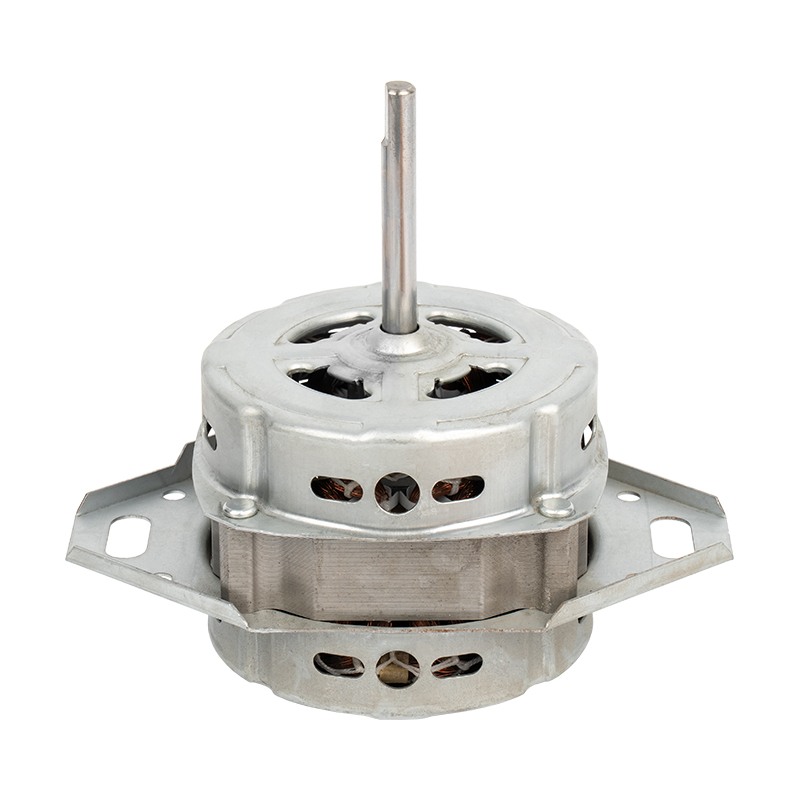 Direct Drive Inverter Washing Machine MotorA brushless inverter motor that mounts directly on the drum shaft, eliminating the belt. As the article explains, BLDC direct-drive designs deliver high torque at low speed for heavy, unbalanced laundry loads while running quieter and lasting longer.View Product →
Torque, Speed and Efficiency: Reading the Numbers
Torque is the twisting force the shaft delivers, measured in newton-metres; starting torque matters for compressors and blender loads, while rated torque defines what a motor can deliver continuously without overheating. Mechanical power equals torque times rotational speed, so the same wattage can be packaged as high speed with low torque or the reverse - matching this relationship to your load is the core of motor selection. Note that the wattage on a nameplate is electrical input; the mechanical output is smaller, and the difference is efficiency.
Efficiency varies more between motor families than many buyers expect.
Values above are indicative midpoints for small appliance-class motors; actual figures depend on size and design quality. The gap between families is real money and real heat over thousands of operating hours, so when comparing quotations, check these items on the datasheet:
- Rated voltage and frequency - confirm they match the destination market, such as 220-240 V/50 Hz or 110-120 V/60 Hz.
- Rated power and duty cycle - an S1 continuous rating differs fundamentally from short-time duty, and an undersized rating causes overheating.
- Speed and torque at rated load, not just the no-load figure.
- Insulation class - Class B windings tolerate 130°C, Class F 155°C.
- Noise level in dB(A), which is critical for fans, range hoods and indoor units.
- Bearing type - ball bearings for longer life and heavier loads, sleeve bearings for low cost and quiet horizontal mounting.
Where airflow must vary across ventilation, cooling or drying equipment, a variable-frequency design lets one motor cover a range of operating points instead of a single fixed speed.
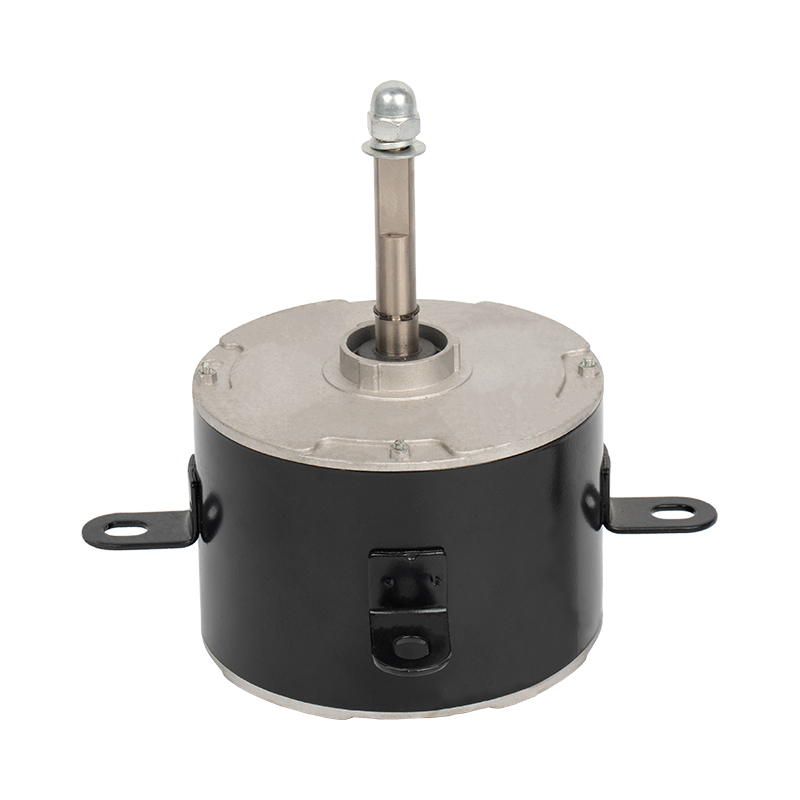
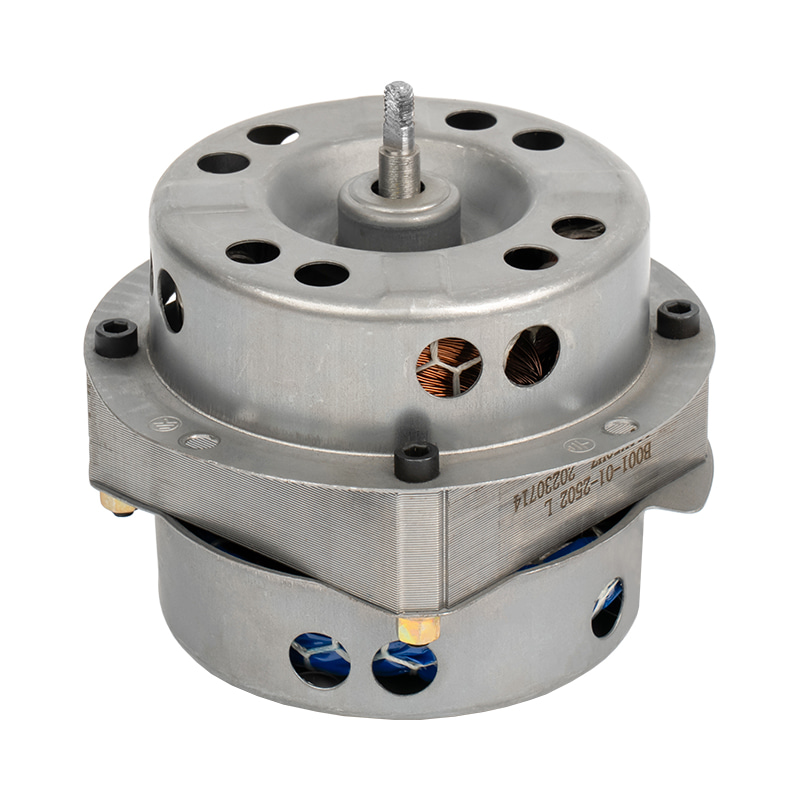 Variable Frequency Speed Small Blower Motor YYK-60A compact variable-frequency blower motor offering roughly 30%-100% stepless speed adjustment for ventilation and cooling equipment. It fits the article's point that variable-frequency designs let one motor cover a range of operating points instead of a single fixed speed.View Product →
Where the Energy Goes: Losses, Heat and Lifespan
Every motor wastes some input power, and knowing where it goes explains most quality differences between suppliers. Copper losses come from resistance in the windings and scale with the square of current, so thin wire or too few turns hurt immediately. Iron losses arise in the steel core from alternating magnetisation and eddy currents, which is why lamination thickness and steel grade matter. Friction and windage losses come from the bearings and air drag. In a representative small appliance motor at rated load, roughly 75 percent of input energy actually reaches the shaft.
- Mechanical output - 75%
- Copper winding loss - 15%
- Iron core loss - 6%
- Friction and windage - 4%
Heat is the enemy of lifespan. Winding insulation is graded by temperature tolerance - Class B withstands 130°C and Class F 155°C - and as a rule of thumb, every 10°C of continuous over-temperature roughly halves insulation life. Bearings are the other limiting component: contaminated or under-specified grease shows up as noise first and seizure later. When auditing a potential supplier, ask for temperature-rise test reports and confirm which bearing grade is actually fitted rather than merely listed.
Choosing the Right Motor Family
Once the physics is clear, selection becomes a matching exercise between load, available supply and lifetime expectations. The three families most relevant to appliance and light-equipment buyers compare as follows.
| Family | Strengths | Watch-outs | Typical uses |
|---|---|---|---|
| AC induction, single-phase | Simple, low cost, no electronics, quiet | Fixed speed without a drive; start capacitor is a wear item | Fans, pumps, compressors, washing machines |
| AC induction, three-phase | High efficiency, robust, easy speed control with a drive | Needs a three-phase supply | Industrial fans, blowers, pumps |
| Brushed DC | Cheap speed control via voltage, high starting torque | Brush wear and sparking limit life | Small appliances, toys, tools |
| BLDC / inverter | High efficiency, long life, precise variable speed | Requires a driver; higher upfront cost | Direct-drive washers, air purifiers, variable-speed blowers |
Frequently Asked Questions
Why does a motor spin continuously instead of stopping at one position?
Because the direction of the magnetic push keeps changing. A commutator or electronic controller re-energises windings in sequence, and in an induction motor the stator field itself rotates, so the rotor is always chasing an advancing field rather than aligning with a static one.
What exactly is back EMF?
It is the voltage a spinning motor generates in its own windings, opposing the supply. It rises with speed, limits current naturally, and in brushless systems it doubles as a free speed sensor for sensorless control.
Why does a single-phase motor hum but refuse to start?
The main winding alone cannot create a rotating field, so the rotor stays put while the field pulses. The usual causes are:
- a failed start or run capacitor
- a seized or worn bearing
- an open circuit in the auxiliary winding
Testing the capacitor first resolves most cases.
Can I run a 50 Hz motor on a 60 Hz supply?
Only with care. Speed rises about 20 percent with frequency, torque changes slightly, and cooling conditions shift as well. Unless the motor is explicitly dual-frequency rated, or a variable-frequency drive is used, confirm the change with the manufacturer before shipping product to a different market.
How long should an appliance motor last?
Well-built induction motors routinely serve ten years or more in household duty, and brushless designs often outlast the appliance itself. Brushed motors are the exception, with brush life typically between 1,000 and 5,000 operating hours.
A motor, in the end, is one idea expressed many ways: current, magnetic field and a timing method that keeps the force rotating. Understanding which family suits your load, and which numbers on the datasheet actually predict performance, prevents most sourcing mistakes. As a manufacturer of motors and pumps for air conditioners, air coolers, washing machines, blowers and other household equipment, our engineering team regularly helps buyers match torque, noise and efficiency requirements to specific applications - if you are specifying a motor for a new product, contact us to discuss the details.
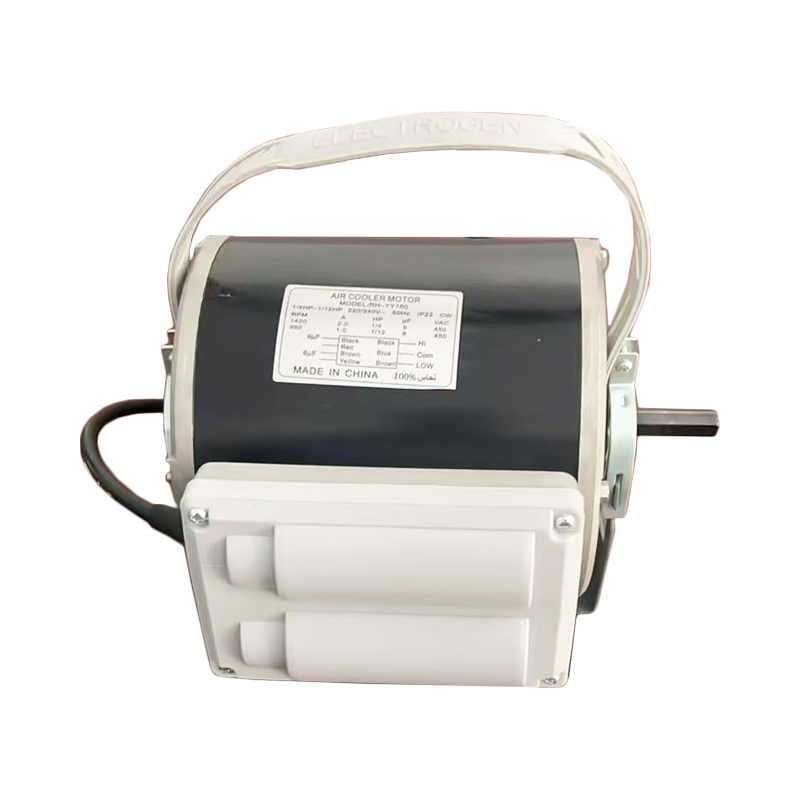


 Home
Home  Tel.: +86-13819807486
 Whatsapp:+86 13819807486
 E-mail:


