


 简体中文
简体中文
 English
  عربى
عربى Content
- 1 What Is a Centrifugal Fan? The 90-Degree Rule
- 2 How Air Moves Through a Centrifugal Fan: Inlet, Impeller, Volute
- 3 Three Impeller Blade Types and When They Matter
- 4 Centrifugal vs. Axial Fans: The Performance Trade-off
- 5 How the Motor Determines Real Fan Performance
- 6 Where Centrifugal Fans Show Up in Everyday Equipment
- 7 Before You Buy: Five Specification Details That Change Everything
- 8 Frequently Asked Questions
Look inside a small air cooler or a kitchen range hood and you will see the same pattern: air enters along the motor shaft, turns 90 degrees, and leaves the housing at a right angle. That right-angle discharge is the signature of a centrifugal fan. Unlike an axial fan, which moves air straight through the blade plane, a centrifugal impeller throws air radially outward, and a volute casing converts the high-velocity air stream into static pressure.
The practical takeaway is straightforward: if your application has ducts, filters, or dampers, a centrifugal fan will hold its airflow much better than an axial fan of the same size. And because the impeller only develops pressure at the right speed, the motor is not an afterthought—it decides whether the fan curve on paper becomes real airflow in your machine.
What Is a Centrifugal Fan? The 90-Degree Rule
The fastest way to recognize a centrifugal fan is to look at the inlet and outlet. Air enters the impeller eye axially, parallel to the motor shaft, and is thrown outward in all directions. The spiral or scroll housing collects that radial flow and guides it through one outlet, which is why centrifugal fans are also called radial fans or blowers.
That 90-degree turn is not a packaging choice. It is the mechanism that builds static pressure. Air leaves the impeller with kinetic energy; the housing slows it down and converts that energy into pressure. An axial fan has no such conversion stage, so it produces high volume at low pressure but loses delivery quickly when resistance appears.
The compact footprint and offset inlet make centrifugal fans easy to package inside HVAC equipment, air coolers, and exhaust systems. If you are planning a new motor configuration, our motor product line shows the main frame sizes available for this fan family.
How Air Moves Through a Centrifugal Fan: Inlet, Impeller, Volute
A centrifugal fan is a three-stage energy machine: guide air in, spin it fast, then slow it down to create pressure. Each stage has a dedicated component.
Inlet and incoming air
The inlet, or impeller eye, must match the impeller diameter. A restricted inlet starves the blade tips and pulls a partial vacuum that reduces both flow and efficiency. Keep the inlet duct straight for at least one impeller diameter before the bell mouth.
The rotating impeller
The impeller is where centrifugal force does the real work. As it rotates, blades push air outward, adding radial and tangential velocity. Tip speed, not motor speed alone, determines how much energy the air receives.
The volute casing
The volute is a spiral channel with gradually increasing cross-section. Air expands and decelerates as it travels through the volute, and that deceleration converts velocity into static pressure. The cut-off clearance near the outlet affects noise and efficiency, so housing geometry deserves as much attention as blade shape. When airflow is low but motor current is normal, inspect the inlet path and the volute cut-off before changing the motor.
Three Impeller Blade Types and When They Matter
Blade curvature defines the fan curve, efficiency, and noise. Choosing the wrong blade type is one of the most common OEM specification errors.
| Parameter | Forward-curved | Backward-curved | Radial |
|---|---|---|---|
| Blade direction | Curved toward rotation | Curved away from rotation | Straight, mostly radial |
| Typical static pressure | Medium | High | Medium to high |
| Efficiency range | 60–75% | 75–88% | 60–72% |
| Tip speed needed | Lower | Higher | Medium |
| Noise level | Lower | Medium-high | High |
| Common applications | Fan coil units, small appliances | Industrial fans, air purifiers | Dust handling, material transfer |
For compact consumer appliances, forward-curved blades provide adequate pressure at lower tip speed and lower noise. Industrial air systems use backward-curved blades for higher efficiency and pressure. If the air carries dust or sticky particles, radial blades are the safest option because they shed material more easily.
Centrifugal vs. Axial Fans: The Performance Trade-off
Axial and centrifugal fans are rarely competing for the same job. Axial fans move large volume against almost no resistance; centrifugal fans move moderate volume against significant resistance. Filters, coils, long ducts, and exhaust stacks all create resistance that an axial fan cannot overcome efficiently.
The chart shows typical relative curves. The centrifugal fan starts with higher shut-off pressure and keeps a flatter delivery as airflow increases; the axial fan loses pressure quickly. For pressure plus quiet operation, size the impeller conservatively and let the motor operate near its rated point. Oversizing the motor does not fix a mismatched impeller; it only adds cost and noise.
How the Motor Determines Real Fan Performance
Once the impeller and housing are fixed, the motor controls what the customer feels: starting torque, speed stability, noise, power draw, and lifetime. The most direct motor parameter is speed, set by the pole count and the AC line frequency.
On a 50 Hz grid, a two-pole induction motor has a synchronous speed of about 3000 rpm, a four-pole about 1500 rpm, and a six-pole about 1000 rpm. Actual speeds are slightly lower due to slip. On 60 Hz, multiply these values by 1.2.
This matters because the fan laws are unforgiving. Airflow changes directly with speed, static pressure changes with the square, and shaft power changes with the cube. If a fan runs 10% slower, airflow drops roughly 10%, pressure drops about 20%, and absorbed power falls about 30%. The cleanest way to vary output is a frequency converter paired with an inverter-rated motor, such as a variable-frequency small blower motor. The same housing can then serve multiple flow setpoints without mechanical dampers. For practical failure cases, this blower motor technical overview covers common pitfalls worth reviewing before you prototype.
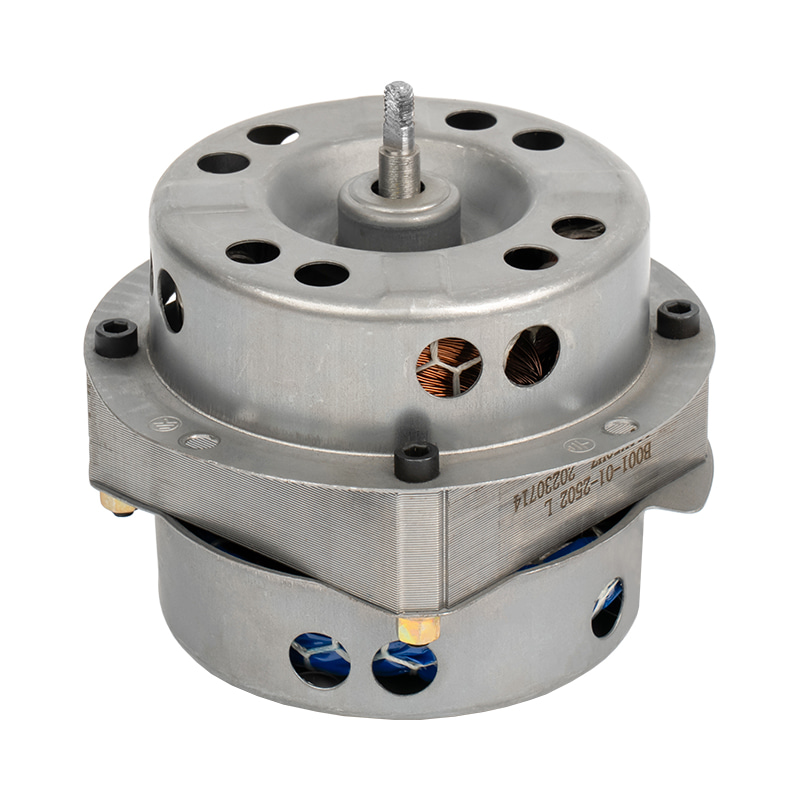 Variable Frequency speed small Blower motor YYK-60 Supplier, Wholesale CompanyCixi Xinhao Motor Co., Ltd. is China Variable Frequency speed small Blower motor YYK-60 supplier and wholesale Variable Frequency speed s...View Product →
Where Centrifugal Fans Show Up in Everyday Equipment
Centrifugal fans rarely sit alone on a shelf. They are buried inside equipment that needs pressure to push air through something. The chart below shows the typical weight of applications across the industries we work with.
- HVAC & ventilation (36%)
- Drying & cooling (21%)
- Purification & dust (18%)
- Process & handling (15%)
- Other (10%)
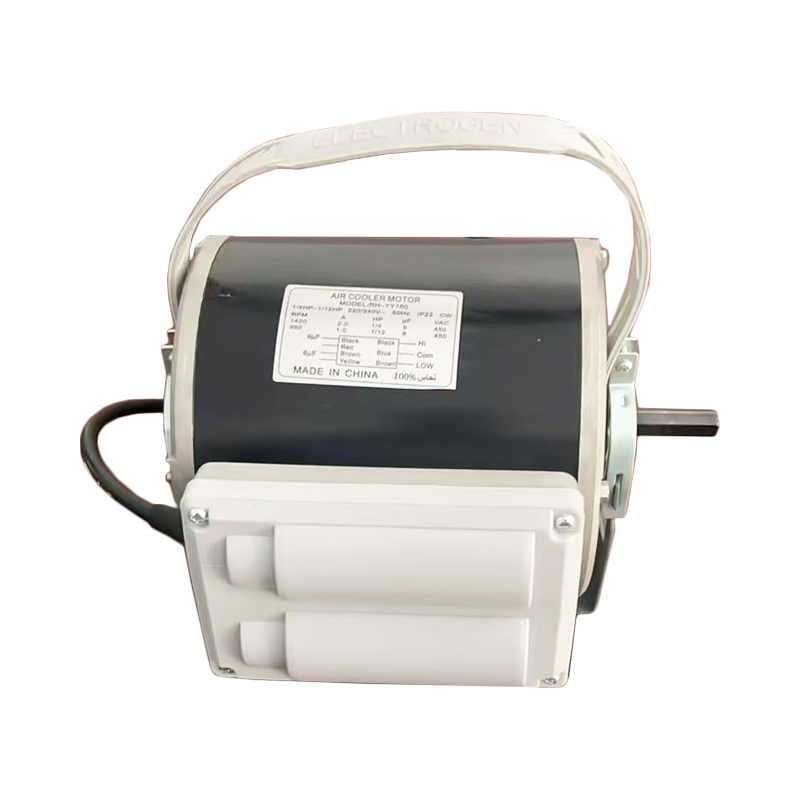
In HVAC equipment, the fan must overcome coil and duct resistance. In evaporative air coolers, the impeller pulls air through wet pads, so the motor runs in humid airflow and needs moisture-resistant insulation and longer bearing life—which is why an evaporative cooling air cooler motor is designed around that duty cycle.
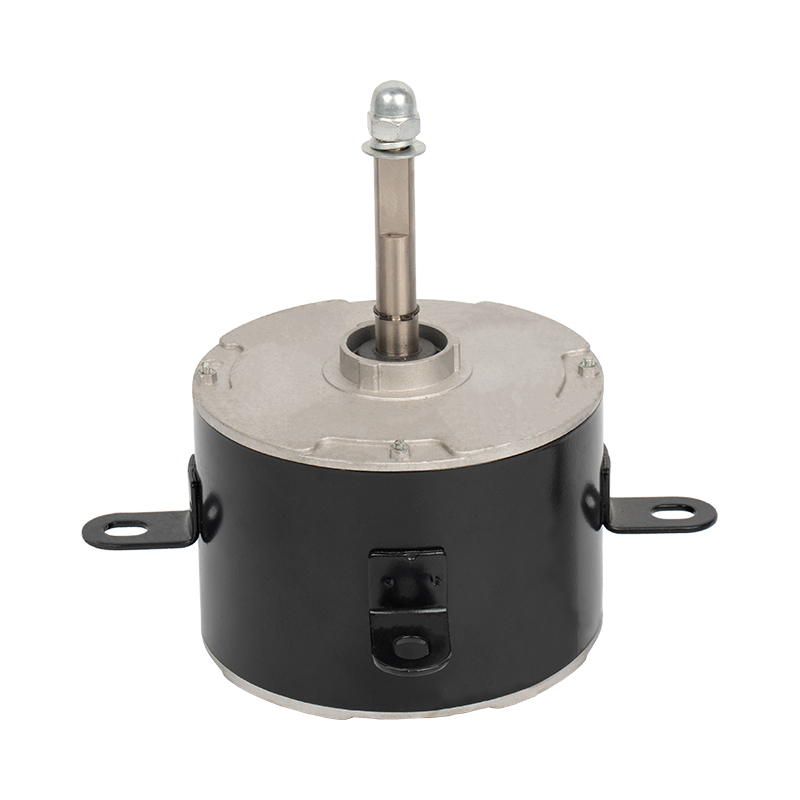 Evaporative Cooling Air Cooler Motor YYK-200 Supplier, Wholesale CompanyCixi Xinhao Motor Co., Ltd. is China Evaporative Cooling Air Cooler Motor YYK-200 supplier and wholesale Evaporative Cooling Air Cooler M...View Product →
Industrial air purifiers accumulate resistance as filters load. Direct-drive motors with oversized aluminum wheels hold the operating point better over time; a large-aluminum-fan industrial air purifier motor is a representative example of that robustness.
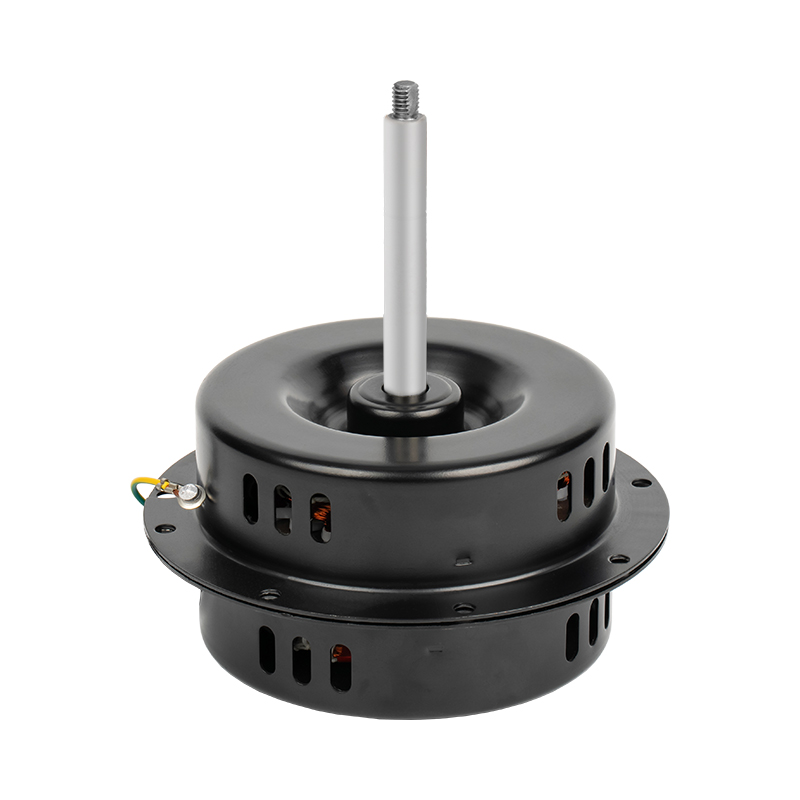 Efficient Large Aluminum fan Industrial Air Purifier Motor YYK-120 Supplier, WhoCixi Xinhao Motor Co., Ltd. is China Efficient Large Aluminum fan Industrial Air Purifier Motor YYK-120 supplier and wholesale Efficient ...View Product →
Before You Buy: Five Specification Details That Change Everything
Reading a datasheet is easier than matching it to your real operating point. These five details cause the most frequent mismatches in OEM procurement conversations.
- Static pressure vs. total pressure. Static pressure is what overcomes duct resistance; total pressure includes velocity pressure and is always higher. Mixing the two leads to undersized fans.
- Motor speed tolerance. A few percent speed change becomes a squared change in pressure. If the application is tight, specify a tighter speed class.
- Noise is a spectrum. Same dBA does not mean same sound. Forward-curved blades hum at low frequency; radial blades create broadband noise.
- Duty cycle and insulation. Continuous multi-hour operation demands Class F or H insulation and rated ball bearings. A 10-minute cycle motor may overheat in continuous service.
- Batch consistency. Check the supplier's balance grade. Impeller imbalance shortens motor bearing life faster than almost any other factor.
None of these are glamorous, but each decides whether the fan still performs after six months in the field.
Frequently Asked Questions
Does a centrifugal fan need a scroll housing?
Practically yes. Without the volute, air expands abruptly and the fan behaves like a high-speed propeller with poor pressure output.
Why is my airflow lower than the datasheet?
Check inlet restriction, motor speed, and system resistance first. Also verify the impeller is not mounted backwards—it happens more often than suppliers like to admit.
Are centrifugal fans more efficient than axial fans?
At low-pressure free-air duty, axial wins on efficiency and cost. At realistic system resistance, a good backward-curved centrifugal fan frequently comes out ahead.
Can one motor serve fixed speed and variable speed?
Standard AC motors can overheat at low speed if not designed for inverter duty. If you plan speed control, specify an inverter-rated motor early in the project.
How do I choose between forward-curved and backward-curved?
Use forward-curved for compact, quiet appliances. Use backward-curved for high pressure, high efficiency, and continuous industrial duty. Use radial for dirty or sticky air.



 Home
Home  Tel.: +86-13819807486
 Whatsapp:+86 13819807486
 E-mail:


