


 简体中文
简体中文
 English
  عربى
عربى Content
- 1 Define the Duty Point: Airflow and Static Pressure
- 2 Choose an Impeller Style That Matches the Airstream
- 3 Match the Operating Point to Motor Speed and Duty Cycle
- 4 Size the Motor for Temperature, Voltage, and Environment
- 5 Verify Noise, Vibration, and Mounting Constraints
- 6 Ask Application-Specific Questions Before Sending an RFQ
- 7 Verify the Sample Before You Approve Production
- 8 Frequently Asked Questions
- 8.1 What is the most common mistake in centrifugal blower selection?
- 8.2 Can a forward-curved and a backward-curved impeller share the same motor?
- 8.3 Why does a new blower draw more current than the nameplate?
- 8.4 Should every blower use a VFD-compatible motor?
- 8.5 What is a safe margin for static pressure?
A frequent request our engineers receive from equipment manufacturers starts with the same symptom: a newly installed centrifugal blower delivers less airflow than the old unit, even though both carry the same motor nameplate. The real difference is usually the impeller type or the speed at the actual operating point, not the motor. Selection therefore must begin with the system duty point, not with motor power.
The short version is simple. Define the required airflow and static pressure, choose an impeller style suited to the airstream, verify the motor duty rating, and confirm the result with a performance test before approving samples. The sections below explain each step with the numbers and tolerances that engineering and purchasing teams need.
Define the Duty Point: Airflow and Static Pressure
Every centrifugal blower produces a unique relationship between airflow and static pressure. The same unit can move 5,000 m³/h against a low resistance of 400 Pa, or only 2,000 m³/h against a high-resistance system of 1,800 Pa. If the requirement is undefined, the blower will run wherever the system places it, which is often far from the intended design point.
Fix two numbers first: required airflow in m³/h or CFM, and total static pressure in Pa or mmH₂O. Static pressure is commonly underestimated. Duct length, bends, filters, dampers, heat exchangers, and discharge louvers all add resistance, and a 30% error in the pressure estimate can place the operating point far enough away to change motor current by tens of percent.
| Application | Airflow range | Static pressure range |
|---|---|---|
| Evaporative air cooler | 3,000–8,000 m³/h | 200–400 Pa |
| Drying cabinet / oven recirculation | 1,500–5,000 m³/h | 400–900 Pa |
| Electronic enclosure cooling | 300–1,200 m³/h | 150–500 Pa |
| Dust collection / material conveying | 2,000–6,000 m³/h | 1,200–2,500 Pa |
Choose an Impeller Style That Matches the Airstream
Impeller blade geometry is the largest single factor separating a compact low-cost blower from an efficient industrial unit. Forward-curved impellers use many short blades and produce high flow at low pressure, but their efficiency is limited. Backward-inclined blades sustain medium-to-high pressure more efficiently and tolerate slightly dirtier air. Radial blades deliver high pressure at high noise levels and handle dust well.
| Impeller type | Efficiency | Pressure | Noise | Particle tolerance |
|---|---|---|---|---|
| Forward-curved | 55–68% | Low–medium | Low | Poor |
| Backward-curved | 70–80% | Medium–high | Medium | Moderate |
| Backward-curved airfoil | 80–88% | High | Low | Very poor |
| Radial blade | 60–70% | Very high | High | Good |
Selecting on a single parameter creates trouble. A forward-curved blower that fits a low-pressure evaporative cooler may struggle to push the same airflow through a ducted discharge; a backward-inclined blower can do the same job with lower input power, but needs a longer housing. Match the blade style to the air condition first, because motor and housing changes cannot recover a poorly matched impeller.
Match the Operating Point to Motor Speed and Duty Cycle
The fan laws are simple to state and easy to misuse. Airflow changes linearly with speed, static pressure with the square of speed, and input power with the cube of speed. A 10% speed reduction therefore cuts input power by about 27% while flow drops by only 10%. For systems with an estimated resistance, a multi-speed or VFD-capable motor lets you trim the blower to the real operating point without changing the impeller.
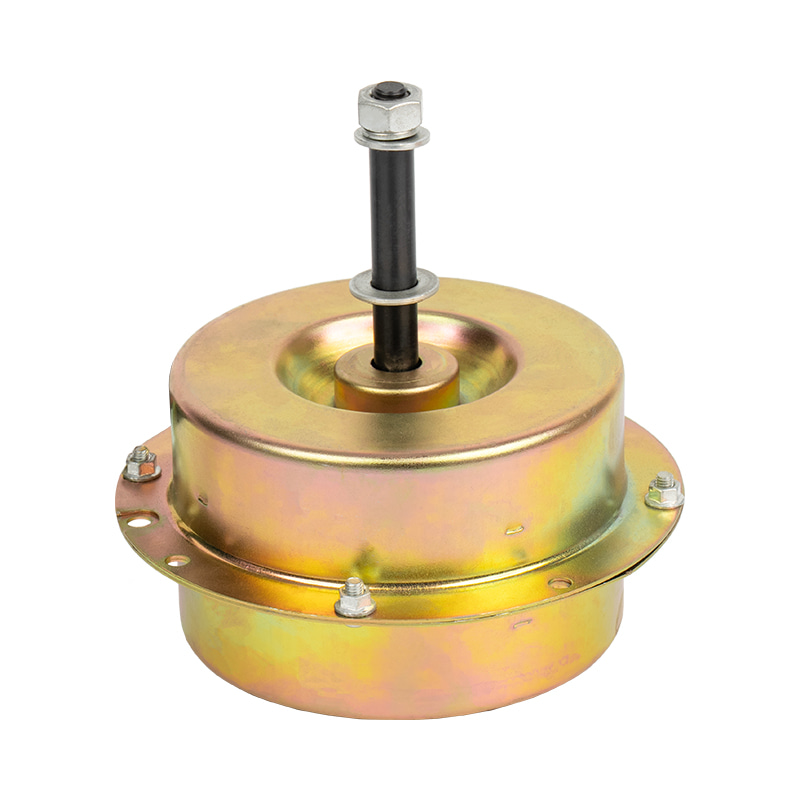
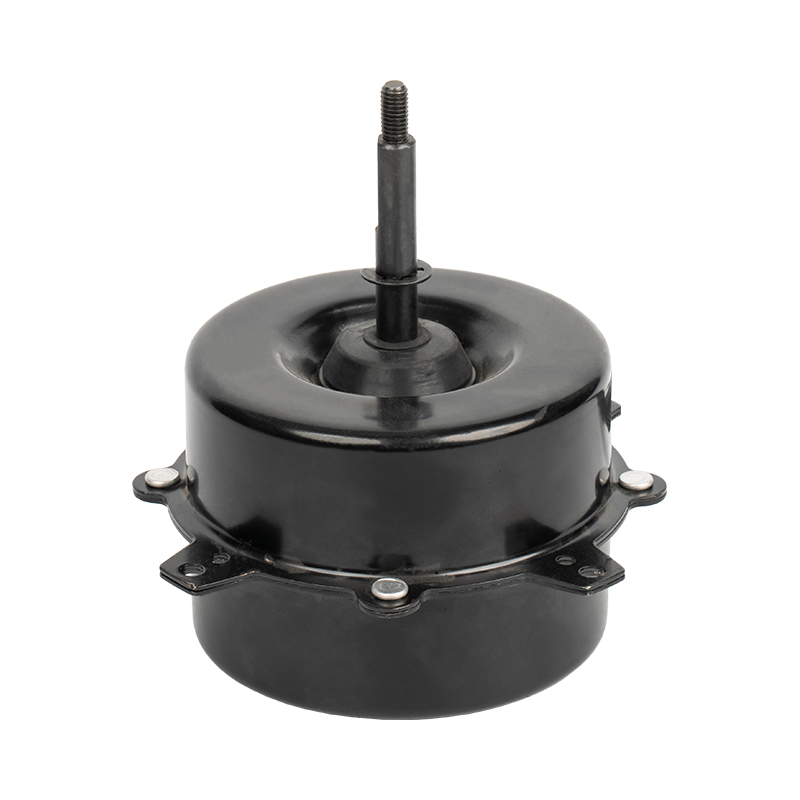
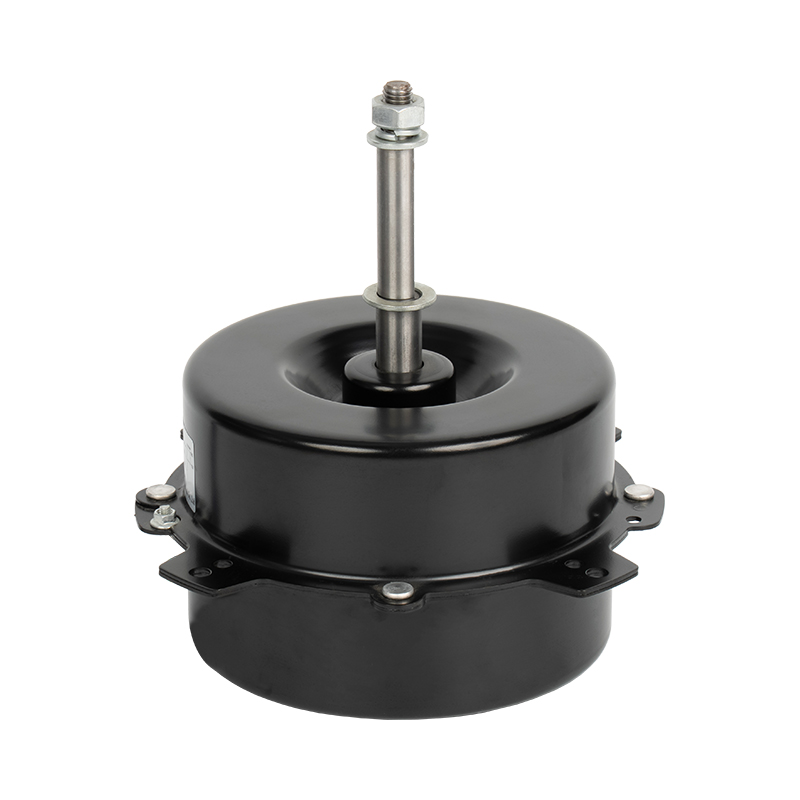
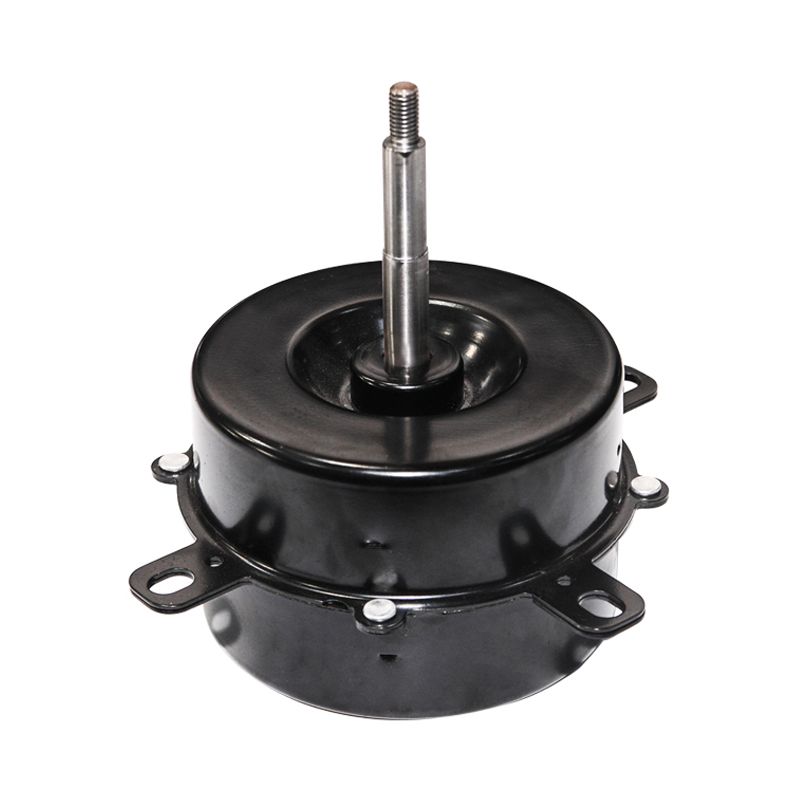
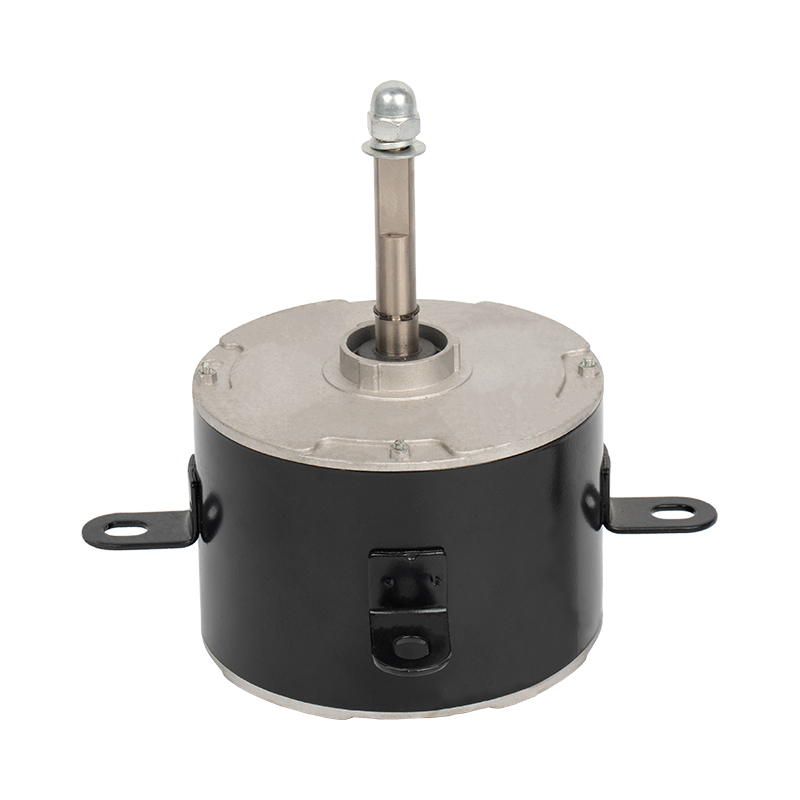
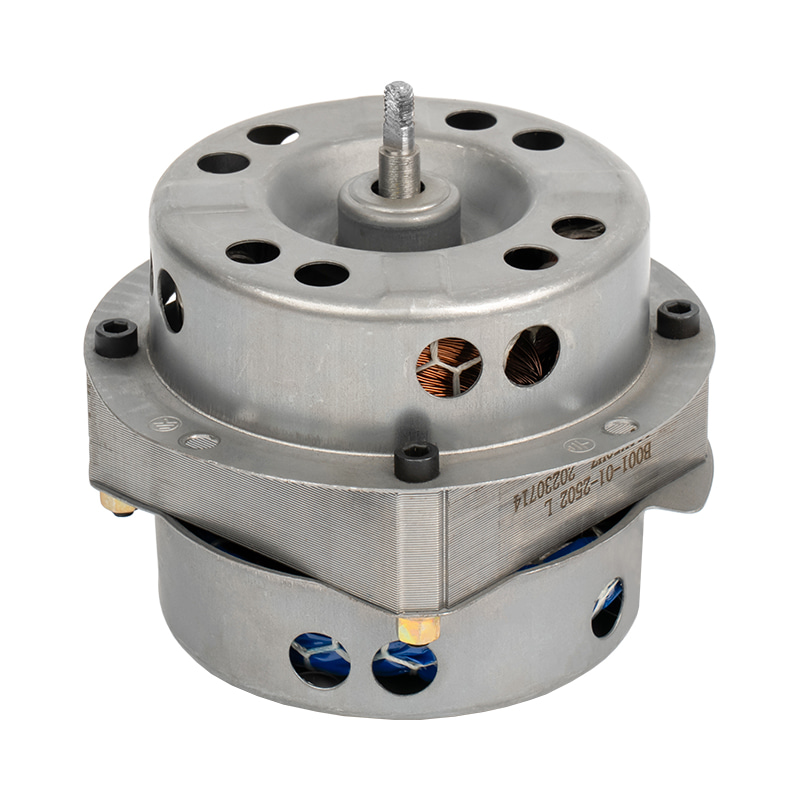 Variable Frequency Speed Small Blower Motor YYK-60This compact blower motor offers stepless speed control from 30% to 100%, letting you adjust airflow to match system resistance and reduce power use. Its quiet operation suits sensitive environments.View Product →
Duty cycle is equally important. A motor rated for intermittent duty must cool down between runs. In a blower that operates for eight hours or more per day, the motor must hold its nameplate load at the expected ambient temperature without exceeding the insulation limit. Continuous cooling and drying applications fail most often when the impeller is oversized for the motor, not when the motor itself is defective.
Size the Motor for Temperature, Voltage, and Environment
Motor frame, insulation class, capacitor value, and bearing type must be matched to the blower load curve. A motor that accelerates a lightweight forward-curved impeller easily may overheat with a heavier radial impeller, because the higher load pushes the current above the nameplate value.
- Bearing wear — 38%
- Thermal overload — 27%
- Voltage mismatch — 15%
- Contamination — 12%
- Other causes — 8%
Voltage tolerance matters just as much. Motors specified for 220–240 V AC must start and run reliably when line voltage drops by 10%, as often happens in factories with long cable runs. An undersized capacitor will reveal itself at the test bench, not at the order desk.
For continuous cooling and drying duty, a blower motor designed around that thermal profile eliminates most commissioning surprises; the YYK60 medium-duty blower motor in our catalog is one such unit.
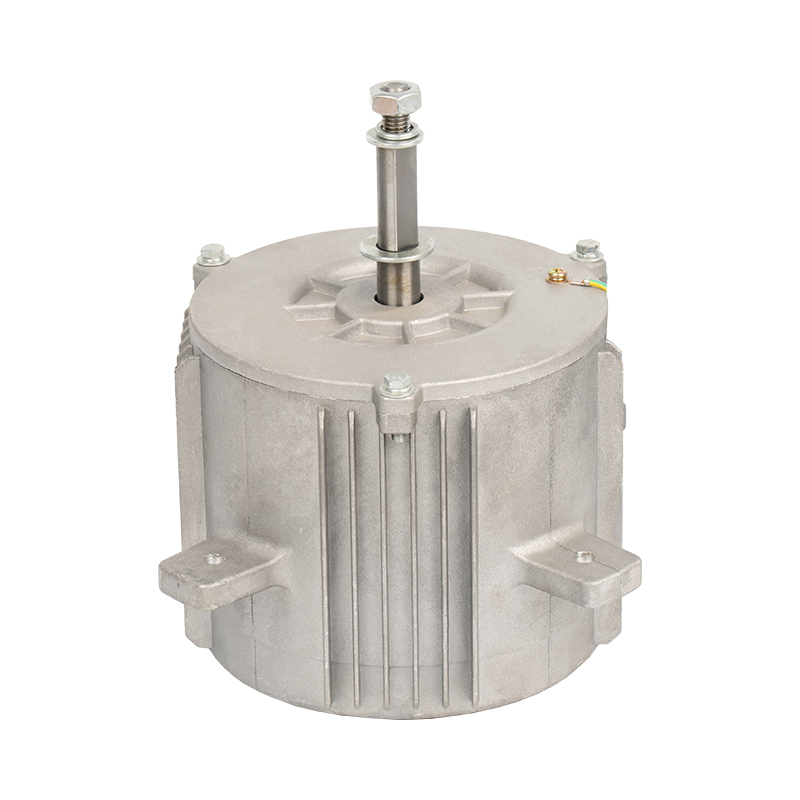
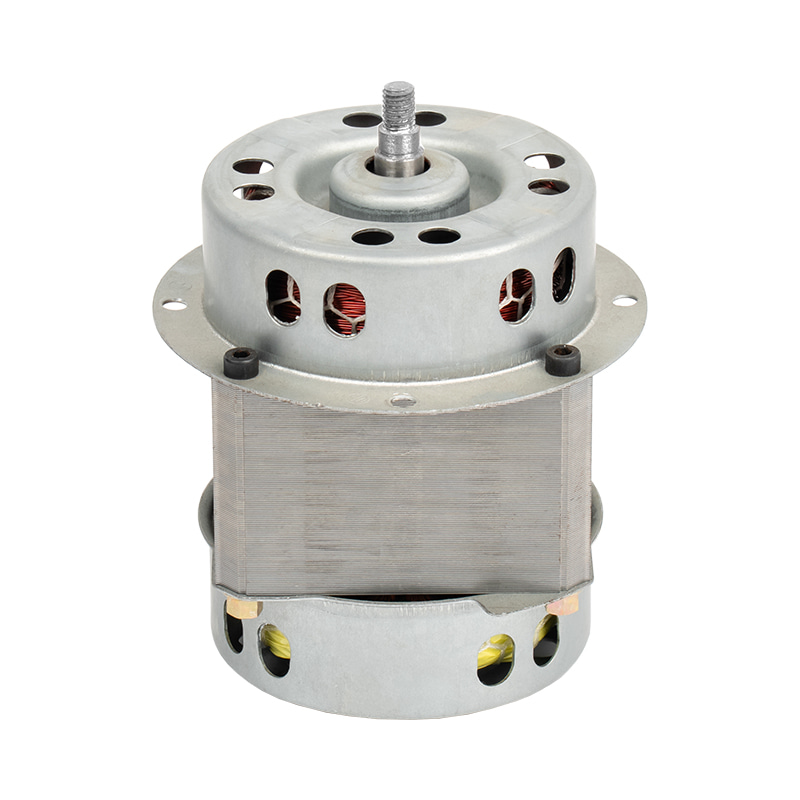 Continuous Duty Medium Blower Motor YYK-60 for Cooling and DryingDesigned for cooling and drying applications, this medium blower motor features IP55 protection, low noise around 55 decibels, and a maintenance-free structure for reliable continuous operation.View Product →
Verify Noise, Vibration, and Mounting Constraints
Acoustic limits are often the hidden selection driver. A backward-inclined blower that is mechanically perfect for a drying cabinet may fail when its 50 dB(A) noise level exceeds a product limit of 45 dB(A) at 1 m. Check permissible sound levels before choosing between impeller designs, not after.
- Measure or confirm the maximum admissible noise level at 1 m in dB(A).
- Balance grade per ISO 21940 affects bearing life in high-speed units; require G6.3 or better for compact impellers.
- Keep the inlet free of tight elbows, which disturb the approaching flow and reduce pressure recovery.
- Confirm the mounting orientation. Vertical motor-down mounting changes axial loads and may require a different bearing arrangement.
Ask Application-Specific Questions Before Sending an RFQ
The same blower family is never optimal across all duties. A complete RFQ should answer the following questions:
- Is the airstream clean, humid, or laden with fine particles?
- Is the inlet air temperature above 60°C for any period?
- What is the allowed voltage range at the terminal box?
- Is speed control required by the control logic or the end user?
- What is the expected operating cycle: continuous, repeated start/stop, or seasonal?
- What IP rating does the final installation require?
An evaporative-cooling unit, for example, benefits from a corrosion-protected shaft, sealed bearings, and an IP44 or better motor enclosure; a dust-handling blower benefits from radial blades and a motor shielded from the product stream. Selecting the impeller and motor as a matched pair is faster and cheaper than tuning either part later.
Verify the Sample Before You Approve Production
Selection is only as reliable as the verification step. A test report is worth more than a polished quote, especially when production parts must match the approved sample batch after batch. Add the following checks to every prototype and first-article inspection:
- Run a performance test at the stated operating point according to ISO 5801 or AMCA 210, and compare airflow and static pressure with the nominal curve.
- Measure speed and input power after a 30-minute warm-up at nominal voltage.
- Confirm that the steady-state current draw stays below the motor nameplate current.
- Run a temperature-rise test for at least 8 hours or until the temperature stabilizes at the expected maximum ambient.
- Measure vibration velocity at the mounting feet and compare it with the specified limit.
- Inspect sealing, lead-wire rating, and corrosion protection for applications with repeated condensation.
A broader explanation of how blower motors are built and why they fail is available in our technical overview of blower motors. If you already have a duty point in mind, talk directly to our engineering team; a ten-minute review of the operating conditions usually eliminates the most expensive mistakes before tooling starts.
Frequently Asked Questions
What is the most common mistake in centrifugal blower selection?
Choosing the blower and motor by outlet size or motor power instead of by duty point. The same frame size can deliver very different airflow and static pressure depending on impeller type and speed, so a kW figure alone cannot define a correct selection.
Mechanically they may fit, but electrically they usually should not. The backward-curved impeller draws less power at low flow and more at high flow, changing the motor load curve. The motor should be matched to the actual impeller and the verified duty point.
Why does a new blower draw more current than the nameplate?
The most common reasons are a system resistance lower than calculated, a supply voltage below the rated value, or an impeller speed higher than intended. Measure voltage and current together, and check the operating point against the published curve.
Should every blower use a VFD-compatible motor?
Only when speed control is genuinely required. A variable-frequency drive adds cost at both the drive and the motor, and an incompatible motor can overheat at low speed. Multi-speed motors are an intermediate option for seasonal cooling or water-circulation duties.
What is a safe margin for static pressure?
For a measured system, allow 10% additional airflow and 10–15% margin on calculated static pressure. For an estimated system, allow up to 25% on pressure, but verify with a test: an excessive margin pushes the operating point away from the best efficiency point and wastes energy.
Centrifugal blower selection becomes manageable when the system curve and the motor duty are treated as design inputs rather than afterthoughts. Define the duty point, match the impeller style to the airstream, confirm the motor can sustain the operating point over the expected duty cycle, and prove the result with a performance test. Equipment built this way gives reliable airflow, predictable energy cost, and fewer service callbacks than any specification that starts with a questionable motor power figure.


 Home
Home  Tel.: +86-13819807486
 Whatsapp:+86 13819807486
 E-mail:


