


 简体中文
简体中文
 English
  عربى
عربى Content
- 1 What Counts as a Variable Speed Centrifugal Blower
- 2 Affinity Laws: Where the Energy Actually Comes From
- 3 Drive and Motor Options Compared
- 4 Motor Details That Decide Whether the Blower Survives
- 5 Problems That Show Up After Commissioning
- 6 Applications: Cooling, Ventilation and Air Handling
- 7 Drying and Process Air: Steady Torque at Low Speed
- 8 Frequently Asked Questions
- 9 Getting the Specification Right the First Time
A 7.5 kW centrifugal blower running flat out at 3,600 rpm behind a discharge damper will still draw close to 85% of its shaft power when you throttle it down to 60% flow. The damper turns the surplus pressure into heat, noise and vibration. Replace the damper with speed control at the same duty point and the power demand drops to roughly 25% to 30%. That single number is why variable speed centrifugal blowers appear in almost every plant energy audit.
The conclusion first: the savings rarely come from the impeller alone. They come from specifying the impeller, motor, drive and control loop as one package, because a variable speed blower that is matched on paper but mismatched on the motor side will overheat, vibrate or hunt within the first year. Everything below explains why, and what to check before you place the order.
What Counts as a Variable Speed Centrifugal Blower
A centrifugal blower moves air by spinning an impeller inside a scroll housing. "Variable speed" simply means airflow is adjusted by changing impeller rpm instead of closing a damper or an inlet vane. Three arrangements dominate the market:
- VFD plus a three-phase induction motor. The most common route from about 1 kW upward. A two-pole motor runs 3,600 rpm at 60 Hz and 3,000 rpm at 50 Hz; a four-pole motor runs 1,800 or 1,500 rpm. Practical turndown is usually 30% to 50% of rated speed.
- EC or BLDC motor with integrated electronics. Motor and drive are matched at the factory, which removes a whole class of configuration errors. Typical in small blowers below roughly 1 kW.
- Belt drive with an adjustable pulley. No electronics at all. Speed is trimmed manually at commissioning, which is useful for fine-tuning a system that will then run at a fixed point.
Direct drive gives you no belt slip, no belt maintenance and accurate speed readout. Belt drive absorbs shock loads, tolerates small misalignments and lets you shift the operating point by changing a pulley ratio. Neither is automatically better; the choice follows the duty cycle. If you want a refresher on how these motors are wound, cooled and assembled, this overview of blower motor construction covers the fundamentals.
Affinity Laws: Where the Energy Actually Comes From
For a fixed system, airflow changes in direct proportion to speed, static pressure with the square of speed, and shaft power with the cube of speed. Halving the speed does not halve the power — it cuts it to about one-eighth.
| Speed (% of rated) | Airflow (%) | Static pressure (%) | Shaft power (%) |
|---|---|---|---|
| 100 | 100 | 100 | 100 |
| 90 | 90 | 81 | 73 |
| 80 | 80 | 64 | 51 |
| 70 | 70 | 49 | 34 |
| 60 | 60 | 36 | 22 |
| 50 | 50 | 25 | 13 |
Real installations deviate from the cube. System resistance, drive losses of 3% to 6%, a drop in motor efficiency when the load falls below about 50%, and a minimum airflow required for the process all flatten the curve. Duct leakage and oversized impellers make it worse. Treat the cube law as the ceiling on savings, not the forecast.
Drive and Motor Options Compared
The speed range you can actually use depends as much on the motor and drive as on the impeller. The table below compares the arrangements seen most often in ventilation, cooling and process air duty.
| Arrangement | Practical speed range | Part-load efficiency | Typical use | Watch out for |
|---|---|---|---|---|
| VFD with induction motor | 100% down to 30-50% | High, minus 3-6% drive loss | 1 kW and up, industrial and commercial | Inverter-duty insulation, shaft currents, harmonics, motor cable length |
| EC or BLDC with integrated drive | 100% down to 20-30% | Highest at small sizes | Small blowers, compact packaged units | Limited field repair; usually replaced, not rewound |
| Belt drive, adjustable pulley | 100% down to 60-70%, manual | Lower, 2-5% belt loss | Simple ventilation, retrofits | Manual adjustment only, belt wear, alignment |
| Fixed speed with damper or inlet vanes | 100% only | Poor at part load | Legacy systems awaiting upgrade | Energy wasted as heat, higher noise, no true turndown |
Motor Details That Decide Whether the Blower Survives
Power rating and frame size are the easy part of the specification. These are the details that separate a blower that runs for a decade from one that is pulled out every 18 months.
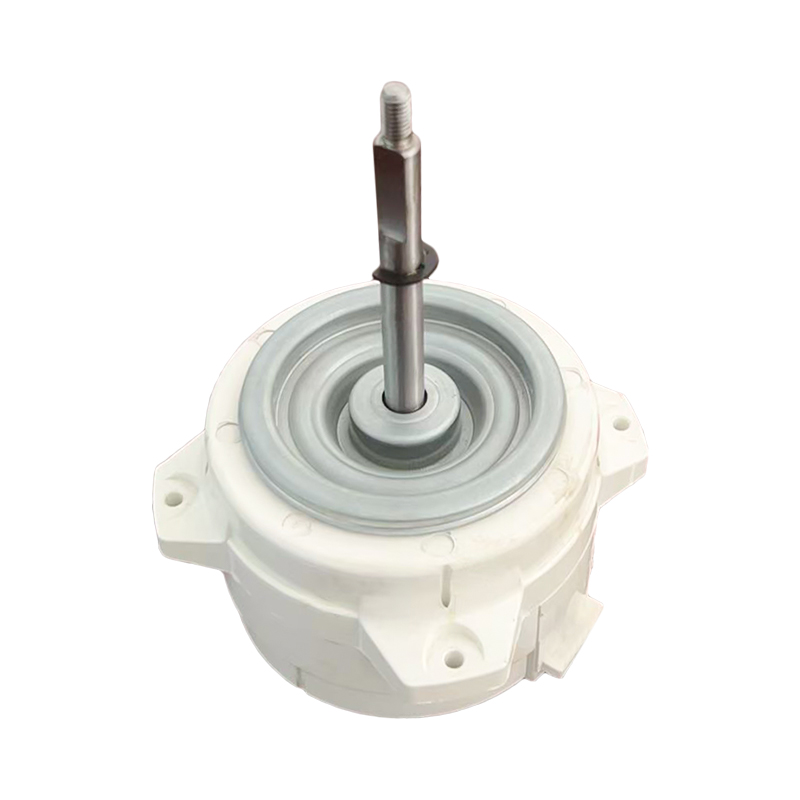
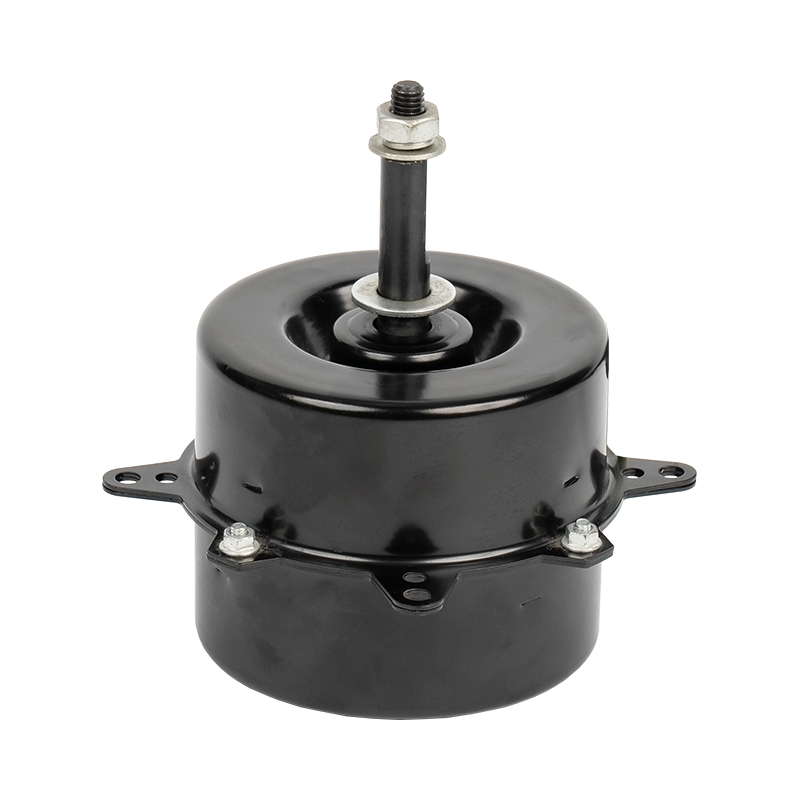
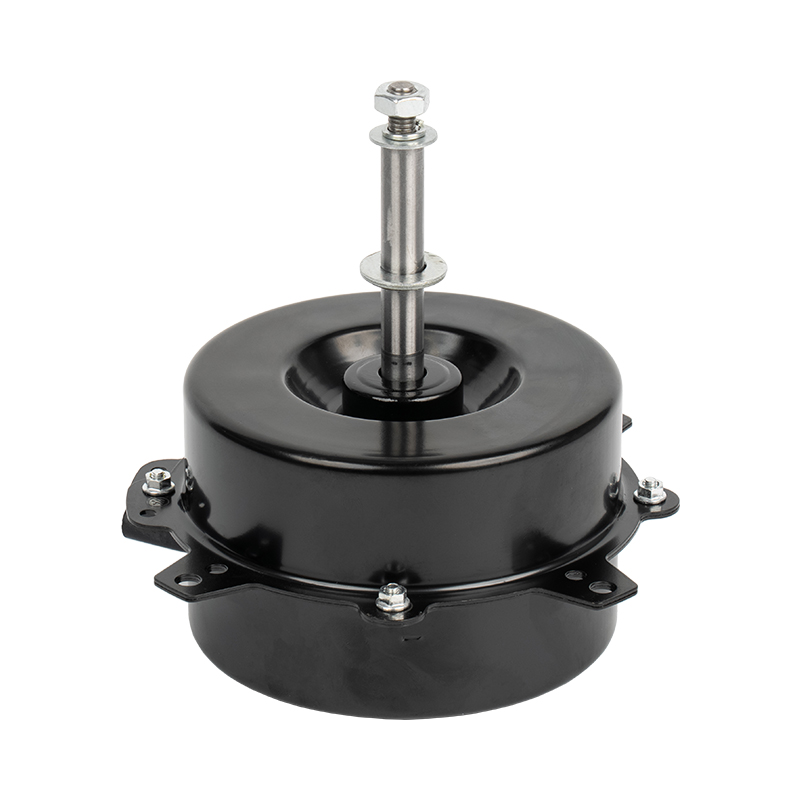
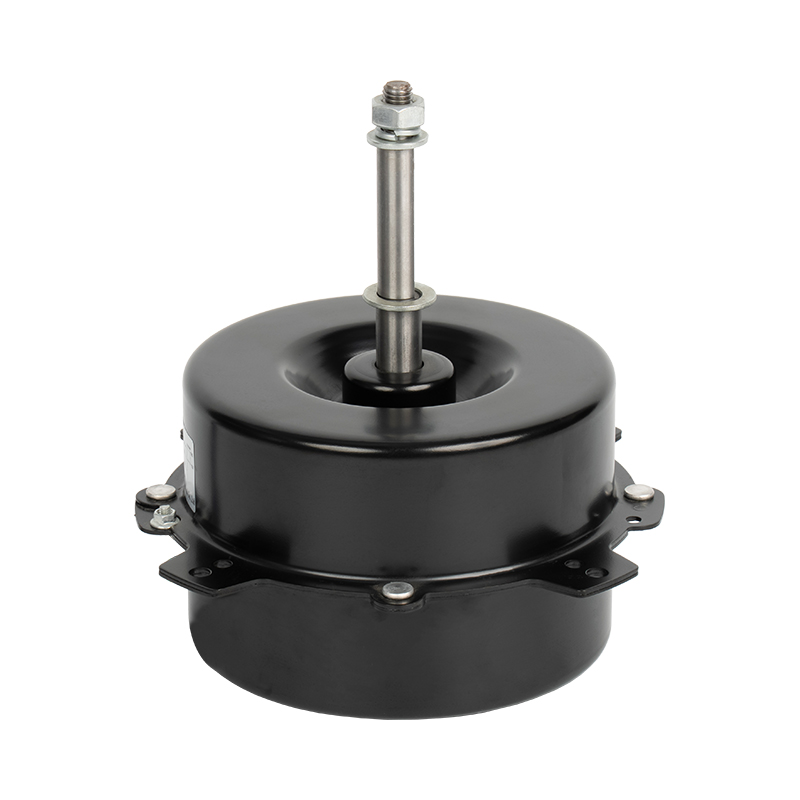
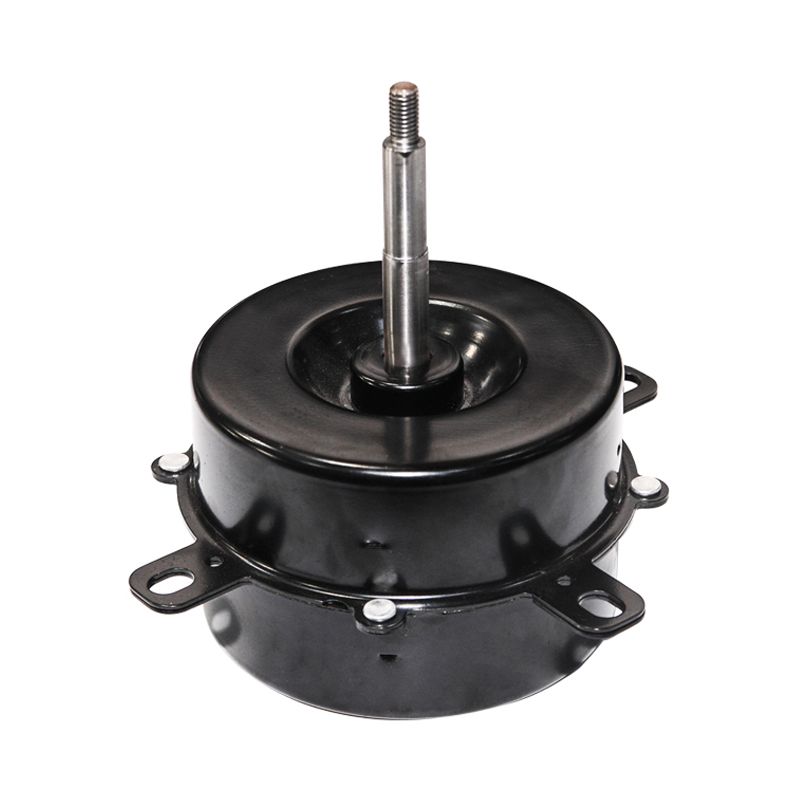
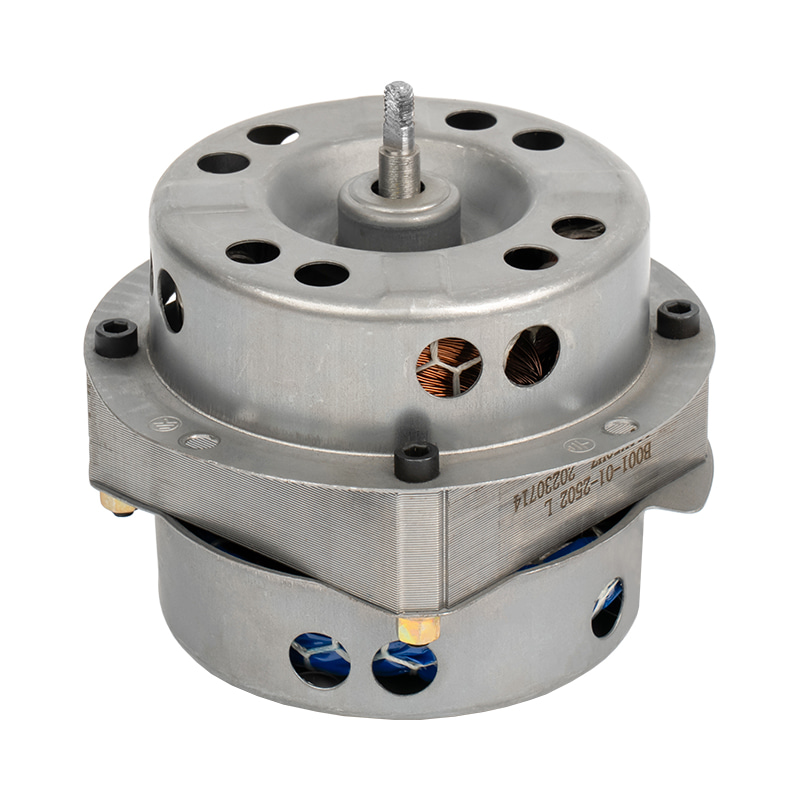 Variable Frequency speed small Blower motor YYK-601. Small size, large air volume output Variable Frequency speed small Blower motor YYK-60 is small in size. It is an optimized vortex fan blade with a high-performance...View Product →
- Minimum continuous speed. A totally enclosed fan-cooled motor cools itself with a fan on the shaft. Below roughly 30% to 40% of rated speed that fan no longer moves enough air across the frame, so the winding temperature climbs even though the load has dropped. Ask for the minimum continuous speed, not just the rated speed.
- Insulation class and temperature rise. Class F insulation with Class B temperature rise is a common industrial baseline. In a hot ceiling void or a rooftop unit, that margin is what keeps the winding alive in August.
- Bearings. Ball bearings with adequate L10 life at the actual radial load, properly preloaded and shielded, behave far better than the cheapest available option. Sleeve bearings suit continuous low-speed duty but must never run dry.
- Shaft and mounting tolerances. Shaft extension diameter, keyway size and total indicated runout matter when the impeller is bolted directly to the shaft. Excessive runout shows up as a once-per-revolution vibration that no balancing will fix.
- Inverter duty rating. A motor driving a VFD should be rated for it: winding insulation designed for fast switching, and a bearing-current mitigation plan for larger frames.
Before ordering, send the supplier four numbers: the duty point in airflow and static pressure, the ambient temperature, the altitude if it is above 1,000 m, and the control mode you intend to use. That set of four prevents most of the mismatch problems that appear after commissioning.
Problems That Show Up After Commissioning
Most field complaints on variable speed blowers are not impeller problems at all. They cluster around five root causes, and only one of them is mechanical.
Figure 2: Distribution of typical commissioning and first-year issues reported on variable speed blower installations.
The practical fixes are unglamorous. Set a floor frequency instead of letting the drive creep toward 15 Hz. Program a skip band around any speed that produces a resonance peak. Give the PID loop a realistic ramp time so the blower does not chase every small pressure flicker. Keep motor cables short, or fit a dv/dt or sine filter when they are not.
Applications: Cooling, Ventilation and Air Handling
In evaporative coolers and air coolers, the blower and the water circulation pump share one job: move a large volume of air at low static pressure while keeping noise low enough for a bedroom or an office. Running the blower at reduced speed at night or in mild weather cuts both the power bill and the noise, which is why variable frequency drives have become standard on larger cooler units.
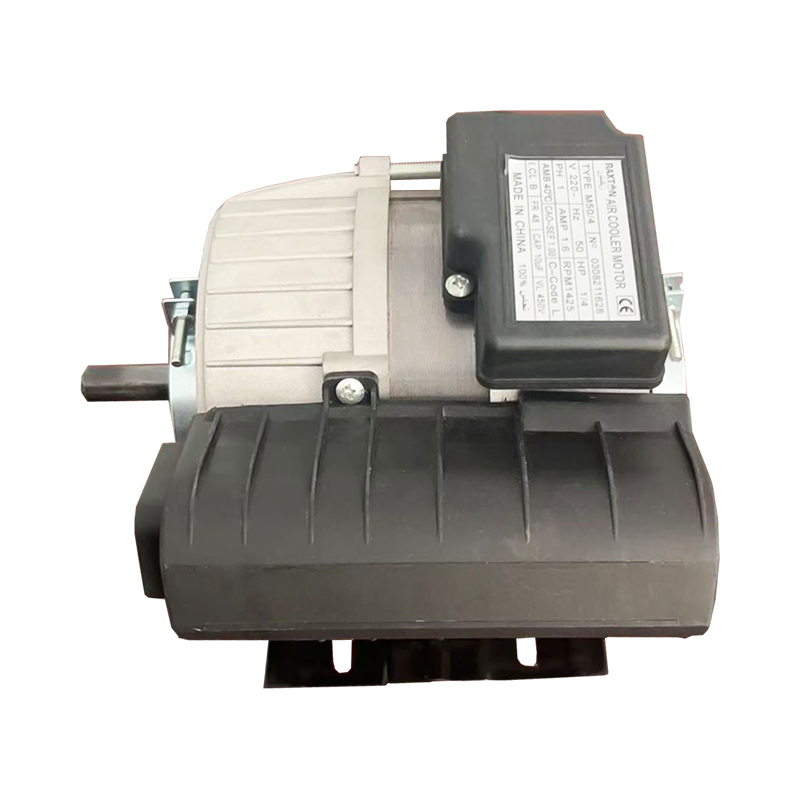
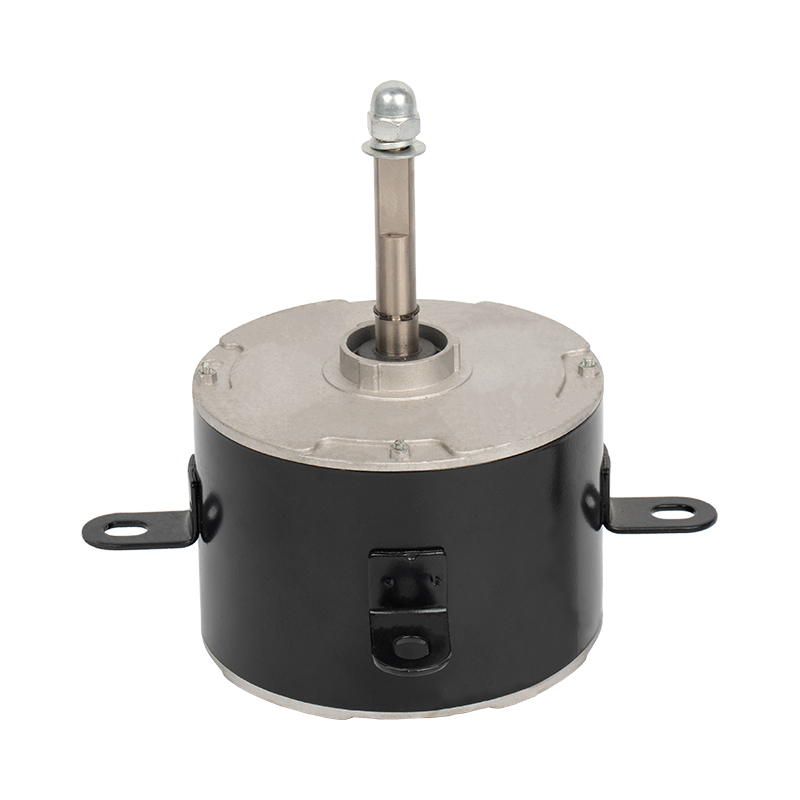
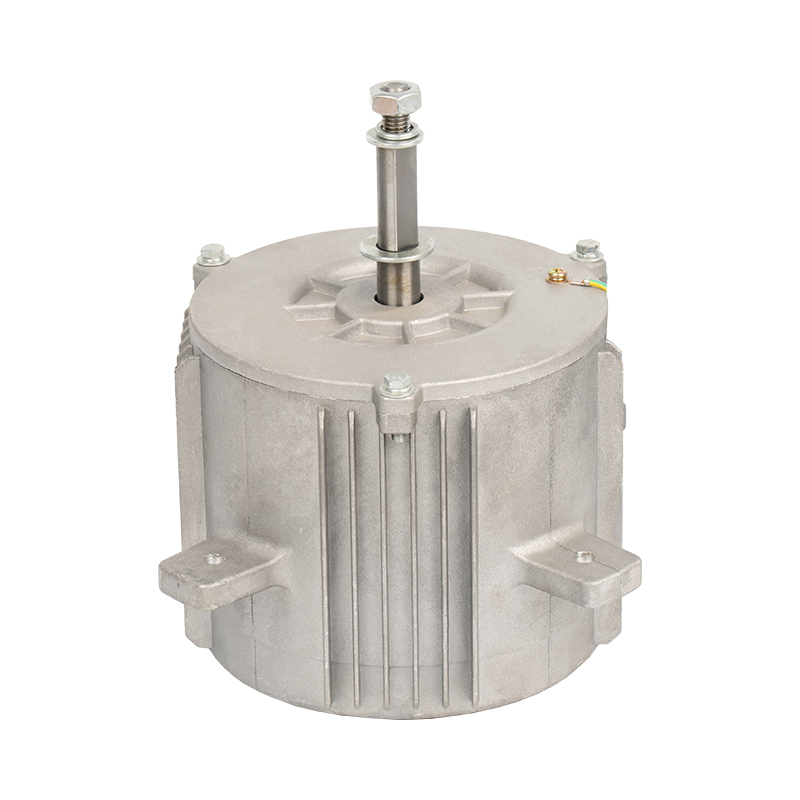 Frequency Conversion Air Cooler Motor YYK-250Air Cooler Motor Aluminum shell YYK-250View Product →
The same logic applies to industrial air purifiers and to general ventilation: the filter loads up, system resistance rises, and a fixed-speed blower simply moves less air. A speed-controlled unit holds the airflow steady by increasing rpm as the filter clogs, then returns to low speed after the filter is changed. That is a control benefit, not just an energy one.
Drying and Process Air: Steady Torque at Low Speed
Drying and cooling lines often need a moderate, stable airflow over a long duty cycle rather than a high peak. Here the motor is selected for continuous operation at part speed, with the thermal margin to survive hours at 40 Hz in a warm enclosure. A medium-pressure blower motor matched to a drive gives the line operator a single knob for airflow, while the process stays inside its drying curve instead of being switched on and off.
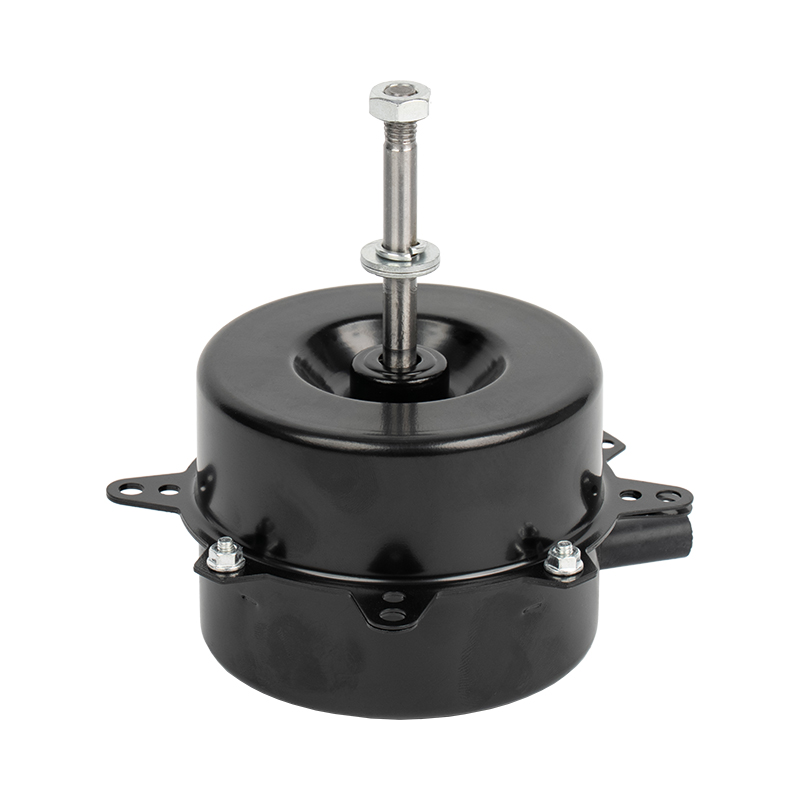
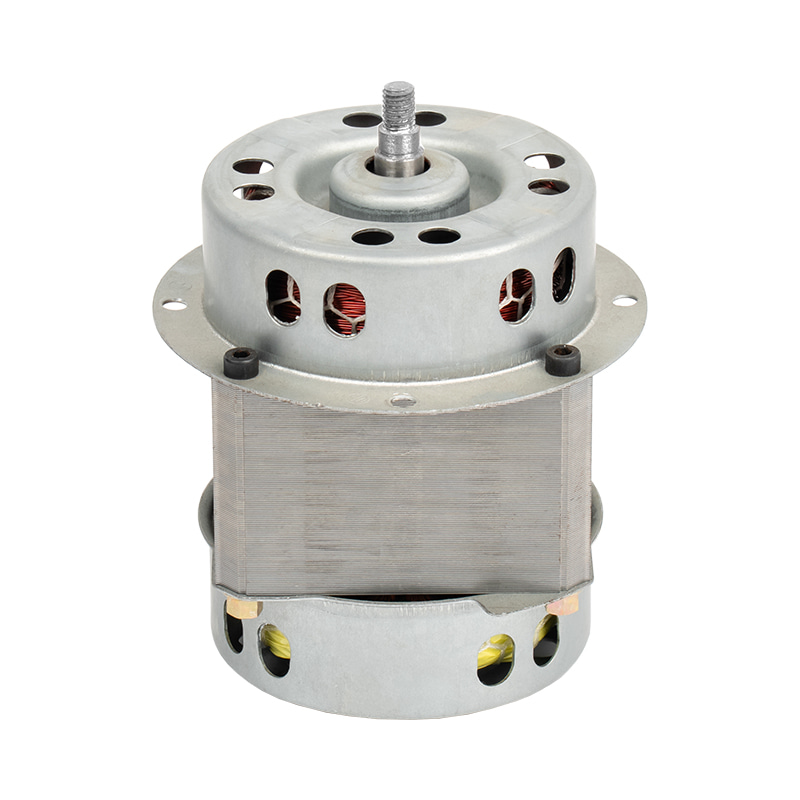 Cooling and drying Medium blower motor YYK-60Product introduction:View Product →
Two specification habits pay off in this kind of duty: size the motor for the worst-case ambient rather than the nameplate condition, and confirm the bearing lubrication interval for the actual speed range, because a motor that is quiet at 60 Hz can develop a whine at 35 Hz if the bearings are marginal.
Frequently Asked Questions
Does every centrifugal blower benefit from variable speed?
No. If the system genuinely runs at its design point every hour of the year, a correctly sized fixed-speed blower with a high-efficiency motor can be the cheaper and simpler answer. Variable speed pays back where the duty point moves: part-load operation, night setbacks, filter loading, or seasonal weather changes.
How low can I run the blower before the motor becomes a problem?
For a self-cooled TEFC motor, plan on 30% to 40% of rated speed as a working floor, and confirm the figure with the motor supplier. Below that, either accept a reduced continuous rating or specify forced ventilation.
Can a VFD be added to an existing blower motor?
Sometimes. Older motors may lack inverter-duty insulation, and long motor cables can create voltage spikes and bearing currents. The usual options are a dv/dt filter, a sine filter, or simply replacing the motor with an inverter-rated unit. Do the arithmetic before committing to the retrofit.
How much energy will I really save?
It depends on how many hours you spend at part load. A drop from 100% to 80% speed is worth around 49% of shaft power in theory and typically 35% to 45% in practice once drive losses and motor efficiency are counted.
Getting the Specification Right the First Time
A variable speed centrifugal blower is a system decision. Pick the impeller for the duty point, the motor for the slowest speed it will actually run at, the drive for the motor, and the control loop for the process. Get those four in line and the energy saving becomes a by-product of good engineering rather than a promise on a datasheet.
If you already have the duty point — airflow, static pressure, ambient and control mode — send it over through our contact page and we can match it to a motor frame that holds up at part speed, not just at rated speed.



 Home
Home  Tel.: +86-13819807486
 Whatsapp:+86 13819807486
 E-mail:


