


 简体中文
简体中文
 English
  عربى
عربى Content
- 1 Centrifugal Fan Efficiency: Definition and Calculation
- 2 Blade Geometry Sets the Upper Efficiency Limit
- 3 System Effects and Installation Losses
- 4 The Motor Is the Efficiency Bridge
- 5 Selection and Maintenance Practices That Protect Efficiency
- 6 Verifying Efficiency After Installation
- 7 Frequently Asked Questions
Two nominally identical 22 kW centrifugal fans can consume very different amounts of electricity in the same building when one operates near its best efficiency point and the other is oversized and throttled. The gap often reaches 10-15% of annual energy use, which is why centrifugal fan efficiency should be treated as a system property rather than a nameplate number. Impeller geometry, motor efficiency, installation conditions, and the operating point all contribute, and each one can be improved in a planned way.
Centrifugal Fan Efficiency: Definition and Calculation
Centrifugal fan efficiency compares the useful air power delivered by the fan with the power supplied to the fan shaft or motor. In metric units, shaft power is calculated as:
Pshaft (kW) = Q (m3/h) x p (Pa) / (3,600,000 x η)
where Q is airflow, p is total pressure, and η is efficiency expressed as a decimal. If you replace total pressure with static pressure, you get static efficiency. Static efficiency is more meaningful in ducted systems because it represents the pressure actually available to overcome duct resistance, while total efficiency includes velocity pressure that may not be recoverable.
When comparing fan data, always check which definition is used. The same fan can look 5-10 points better in total efficiency than in static efficiency. Reliable efficiency values come from standardized tests such as AMCA 210.
Blade Geometry Sets the Upper Efficiency Limit
Impeller design is the first efficiency decision. The chart below shows typical peak static efficiency ranges for four common centrifugal impeller types.
Peak static efficiency ranges by impeller type
Airfoil and backward-inclined blades offer the highest efficiency for clean airstreams. Radial blades have lower efficiency but tolerate dust, moisture, and abrasive particles better.
| Blade type | Peak static efficiency | Pressure capability | Best suited cases |
|---|---|---|---|
| Airfoil | 85-90% | High | Clean air, HVAC, high-efficiency systems |
| Backward inclined | 80-85% | High | Industrial clean air, general ventilation |
| Backward curved | 75-82% | Medium-high | Balanced efficiency and durability |
| Radial | 55-70% | Very high | Material handling, abrasive or particulate-laden air |
The efficiency ceiling is only useful if the fan runs close to its best efficiency point. Oversizing shifts the operating point away from the BEP and turns a high-efficiency impeller into a wasted investment.
System Effects and Installation Losses
A fan tested at 84% static efficiency can deliver under 60% in the field when the system is not designed around it. Common reasons are simple:
- Restricted or poorly shaped inlets that add pre-swirl and turbulence.
- Outlet ductwork that turns too close to the fan discharge.
- Dirty filters, coils, or dampers that raise system resistance.
- Operation at a flow point far below or above the design duty.
- Air density changes caused by temperature, humidity, or altitude.
The affinity laws show why part-load control matters. Flow changes in direct proportion to speed, pressure changes with the square of speed, and shaft power changes with the cube of speed. If speed is reduced by 20%, power drops to roughly 51%, while a volume damper can still keep the motor at near full load. The most efficient way to vary airflow is therefore speed control, not throttling.
The Motor Is the Efficiency Bridge
Even a perfect impeller cannot be efficient if the motor converts electricity poorly. Combined efficiency is the product: a 78% efficient impeller driven by an 82% efficient motor gives about 64% overall. Improving motor efficiency to 90% raises overall efficiency to about 70%, which is a 9% reduction in input power on the same fan curve.
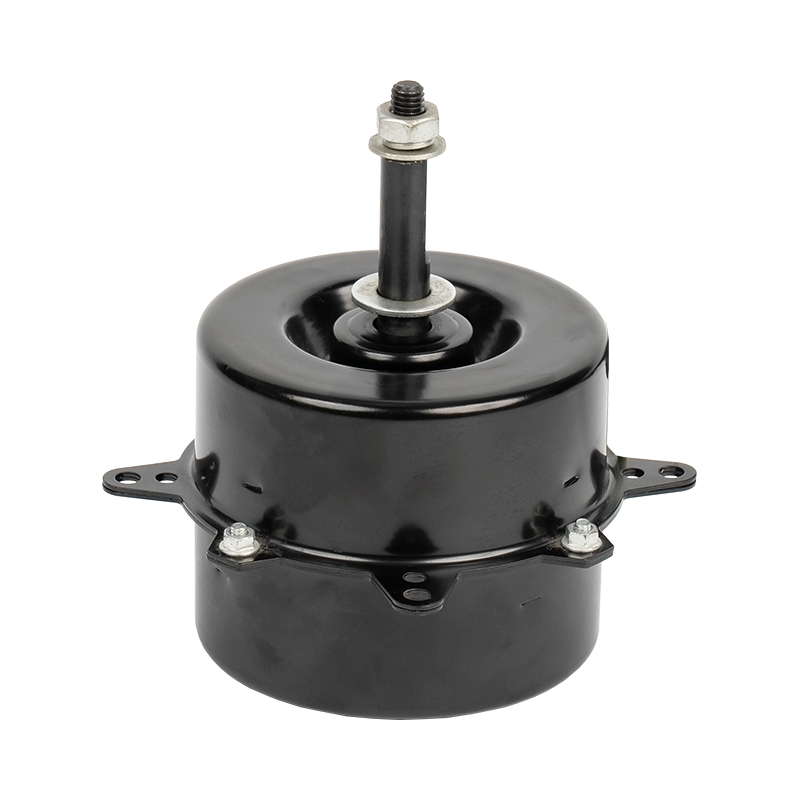
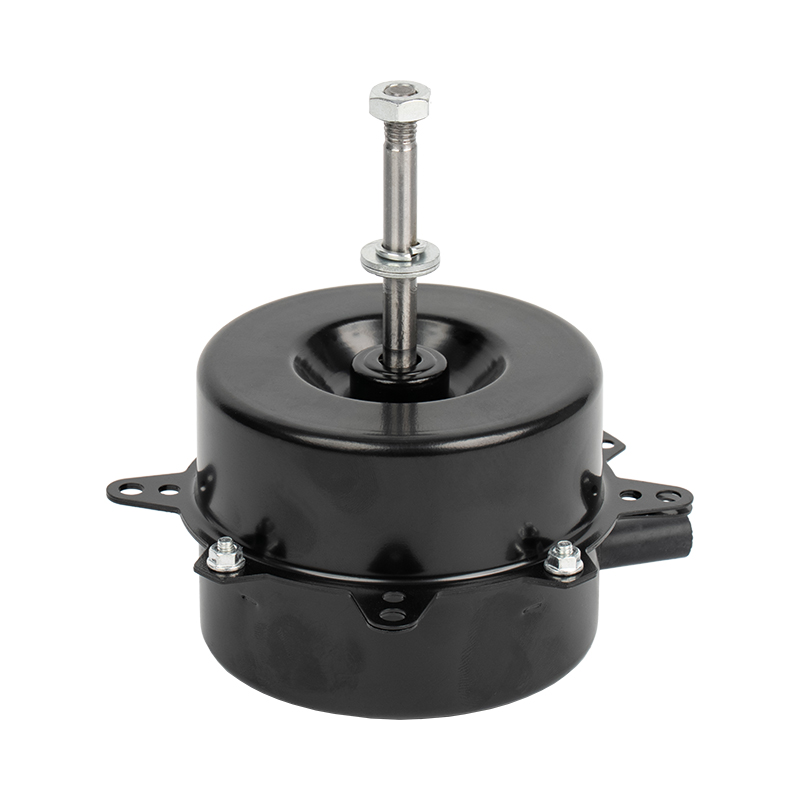
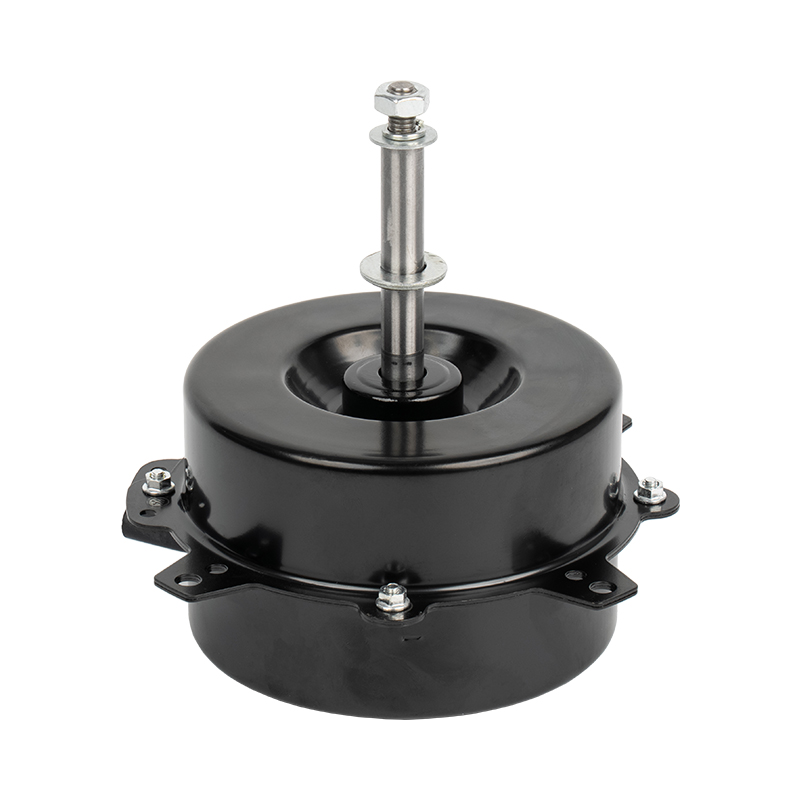
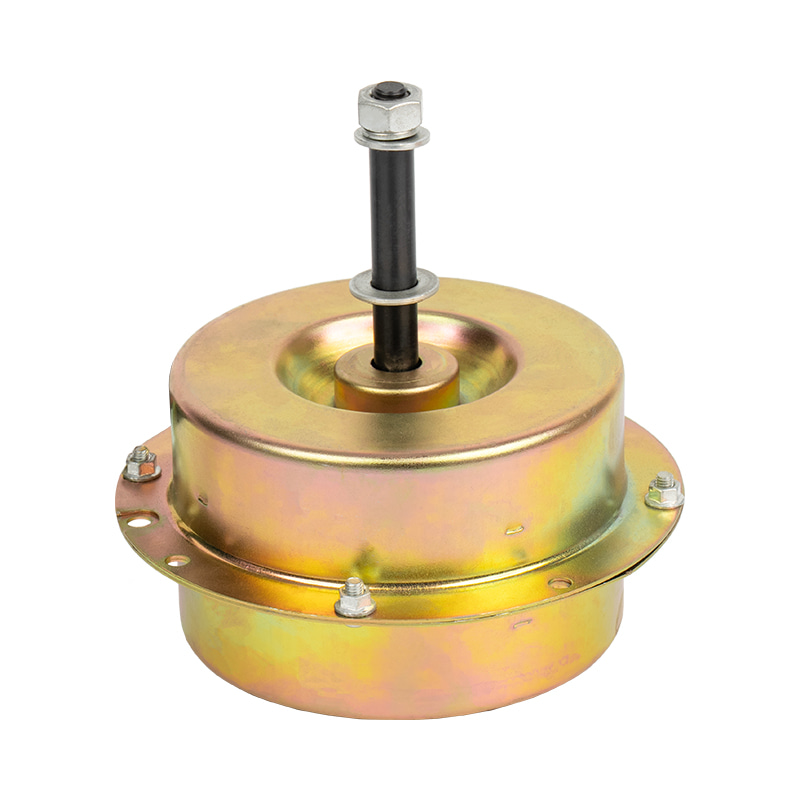
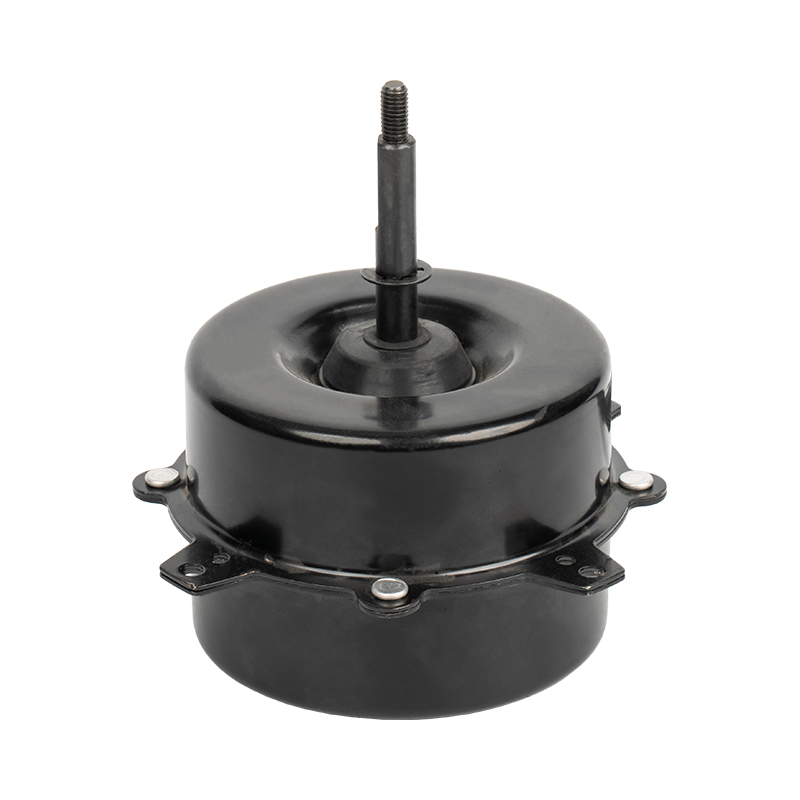
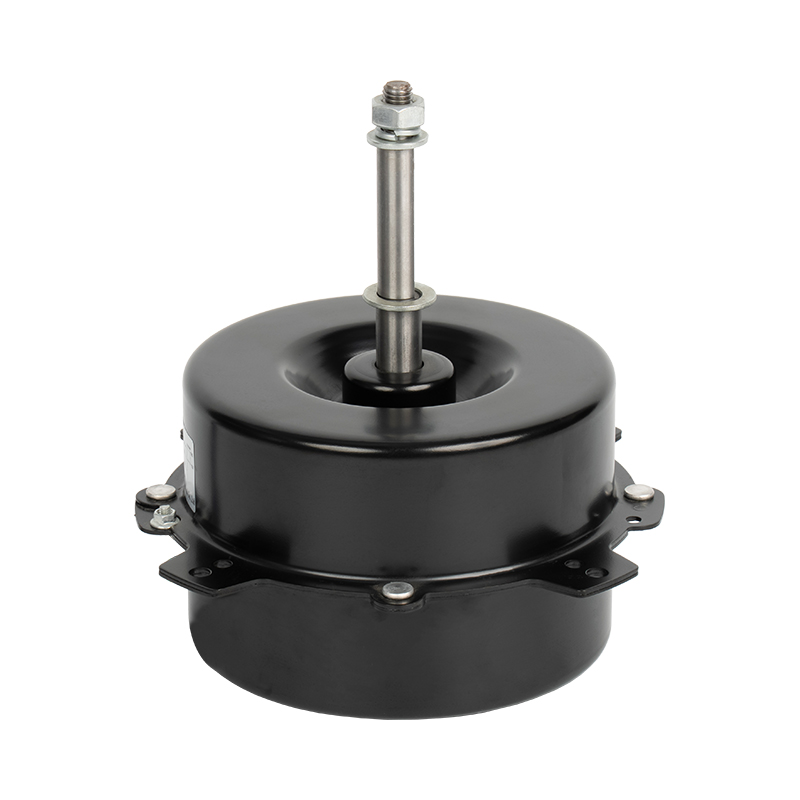
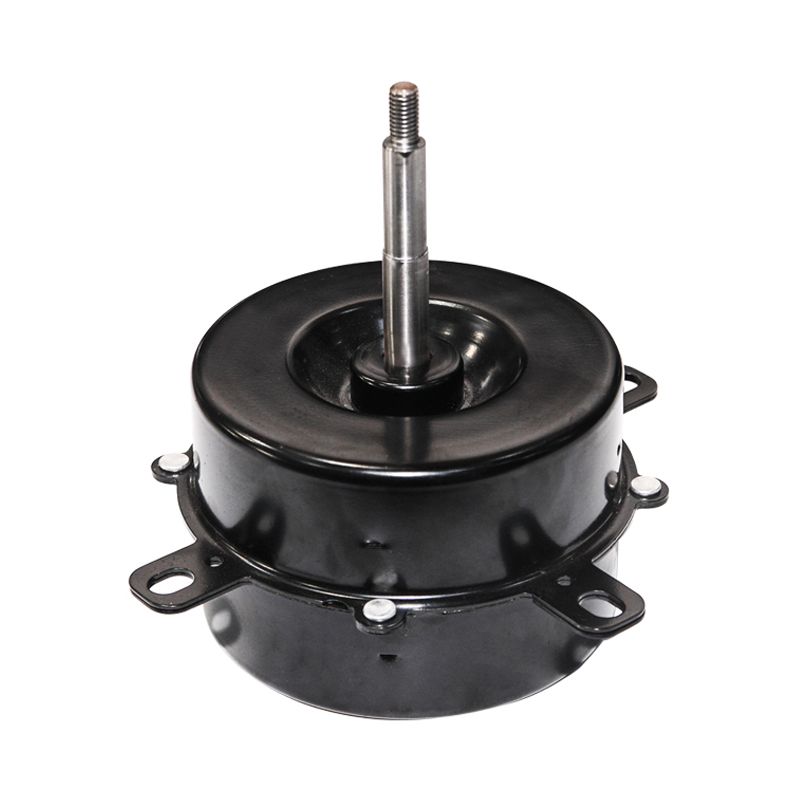
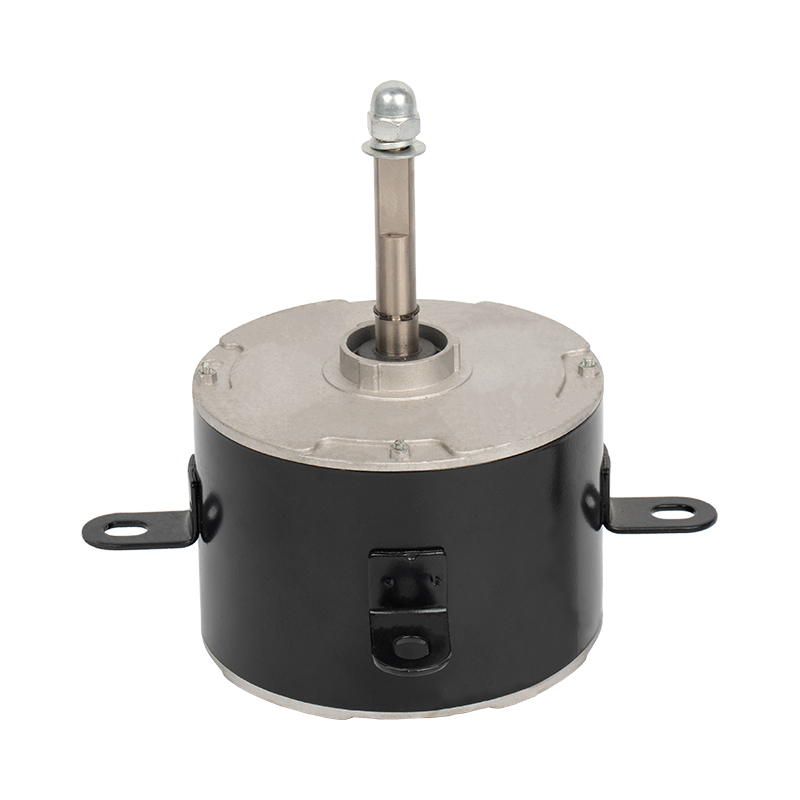
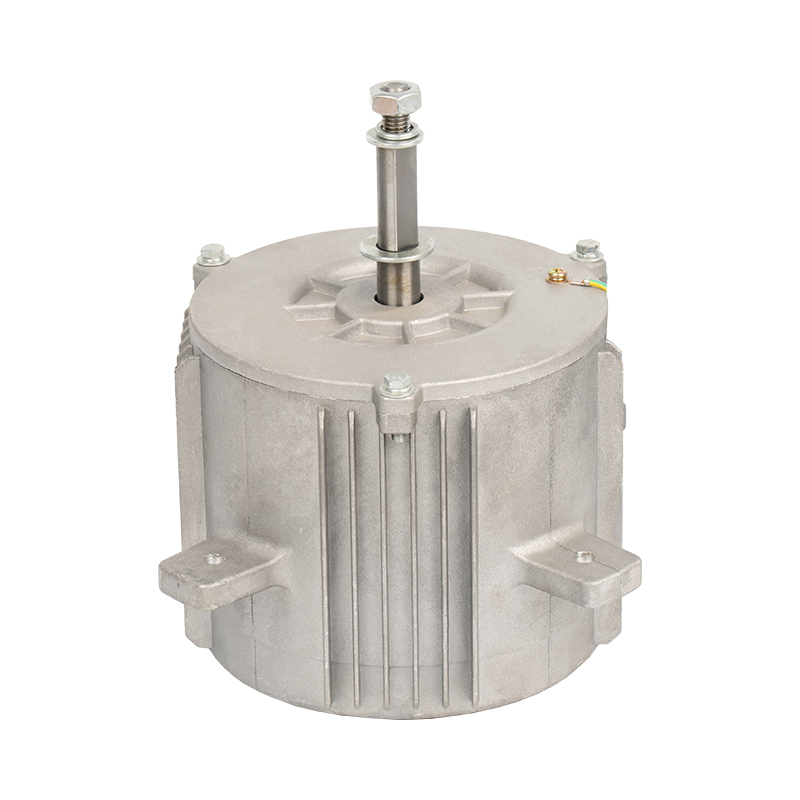
At partial speed, the motor becomes even more important. A standard motor can lose efficiency and run hot when a variable frequency drive changes the speed-torque balance. A variable-frequency small blower motor is built to hold stable torque and efficiency across the speed range used by small centrifugal blowers, so it is a more reliable match for VFD-controlled systems.
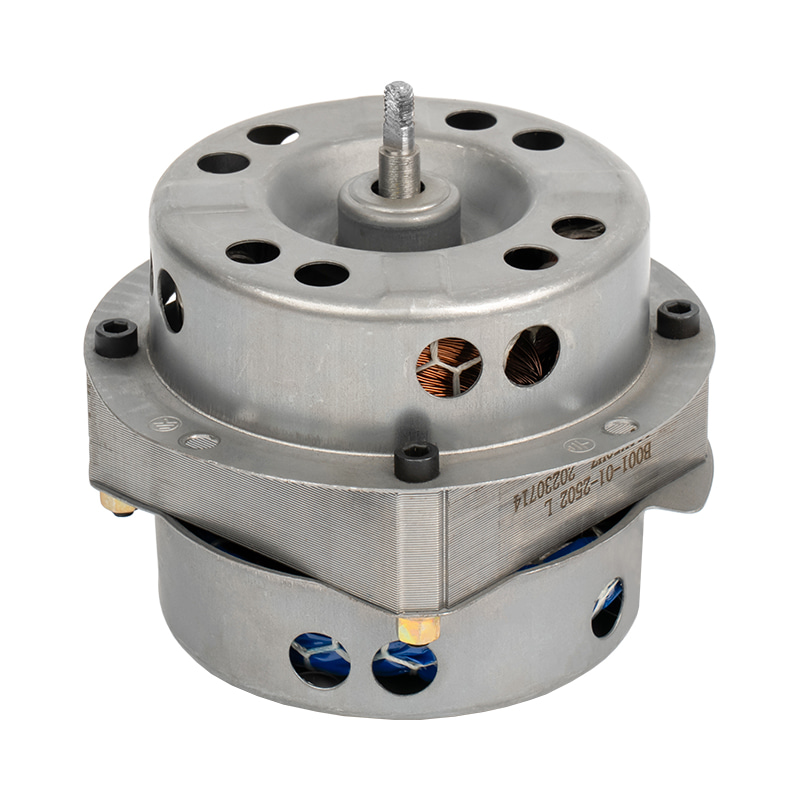 Variable Frequency speed small Blower motor YYK-60 Supplier, Wholesale CompanyCixi Xinhao Motor Co., Ltd. is China Variable Frequency speed small Blower motor YYK-60 supplier and wholesale Variable Frequency speed s...View Product →
Motor construction details affect efficiency as well: insulation class, bearing quality, cooling, and rotor design all influence how much input energy becomes shaft power. If you are replacing or specifying blower motors, this blower motor guide explains the practical differences you need to review.
Unbalanced voltage is often overlooked. A voltage unbalance of 3% can increase motor losses by 10-15% and shorten motor life. Check supply voltage and terminal connections during commissioning.
Selection and Maintenance Practices That Protect Efficiency
Start with the duty point, not the maximum flow. A fan selected for a high margin and then throttled back to design flow experiences lower static efficiency and unnecessary energy loss. Select the impeller and motor together for the expected annual operating profile, including high-demand and part-load hours.
From a procurement standpoint, buy the efficiency class that life-cycle cost justifies. A 2% efficiency improvement on a 30 kW fan running 6,000 hours per year at $0.12/kWh saves about $432 annually. Over a ten-year life, that is more than $4,000 before interest, which is usually more than the added cost of an efficiency-rated motor.
Shaft-driven components matter. Check bearing condition every routine service; worn bearings increase frictional torque and add to motor load. If the fan is belt-driven, inspect belt tension and alignment. An under-tensioned belt slips and reduces delivered speed, forcing the fan to run longer to produce the same volume. Impeller imbalance should be corrected because it increases vibration, accelerates bearing wear, and indirectly lowers efficiency.
Efficiency improvements are cumulative. A matching impeller, a correctly specified motor, speed control, and disciplined maintenance together save more energy than any single component alone.
Verifying Efficiency After Installation
Nameplate values mean nothing if the real system does not deliver them. During commissioning, measure motor input power, airflow, and static pressure at the design point. Compare measured power with the calculated value. If power is higher than expected, look for pressure losses, impeller clearance issues, or incorrect rotation direction.
A simple logbook of energy use, filter pressure drop, and bearing temperatures helps detect drift before it becomes a failure. Re-checking the operating point every six months allows you to correct damper positions, belt tension, or speed settings before energy is wasted for the rest of the season.
Frequently Asked Questions
What is a good centrifugal fan efficiency?
For modern airfoil and backward-inclined centrifugal fans, peak static efficiency usually falls between 75% and 90%. Radial-blade fans are lower, often 55-70%, because their blade shape is built for durability in dirty airstreams.
How do I calculate centrifugal fan efficiency?
Measure airflow and static or total pressure, calculate air power using Q x p / 3,600,000, then divide by the measured shaft power. For a motor-driven fan, divide by electrical input power if you want wire-to-air efficiency.
Is a centrifugal fan more efficient than an axial fan?
It depends on pressure. Axial fans tend to be more efficient in low-pressure, high-flow systems, while centrifugal fans are more efficient when the system needs higher static pressure and stable flow against changing resistance.
Does a variable frequency drive improve centrifugal fan efficiency?
A VFD improves part-load efficiency because it reduces motor speed instead of throttling airflow. The motor should be rated for variable-speed operation so it can maintain efficiency and cooling at low speed.


 Home
Home  Tel.: +86-13819807486
 Whatsapp:+86 13819807486
 E-mail:


