


 简体中文
简体中文
 English
  عربى
عربى Content
- 1 In-Depth Comparison of Two Mainstream Motor Types
- 2 Core Performance Comparison Between Universal and Brushless DC Motors
- 3 How Three Key Motor Parameters Determine Wall Breaking Performance
- 4 Daily Maintenance Essentials and Motor Lifespan Extension Strategies
- 5 Common Fault Diagnosis and Solutions
- 6 Motor Evaluation Guide for Purchasing a Wall Breaking Machine
The motor technology selection for wall breaking machines directly impacts overall machine performance and user experience. In the comparison between universal motors and brushless DC motors, brushless DC motors—with their operational efficiency exceeding 85%, service lifespan reaching tens of thousands of hours, and significantly reduced noise levels—are gradually replacing universal motors as the core power solution for mid-to-high-end wall breaking machines. Although their technical complexity and cost barriers are higher, a comprehensive evaluation across long-term value, energy efficiency, and user satisfaction clearly demonstrates that brushless DC motors have become the mainstream direction for industry upgrades. For consumers and manufacturers pursuing efficient wall breaking, quiet operation, and product durability, prioritizing models equipped with brushless DC motors represents a more forward-looking decision.
In-Depth Comparison of Two Mainstream Motor Types
The current wall breaking machine market primarily adopts two technical approaches: universal motors and brushless DC motors. These differ fundamentally in working principles, performance characteristics, and applicable scenarios. Understanding these differences is essential for making informed selection decisions.
Universal Motors: High Speed and Strong Torque with Limited Lifespan
Universal motors can operate under both AC and DC power supplies, featuring high rotational speed and high torque output that easily meets the wall breaking demands of various ingredients. In scenarios involving hard ingredients such as nuts and beans, universal motors rely on their powerful output to effectively achieve cell wall rupture. However, this motor type has notable structural deficiencies: mechanical contact between the brush and commutator generates substantial heat and wear during high-speed operation, resulting in limited motor lifespan. Excessive operating noise is another significant issue affecting user experience. After prolonged continuous use, brush wear intensifies and may produce sparks, which not only degrades motor performance but also presents safety hazards. For users requiring frequent operation or quiet environments, these shortcomings of universal motors constitute substantial constraints.
Brushless DC Motors: The High-Efficiency, Quiet, Long-Life Solution
Brushless DC motors eliminate traditional brush structures, removing friction losses and achieving operational efficiency exceeding 85%. Their service life typically reaches tens of thousands to hundreds of thousands of hours, far surpassing the average level of universal motors. In terms of noise control, they perform exceptionally well, producing virtually no mechanical friction sound during operation and delivering a significantly more comfortable user experience. These motors employ electronic commutation instead of traditional brush commutation, avoiding performance degradation caused by brush wear and substantially improving operational stability. Although their technical complexity is higher and production process requirements are more stringent, resulting in relatively higher costs, brushless DC motors have become the key technical foundation for achieving efficient wall breaking and low-noise experience in mid-to-high-end wall breaking machine products.
Core Performance Comparison Between Universal and Brushless DC Motors
The following systematic comparison across multiple key dimensions helps readers intuitively understand the technical characteristics and applicable boundaries of each motor type.
| Comparison Dimension | Universal Motor | Brushless DC Motor |
|---|---|---|
| Operational Efficiency | Medium | Exceeds 85% |
| Service Lifespan | Hundreds to thousands of hours | Tens of thousands to hundreds of thousands of hours |
| Operating Noise | High | Extremely Low |
| Maintenance Requirements | Requires periodic brush replacement | Nearly maintenance-free |
| Safety | Brush wear may produce sparks | No spark risk |
| Technical Complexity | Simple | High |
| Target Positioning | Entry-level products | Mid-to-high-end products |
As clearly shown in the comparison table, brushless DC motors lead universal motors across four core dimensions: efficiency, lifespan, noise, and safety. The sole advantage of universal motors lies in their mature technology and lower initial cost, making them suitable for entry-level users with limited budgets and low usage frequency. For consumers pursuing long-term value and high-quality experience, the comprehensive return on investment of brushless DC motors is clearly more compelling.
How Three Key Motor Parameters Determine Wall Breaking Performance
The power, speed, and torque of a wall breaking machine motor are three interrelated core parameters that collectively determine the fineness of ingredient processing, operational efficiency, and user experience. Understanding the mechanism and reasonable range of each parameter is key to evaluating product performance.
Power: Determining Output Ceiling and Energy Balance
Wall breaking machine motor power typically ranges from 500W to 2000W. Higher power delivers stronger crushing force, making it easier and more efficient to process hard ingredients such as ice cubes and large nuts. Comparing a 1500W model with a 1000W model, the former can grind ingredients to a finer consistency in less time. However, higher power is not always better: high-power operation consumes more energy and places more demanding requirements on the overall machine structure and cooling system. If heat dissipation design is inadequate, prolonged high-power operation will cause motor overheating, accelerating internal component aging and shortening motor lifespan. In home electrical environments, excessively high-power models may also impose certain loads on the power grid, requiring consideration of household circuit capacity.
Speed: The Trade-off Between Breaking Fineness and Thermal Effects
Wall breaking machine speeds generally exceed 10000rpm, with high-performance motors reaching up to 30000rpm. High speed enables blades to generate powerful impact force instantaneously, significantly improving wall breaking effectiveness and producing finer ingredient grinding with more complete nutrient release. Taking fruit and vegetable juice production as an example, high-speed motor-driven wall breaking machines can thoroughly rupture fruit and vegetable cell walls, resulting in smoother juice texture and more readily absorbable nutrients. However, excessively high speeds also introduce potential issues: increased friction between blades and ingredients not only accelerates blade wear but may also cause localized overheating of ingredients, affecting nutritional content and taste. For fruit and vegetable juices containing heat-sensitive nutrients such as vitamin C, the high temperatures generated by excessive speeds may destroy some nutritional components. Furthermore, high-speed operation increases motor noise and vibration, posing greater challenges to machine stability and noise reduction design.
Torque: Ensuring Stability When Processing Hard Ingredients
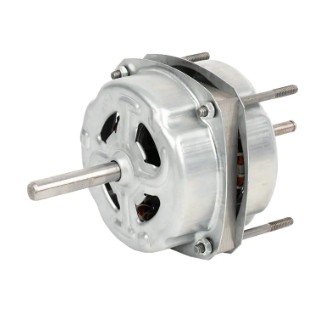
Torque reflects the rotational force output by the motor. Greater torque means the motor is less likely to stall when facing hard ingredients, ensuring smooth and consistent crushing. Taking dry bean grinding for soy milk as an example, a high-torque motor can maintain stable cutter head operation, evenly crushing the beans and avoiding situations where some beans remain unground. If motor torque is insufficient, processing hard ingredients readily causes overload, manifested as sharp speed drops or even complete shutdown, not only failing to achieve ideal wall breaking results but also potentially causing motor burnout from prolonged overload operation. However, excessive torque may also result in unnecessary energy waste in some cases and places higher demands on transmission components, increasing manufacturing difficulty and maintenance complexity.
Daily Maintenance Essentials and Motor Lifespan Extension Strategies
The service life of a wall breaking machine motor depends not only on manufacturing quality but also closely on daily maintenance and proper usage habits. Following these maintenance strategies can effectively extend the motor's operational lifespan and maintain optimal performance.
Prompt Cleaning to Prevent Residue Intrusion
After use, promptly clean oil stains and food residues from the motor surface to prevent them from entering the motor interior and affecting normal operation while reducing failure probability. Avoid using overly wet cloths during cleaning to prevent moisture from entering the motor and causing short circuits. It is recommended to first wipe away large surface stains with a dry cloth, then gently wipe remaining traces with a slightly damp, wrung-out soft cloth. For critical areas such as motor ventilation ports, thorough cleaning is essential to ensure unobstructed airflow and avoid poor motor heat dissipation caused by debris blockage.
Control Continuous Operation Duration to Avoid Overheating
Prolonged continuous operation causes motor overheating and shortens service life. Single continuous use time should not exceed the limit specified in the product manual. If multiple uses are needed, allow adequate cooling time between sessions before restarting. Different motor types and power levels have varying heat dissipation capabilities and continuous working durations: universal motors have relatively weaker heat dissipation and typically shorter continuous working times, while brushless DC motors offer better heat dissipation performance and can appropriately extend continuous working time. Users must follow product instructions to arrange usage time reasonably and protect motor performance.
Monitor Operating Status for Early Anomaly Detection
During daily use, pay attention to whether the motor exhibits abnormal noise, excessive vibration, or significant speed drops during operation. Once any abnormality is detected, stop using immediately and contact professional repair services. Do not attempt self-disassembly to avoid causing more serious damage. Abnormal noise may stem from internal part wear, looseness, or foreign object intrusion; excessive vibration may indicate unstable motor mounting or bearing component failure; speed drops may result from motor overload, unstable power supply voltage, or internal circuit issues. Timely detection and resolution of these problems can effectively prevent further motor damage and extend its service life.
Common Fault Diagnosis and Solutions
Accurately identifying wall breaking machine motor fault types and implementing targeted measures can significantly reduce repair cycles and avoid unnecessary replacement costs. Below are diagnostic methods and handling recommendations for three of the most common faults.
Motor Does Not Rotate: Systematic Troubleshooting from Power to Control Circuit
Possible causes for a non-rotating motor span three levels: power issues, motor body failure, and control circuit failure. Power issues include improperly inserted plugs, damaged power cords, or faulty outlets; motor body failures include winding short circuits, open circuits, or seized rotors; control circuit failures involve damaged switches or burnt circuit board components. Troubleshooting should begin with checking power connections, ensuring plugs are firmly inserted and testing with a different outlet, replacing power cords if external damage is visible. If power supply is normal, further inspect the motor exterior for obvious damage and manually rotate the motor shaft to check for flexibility. If the shaft is seized, internal foreign objects may be present, requiring professional disassembly and cleaning. Control circuit issues are more difficult to diagnose and are best handled by professional repair services.
Unstable Speed: Dual Factors of Brush Wear and Voltage Fluctuation
Unstable speed may result from severely worn brushes causing poor contact, large power supply voltage fluctuations, or faulty electronic speed regulators inside the motor. If caused by brush wear, observe the remaining brush length. When brushes wear down to less than one-third of their original length, timely replacement with the same model type is necessary. For power supply voltage issues, use a multimeter to measure the supply voltage. If fluctuations exceed the rated voltage range of the wall breaking machine (typically 110V-240V), check the home electrical environment and whether high-power appliances are operating simultaneously. If necessary, install a voltage stabilizer to regulate voltage. If electronic speed regulator failure is suspected, the unit should be sent for repair so professionals can test the speed regulation circuit and repair or replace faulty components.
Motor Overheating: Load Management and Cooling System Inspection
Common causes of motor overheating include excessive load (putting too many ingredients in at once or ingredients that are too hard to crush), poor heat dissipation (blocked ventilation ports or cooling fan failure), and motor quality issues (excessive winding resistance). To address overheating, first check ingredient quantity and hardness to avoid overload operation. If heat dissipation is inadequate, clean ventilation ports and check whether the cooling fan is operating normally, replacing the fan promptly if damaged. For overheating caused by motor quality issues, contact the manufacturer's after-sales service for motor replacement if within the warranty period. If the warranty has expired, consult professional repair personnel to assess whether repair is cost-effective. If repair costs are too high, consider replacing the unit.
Motor Evaluation Guide for Purchasing a Wall Breaking Machine
For buyers and end consumers, evaluating wall breaking machine motor performance should focus on the following dimensions to ensure the selected product matches actual usage requirements.
- Prioritize brushless DC motors: Although the initial investment is higher, the combined benefits of energy efficiency, lifespan, and quiet operation deliver significantly superior long-term returns compared to universal motors. For households with frequent usage, this choice is particularly prudent.
- Match power to usage scenarios: For typical household daily use, 800W-1200W is sufficient for most needs. If frequently processing ice cubes, nuts, and other hard ingredients, consider models above 1500W. Avoid blindly pursuing maximum power, and consider household circuit capacity.
- Balance speed and torque: Higher speed is not always better. Choose models with multi-speed adjustment to flexibly adapt to different ingredient characteristics. High-torque design ensures stability when processing hard ingredients, reducing stalling and overload risks.
- Inspect heat dissipation design: Confirm that the product features effective heat dissipation channels and overheat protection mechanisms. A well-designed cooling system is the foundational guarantee for long-term stable operation of high-power motors and a key factor in preventing premature motor aging.


 Home
Home  Tel.: +86-13819807486
 Whatsapp:+86 13819807486
 E-mail:


